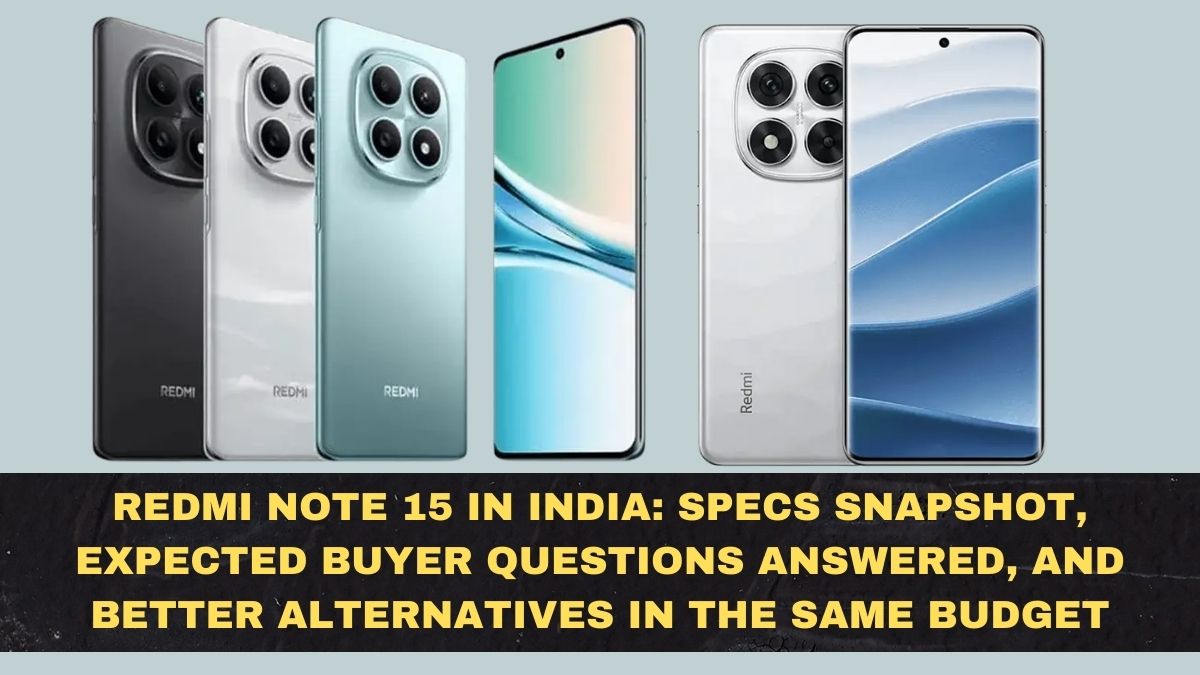
The Redmi Note series is not just a product line in India. It is a cultural habit. Millions of buyers default to “just buy the new Note” without even comparing alternatives. That brand muscle is exactly why the Redmi Note 15 India launch has triggered massive search interest. People are not asking whether it is good. They are asking whether it is still the safest choice in 2026.
That question matters more now than it did three years ago. The budget and mid-range smartphone market in India has become brutally competitive. Every major brand now offers big batteries, fast charging, AMOLED displays, and multi-camera setups. The Redmi Note 15 is entering a market that no longer belongs to Xiaomi by default.

Why the Redmi Note 15 Launch Is Being Watched So Closely
This launch is symbolic.
It tells buyers whether Xiaomi still understands the Indian budget phone buyer.
For years, Redmi Note phones meant:
-
Best specs for the price
-
Reliable battery life
-
Aggressive pricing
-
Mass-market appeal
If the Note 15 fails to deliver clear value, it will signal a real brand decline, not just a bad product cycle.
Redmi Note 15 Specifications Table
| Component | Specification |
|---|---|
| Display | 6.7-inch AMOLED, 120Hz |
| Processor | Snapdragon 7s Gen 2 |
| Rear Camera | 50MP OIS + 8MP ultra-wide + 2MP macro |
| Front Camera | 16MP |
| Battery | 6000mAh |
| Charging | 67W fast charging |
| RAM | 8GB / 12GB |
| Storage | 128GB / 256GB |
| OS | HyperOS on Android |
| 5G | Yes |
| Weight | Approx. 198g |
This specs snapshot explains both why buyers are excited and why some are nervous.
What Xiaomi Actually Improved Over the Last Generation
This is not a lazy refresh.
Three upgrades matter.
First, the battery capacity has jumped to 6000mAh, which dramatically improves real-world endurance.
Second, the AMOLED panel now supports higher peak brightness and better outdoor visibility.
Third, the Snapdragon 7s Gen 2 chip delivers more stable gaming and better thermal behavior.
These are meaningful improvements, not cosmetic ones.
Where Xiaomi Played It Too Safe
Xiaomi also made conservative choices.
The camera hardware is nearly unchanged.
The macro camera still exists for marketing reasons.
Charging speed is good but no longer class-leading.
HyperOS still carries bloatware and ads in some regions.
This phone is safe, not ambitious.
Camera Performance Reality Check
This is where hype collapses.
The 50MP OIS camera is reliable but not special.
It delivers:
-
Good daylight photos
-
Acceptable low-light performance
-
Stable video with OIS
It does not deliver:
-
Flagship-level dynamic range
-
Consistent night photography
-
Creator-grade video
For Instagram and casual photography, it is fine.
For camera-first buyers, it is underwhelming.
Battery Life and Charging Behavior
This is the strongest part of the Redmi Note 15.
The 6000mAh battery combined with an efficient Snapdragon chip delivers:
-
Two-day light usage
-
Full-day heavy usage
-
Stable screen-on time
67W charging fills the battery fast enough to remove charging anxiety.
This phone is built for battery peace of mind.
Display Quality and Multimedia Experience
The AMOLED panel is excellent for this price band.
It offers:
-
Smooth 120Hz scrolling
-
Good outdoor brightness
-
Vibrant colors
-
Strong contrast
For Netflix, YouTube, and gaming, this display punches above its class.
Performance and Gaming Stability
The Snapdragon 7s Gen 2 is not a gaming beast.
But it is stable.
It delivers:
-
Smooth daily performance
-
Consistent frame pacing
-
Low thermal throttling
It will not run heavy games at max settings.
But it will not stutter either.
This is practical performance, not flashy performance.
Software Experience and Bloatware Reality
HyperOS is faster than old MIUI.
But it is still cluttered.
You get:
-
Pre-installed apps
-
Occasional promotional notifications
-
Aggressive permission prompts
Clean-UI lovers will hate this.
Value buyers will tolerate it.
The Price Band That Determines Everything
The Redmi Note 15 succeeds or fails on one variable.
Pricing.
If Xiaomi prices it aggressively, it dominates.
If Xiaomi prices it even slightly high, it collapses.
In 2026, there is no pricing forgiveness in this segment.
Better Alternatives If Pricing Goes Wrong
If the Redmi Note 15 launches overpriced, buyers should look at:
-
Realme 16 Pro
-
Motorola Edge 70
-
Samsung Galaxy A56
-
iQOO Neo 10 Lite
These phones offer better cameras, cleaner software, or faster charging.
Brand loyalty will not save Xiaomi anymore.
Who Should Buy the Redmi Note 15
This phone is perfect for:
-
Battery-first users
-
Casual gamers
-
Netflix and YouTube lovers
-
Redmi loyalists
-
Budget-conscious families
It is not for:
-
Camera enthusiasts
-
Clean-UI purists
-
Performance junkies
Buying it for photography is a mistake.
Why This Launch Matters Beyond One Phone
The Redmi Note 15 is a brand referendum.
If this phone flops, Xiaomi loses its mass-market crown.
If it succeeds, Xiaomi proves it still understands India.
This is bigger than one product.
Conclusion: Why the Redmi Note 15 Is a Safe Buy, Not a Brave One
The Redmi Note 15 is not revolutionary. It does not break price barriers. It does not redefine smartphone photography. What it does deliver is stability, battery confidence, and predictable performance in a familiar Redmi package.
If Xiaomi prices it aggressively, it will sell in millions. If it overprices it even slightly, it will get crushed by sharper competitors. In 2026, safety is not enough. Value must be undeniable.
The Redmi Note 15 will not win hearts. It will win wallets — but only if Xiaomi remembers why the Note series became legendary in the first place.
FAQs
Is the Redmi Note 15 good for gaming?
It is good for casual and moderate gaming but not for heavy gaming.
How is the Redmi Note 15 camera performance?
Reliable for daylight and casual use, but not class-leading.
Does it support fast charging?
Yes. It supports 67W fast charging.
Is HyperOS better than MIUI?
It is faster and smoother but still comes with bloatware.
Who should buy the Redmi Note 15?
Battery-first users, casual gamers, and budget buyers.
What are better alternatives?
Realme 16 Pro, Motorola Edge 70, Samsung Galaxy A56, and iQOO Neo 10 Lite.