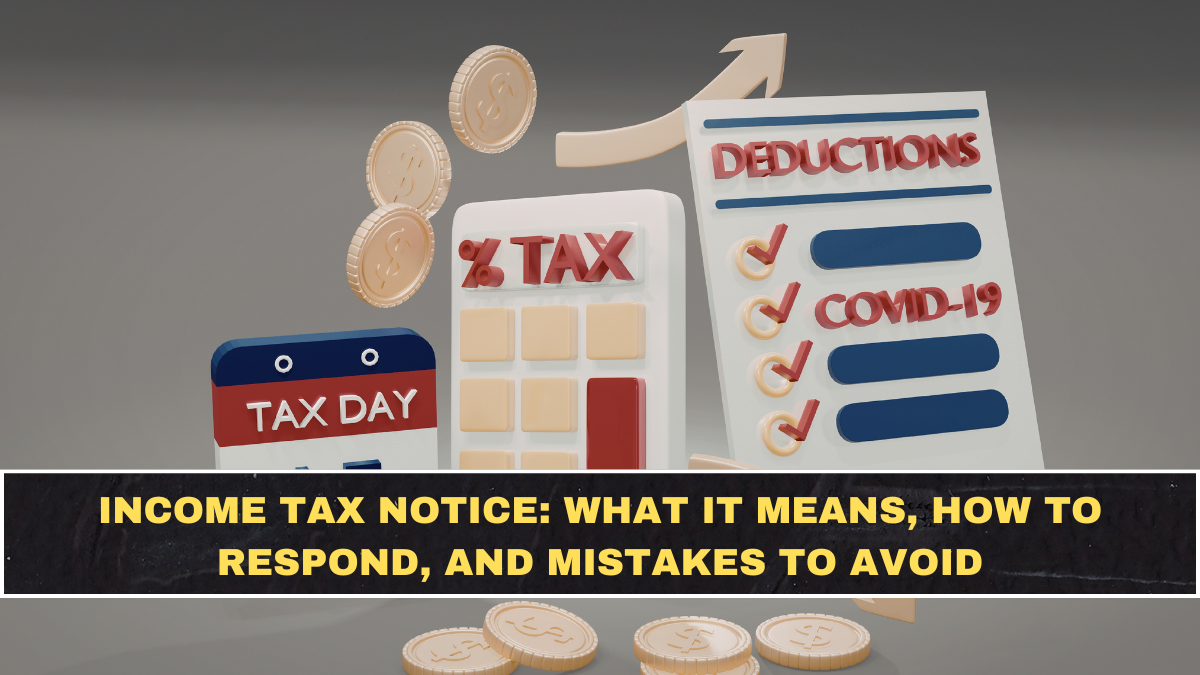
Getting an Income Tax notice doesn’t automatically mean you did something illegal. It usually means the system flagged a mismatch, a missing detail, a high-value transaction needing explanation, or a return that doesn’t reconcile cleanly with what’s available in tax records. The real danger is not the notice itself. The danger is reacting emotionally, ignoring it, or replying casually with incomplete information that creates bigger problems later.
This guide on income tax notice rules is meant for normal taxpayers who want a clean, logical response, not drama. The goal is to understand why notices happen, how to respond in the right order, and how to avoid the common traps that lead to penalties, delayed refunds, or repeated follow-ups. If you treat it like a checklist and keep your response consistent, most notices get resolved without turning into a long headache.
What an Income Tax Notice Actually Means
An income tax notice is basically a question. The department is asking you to confirm something, clarify a mismatch, or provide supporting information. Many notices are automated and triggered by data matching, not by a human deciding you’re “under suspicion.” That’s why the language in a notice can feel serious even when the issue is simple, like a missing interest figure or a mismatch between reported income and records.
Notices also happen because multiple sources report your financial activity. Salary, TDS entries, bank interest, investments, and certain transactions can show up in tax records. If your return doesn’t align with those entries, the system asks for clarification. The notice isn’t the punishment; the next step depends on how you respond and whether your explanation is consistent and supported.
Common Reasons People Receive Notices
The most frequent trigger is mismatch. You filed a return showing one set of numbers, but tax records show another. This can happen with salary components, bank interest, TDS credits, or capital gains reporting. Another common trigger is claiming deductions that don’t match the pattern expected for your profile, or not having supporting evidence in case you’re asked later.
High-value financial activity can also lead to questions, especially when the return does not reflect income levels consistent with spending or investment patterns. This doesn’t mean you’re guilty. It means the system wants a clean explanation: source of funds, correct reporting category, and proof that tax obligations are met. People create problems when they reply with vague statements like “family support” without showing anything that supports the explanation.
First Response Rule: Don’t Panic, Don’t Ignore, Don’t Rush
Ignoring a notice is the easiest way to convert a small mismatch into a bigger issue. Deadlines exist for a reason, and missing them can reduce your options. At the same time, rushing to respond without understanding what is being asked is also a mistake. Many taxpayers reply with incomplete documents or wrong assumptions, and that triggers a second notice, stricter follow-up, or refund hold.
Your first step should be to read the notice carefully and identify the exact question being asked. Notices usually refer to a specific item: income mismatch, deduction clarification, transaction explanation, or documentation request. Treat it like one problem at a time. If you reply with unrelated information, you look confused, and confusion invites more scrutiny. A clean reply is short, relevant, and supported.
The Correct Order to Respond (So You Don’t Create Contradictions)
Start by mapping the notice item to your return. Identify where that item appears in your filed return and whether you reported it correctly. Then check what tax records likely show for the same item. The goal is to understand the mismatch, not to guess. Once you locate the gap, decide whether you need to submit an explanation, submit documents, or revise/correct something if allowed under your situation.
The most important rule: your response must be consistent with your declared income and your financial trail. If you explain a deposit as “gift,” your records should support that it’s a genuine gift and not disguised business income. If you explain income as “exempt,” the category must actually be exempt and not merely “non-taxed in your mind.” Consistency is how cases close quickly.
Documents That Usually Matter (And People Forget)
Most notice responses become messy because taxpayers don’t collect proof properly. The proof is not for “show”; it is to support the exact claim you make in your response. For salary-related queries, you typically need documents that show salary structure and tax deducted. For bank interest or investment-related mismatches, you need statements or certificates that show interest credited and tax deducted details.
For capital gains or asset transactions, you need a clear buy-sell trail, including purchase details, sale details, and the calculation logic. For deductions, you need proof of eligibility and payment evidence. The most common mistake is attaching random screenshots or incomplete statements. Attachments should be readable, relevant, and clearly match the numbers you reference. If your attachment doesn’t match your explanation, it doesn’t help you.
Mistakes That Trigger Penalties or Prolong the Case
One big mistake is submitting a response that accidentally admits something you don’t mean to admit. For example, people sometimes write “I forgot to report this income” when the real issue is only a mismatch in TDS credit posting. Another mistake is claiming deductions without proper proof, assuming “they won’t ask.” Notices are often exactly that: the asking stage.
A second major mistake is inconsistent explanations. You can’t call an amount “loan” in one place and “gift” in another. You can’t claim a transaction is “business income” while your return shows no business profile. Contradictions make you look unreliable even if the money is legitimate. The third mistake is paying money blindly because someone told you “it’s needed to close the notice.” Never pay anything based on random calls or messages; handle actions only through official processes you control.
How to Write a Clean Reply That Gets Accepted
Your reply should be structured, not emotional. Start with a one-paragraph summary that restates the notice item and your response in plain terms. Then provide the explanation, followed by the calculation if relevant, and then list the documents you are attaching. Keep it factual: what happened, how it is reported, and why it aligns with tax rules and your return.
If a correction is required, acknowledge it clearly and state what corrective step you took or will take within the allowed process. Don’t over-explain and don’t add unrelated information. Over-explaining often introduces new questions. Your goal is not to “win an argument.” Your goal is to remove the mismatch and show clean compliance.
When You Should Get Professional Help
If the notice involves large capital gains, foreign assets, complex deductions, business turnover, or multiple years of mismatch, professional help can save you from errors that cost more later. If you can’t understand what the notice is asking, guessing is a bad idea. Also, if you suspect identity misuse or incorrect reporting under your PAN, you should treat it as serious and handle it carefully with proper steps.
That said, avoid “instant fix” agents who promise closure without reviewing documents. A legitimate professional will ask for your return, tax records context, supporting proofs, and a clear narrative. If someone tries to close it through shortcuts, you may end up paying for a bigger mess later.
Conclusion
Most Income Tax notices are solvable, but only if you respond with logic and consistency. The real risk is not the notice—it’s a lazy response, missed deadline, or contradictory explanation that turns a small mismatch into a long compliance problem. If you follow a clean process, you can close the issue without panic and without unnecessary admissions.
Use income tax notice rules as your mental framework: identify the mismatch, respond to the exact question, attach relevant proof, and keep every statement consistent with your return and financial trail. Do that, and you drastically reduce the chance of penalties, repeated notices, or refund delays. The goal is simple: make your tax profile boring and predictable, because boring is exactly what the system rewards.
FAQs
Does an income tax notice mean I will be fined?
No. A notice is often a request for clarification or proof. Fines and penalties usually depend on whether you ignore the notice, miss deadlines, or fail to justify mismatches properly.
What is the first thing I should do after receiving a notice?
Read the notice carefully, identify the exact mismatch or question, and map it to your filed return and supporting records before replying.
What are the most common reasons people get notices?
Mismatches in reported income vs tax records, TDS credit issues, unreported interest/capital gains, high-value transactions needing explanation, and deductions without clean supporting proof.
Can I respond with a simple message like “Noted, will fix”?
That’s risky. Responses should be specific, factual, and supported with documents where required. Vague replies often trigger follow-up or prolong resolution.
How many times should I use the main keyword in a tax notice article?
Use it only where it fits naturally—typically 2–3 times—so the article stays readable and doesn’t look forced or spammy.