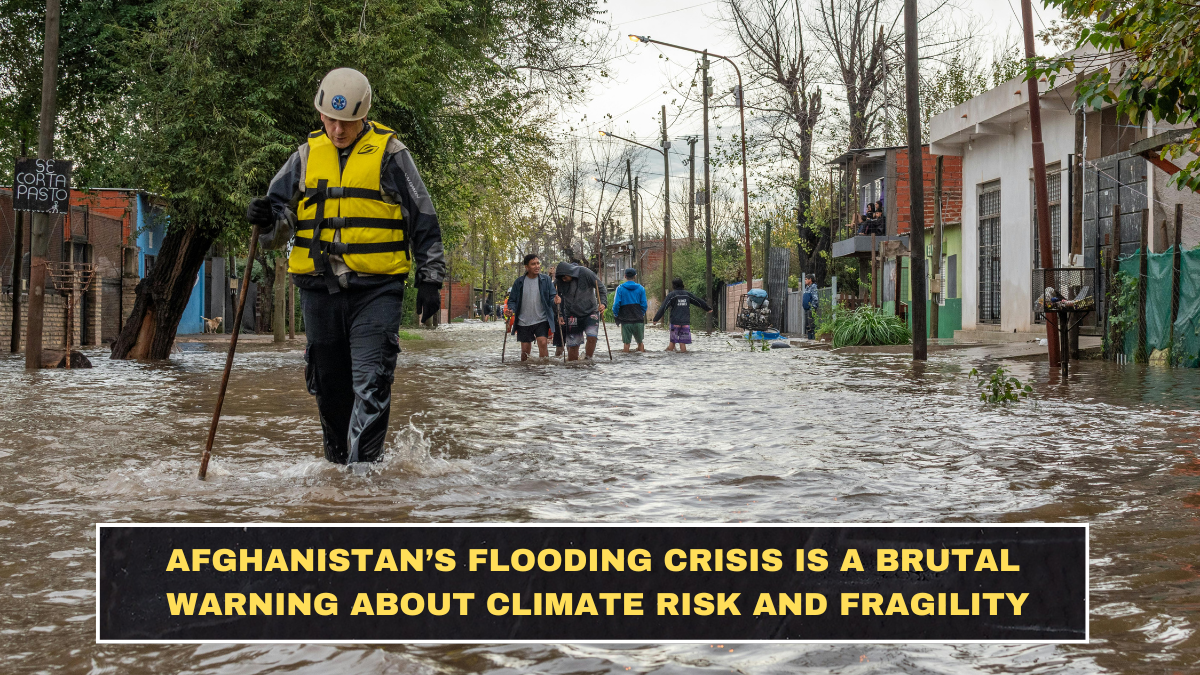
Afghanistan’s latest flooding crisis is a warning because the country is not just facing bad weather. It is facing bad weather on top of weak infrastructure, poverty, and years of conflict damage. Reuters reported on March 30 that heavy rain, flash floods, and building collapses had killed at least 28 people in Afghanistan over five days, injured 49, and damaged more than 500 homes. By March 31, Associated Press reported the Afghan death toll had risen to 42 over five days, with 66 injured, nearly every province affected, and more rain forecast.
What happened
This was not one isolated flash flood. Reuters reported that severe weather hit multiple provinces, with flooding, landslides, and collapsing buildings spreading the damage across the country. AP said authorities counted 476 homes destroyed, damaged farmland and irrigation systems, and impacts on at least 603 families, while an earlier AP update said 93 kilometers of roads had been destroyed and 1,130 families affected as the toll kept rising. In plain language, this was a national weather emergency, not a local inconvenience.
Why Afghanistan is so vulnerable
Afghanistan gets hit harder by extreme weather because the country is already fragile. AP reported that decades of conflict, weak infrastructure, deforestation, and widespread use of mud-built homes make many communities highly exposed to floods and landslides. Reuters also noted that Afghanistan is among the countries the United Nations considers most vulnerable to climate change. That combination is brutal: when rain hits harder, the country has fewer defenses and less resilience.
Why this is also a climate story
You should not oversimplify and pretend every flood is caused only by climate change. But you also should not pretend climate has nothing to do with it. AP linked the current disaster to a wider trend of increasingly severe weather, while Reuters noted Afghanistan’s high vulnerability to climate shocks. The real story is that climate extremes are becoming more dangerous in places where roads, housing, drainage, and emergency response were already too weak. That is why fragile states suffer disproportionately.
The damage is bigger than the death toll
The death count gets attention, but the deeper damage is slower and wider:
- homes destroyed or damaged across multiple provinces
- roads and irrigation systems ruined
- farmland and livestock losses hurting rural incomes
- more pressure on families already living near the edge
That matters because in Afghanistan, disaster recovery is not quick or easy. When roads break and irrigation systems fail, the problem becomes a food and livelihood problem too, not just a weather headline. This is a reasonable inference from the reported infrastructure and agricultural damage.
The key facts at a glance
| Measure | Latest reported figure | Why it matters |
|---|---|---|
| Reported deaths over five days | 42 | Shows the crisis worsened quickly |
| Reported injuries | 66 | Indicates wide human impact |
| Homes destroyed | 476 | Confirms serious housing loss |
| Families affected | 603+ | Shows household-level disruption |
| Roads damaged | 93 km | Recovery and aid access become harder |
| Provinces affected | Nearly all / at least 13 earlier | Confirms national-scale pressure |
The table makes the real point obvious: this is not a small disaster in a remote corner. It is a broad crisis spreading across already-stressed communities.
Why the danger may not fade quickly
The danger may not fade quickly because authorities are still warning of more rainfall. AP reported that Afghan disaster officials expected continued heavy rain in coming days, with people advised to stay away from rivers and flood-prone areas. In a country where infrastructure is weak and many families live in exposed rural zones, one round of flooding can easily be followed by more damage before recovery even starts.
What readers should watch next
The most useful signals now are straightforward:
- whether the official death toll keeps rising
- whether more provinces report severe damage
- whether aid agencies expand emergency shelter and food support
- whether more rainfall warnings are issued in early April
Conclusion
Afghanistan’s flooding crisis is a brutal warning because it shows what happens when extreme weather hits a country that was already weakened. The floods are deadly on their own, but the real disaster is the combination of climate stress, broken infrastructure, and widespread vulnerability. That is why the danger may not fade quickly. The rain may ease, but the fragility it exposed is much harder to fix.
FAQs
How many people have died in the Afghanistan floods in 2026?
Associated Press reported that the death toll reached 42 over five days by March 31, 2026.
Which parts of Afghanistan were affected?
AP reported that nearly every province was affected, while earlier updates said at least 13 provinces had reported serious impacts.
Why is Afghanistan so vulnerable to flooding?
Because decades of conflict, weak infrastructure, poverty, deforestation, and fragile housing make extreme weather far more destructive.
Is more bad weather expected?
Yes. Afghan authorities warned that additional rainfall was expected, which means flood risk had not ended as of March 31.