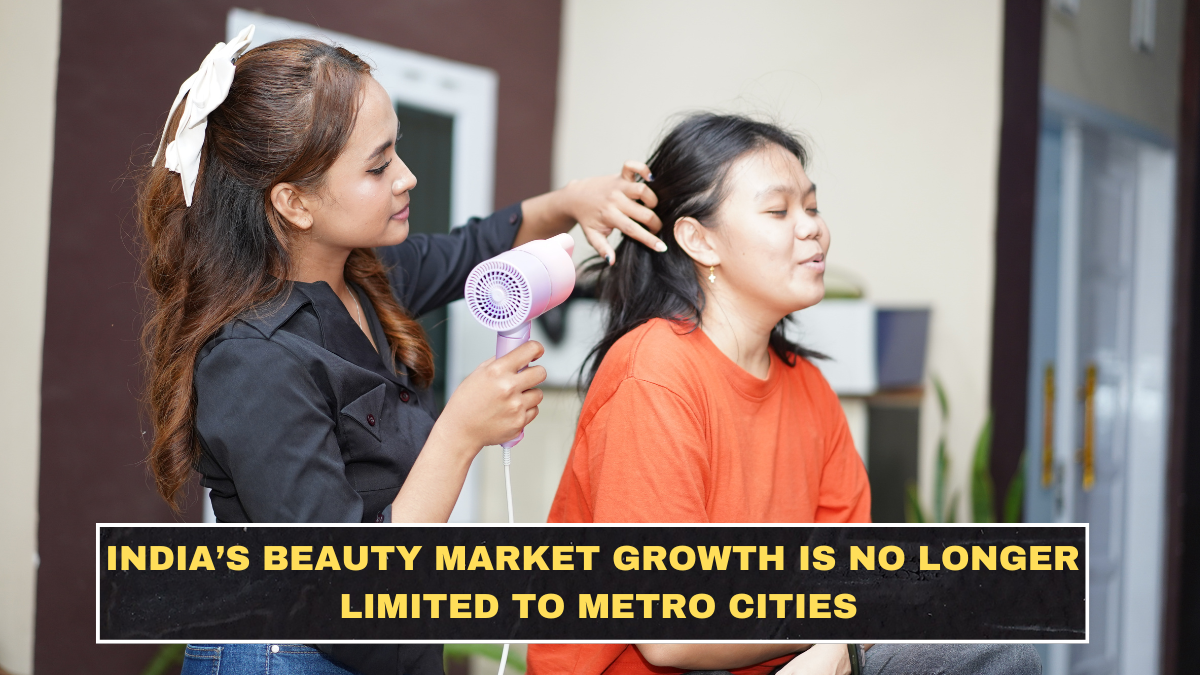
India’s beauty market is no longer being shaped only by big cities. Smaller cities are now a serious demand driver, especially in skincare, cosmetics, salon services, and premium personal care. Redseer projected India’s beauty industry could reach $34 billion by 2028, while IBEF says the wider beauty and personal care market is projected to reach about $30 billion by CY27. That scale is one reason brands are pushing harder into non-metro India.
The real shift is not just more buyers. It is a different type of buyer. Consumers in Tier 2 and Tier 3 cities are becoming more aspirational, more digitally aware, and more willing to spend on skincare and beauty that feels premium, useful, and trustworthy. Redseer’s 2024 beauty report says the premium beauty segment in India is expected to nearly double from about $1.6–1.8 billion in 2023 to roughly $3–3.2 billion by 2028, and that this growth is extending into Tier 2 and Tier 3 cities.
Why beauty demand is spreading beyond metros
The first driver is access. E-commerce and content platforms have made product discovery much easier outside major cities. IBEF notes that Tier 2 and Tier 3 cities drove strong e-commerce growth during 2025 summer sales, with Tier 3 cities alone contributing 38% of order volumes. When online access grows, beauty categories usually follow because they rely heavily on discovery, repeat buying, and visual marketing.
The second driver is aspiration. This is where many people still think too shallowly. They assume smaller-city consumers only want low-cost products. That is wrong. Redseer says beauty aspirations are now “borderless” and specifically points to high-aspiration Tier 2 and Tier 3 cities as a major growth opportunity. IBEF also reported in January 2026 that salon demand is buzzing in Tier 2 and Tier 3 cities because of rising disposable incomes and matching aspirations.
What is changing in the beauty market
| Trend | What it means |
|---|---|
| More online discovery | Buyers can compare brands, ingredients, and prices |
| Higher aspiration in smaller cities | Demand is moving beyond basic grooming |
| Premiumization | Consumers are trading up in skincare and cosmetics |
| Wider salon access | Professional beauty services are reaching non-metros |
| Social media influence | Trends spread faster across regions |
This is also part of a broader consumer shift. IBEF’s retail overview says India’s fastest consumer growth is coming from Tier II and Tier III cities, which are expected to add nearly 100 million new consumers to branded and organised retail by 2030. NielsenIQ also says India’s consumption growth is being driven not just by metros but by “Middle India,” with over 8,000 towns and 600,000 villages offering major expansion potential.
Why skincare and premium beauty are gaining attention
Skincare is benefiting because consumers are becoming more ingredient-aware and more willing to pay for products that promise visible results. Premium beauty is also growing because consumers no longer see branded skincare and cosmetics as “metro-only” purchases. Redseer’s premium beauty analysis says consumer sophistication in Tier 2 and Tier 3 cities now increasingly matches urban markets. A December 2025 brokerage note cited by Business Standard also said premium beauty in India is growing faster than the mass segment, with online penetration expected to rise from around 22% in FY25 to 35% by FY30.
The main reasons this category is expanding are simple:
- better digital access
- stronger aspiration in smaller cities
- more trust in branded products
- faster spread of beauty trends online
- improving retail and salon availability
What brands need to understand
Brands that treat non-metro buyers like low-awareness buyers are behind already. Smaller-city consumers are not automatically less informed. They are often highly value-conscious, but that does not mean they lack ambition or product curiosity. The smarter beauty brands are adjusting product ranges, pack sizes, pricing, and distribution for these markets instead of pushing a metro-only strategy.
Conclusion
India’s beauty market growth is no longer limited to metro cities because access, aspiration, and digital discovery have all widened. Smaller cities are now driving meaningful demand in skincare, salon services, and premium beauty. Any brand still treating non-metro India as a secondary beauty market is not reading the consumer shift correctly.
FAQs
1. Why is India’s beauty market growing beyond metros?
Because consumers in smaller cities now have better online access, higher aspirations, and more exposure to branded beauty products and trends.
2. Is premium beauty demand also rising in Tier 2 and Tier 3 cities?
Yes. Redseer says India’s premium beauty segment is projected to nearly double by 2028, and that the growth is extending into Tier 2 and Tier 3 markets.
3. Are salon services also growing outside metros?
Yes. IBEF reported in January 2026 that Tier 2 and Tier 3 cities are showing strong salon demand, supported by rising incomes and aspirations.
4. What is the biggest mistake brands make in these markets?
Assuming smaller-city buyers only want cheap products. The market is increasingly about affordable aspiration, trust, and better beauty choices, not just low prices.