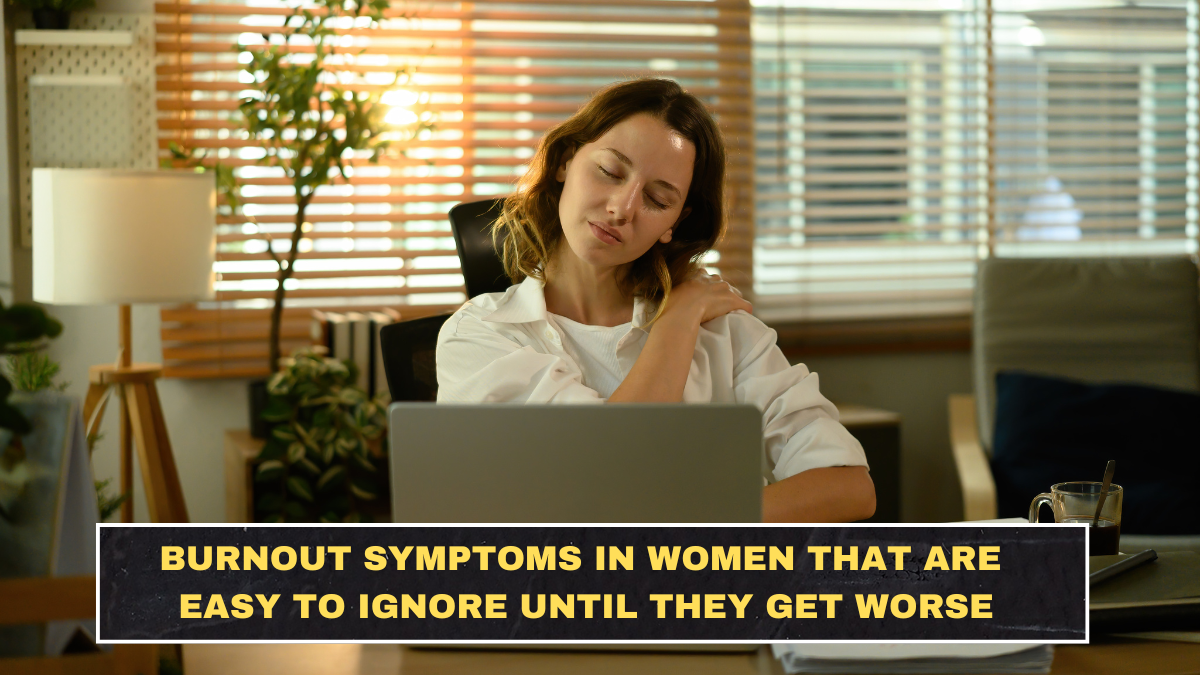
Burnout gets used for everything now, and that has made the term less useful. Officially, the World Health Organization defines burnout as an occupational phenomenon caused by chronic workplace stress that has not been successfully managed. It is marked by three things: exhaustion, growing mental distance or cynicism toward work, and reduced professional effectiveness. That matters because burnout is not just “being busy” or “having a rough week.” It is what happens when stress stops being temporary and starts changing how you function.
Why are women so likely to miss the signs?
Because many women are taught to normalize overload. Work pressure, caregiving, emotional labor, housework, and being the default person for everyone else can pile up so gradually that the damage starts to feel normal. APA has noted that women continue to report higher stress levels than men, and caregiving stress can seriously affect mental and physical health. So a lot of women do not think, “I’m burning out.” They think, “I just need to push a little harder.” That is usually the lie that keeps the problem going.
What symptoms do women often ignore first?
The first signs are usually not dramatic. They are the quiet ones people brush aside because they seem manageable. Constant fatigue is a big one. Not ordinary tiredness, but the kind where even basic tasks feel heavier than they should. Then comes irritability, loss of motivation, trouble concentrating, and the feeling that even small demands are too much. Cleveland Clinic lists fatigue, apathy, dissatisfaction, mood changes, and trouble focusing among common burnout signs, while Mayo Clinic describes burnout as feeling physically or emotionally worn out and starting to feel empty, powerless, or useless.
How does burnout show up emotionally?
Often as emotional flatness before full collapse. A woman might become snappier, more cynical, less patient, or weirdly numb. Things she used to care about begin to feel like one more burden. Cleveland Clinic points to mood changes and apathy, while Mayo Clinic’s stress guidance includes anxiety, restlessness, sadness, depression, and lack of motivation or focus as common effects of chronic stress. This is why burnout is easy to misread. It does not always look like tears. Sometimes it looks like not caring anymore.
What physical signs tend to get dismissed?
This is where people make bad assumptions. They blame age, hormones, poor sleep, or “just stress,” then move on. But chronic stress can show up physically through sleep problems, headaches, muscle tension, stomach issues, low energy, and memory problems. Mayo Clinic specifically warns that long-term stress can disrupt many body processes and raise the risk of physical and mental health problems. So if someone feels exhausted, foggy, tense, and unwell all the time, that is not something to keep romanticizing as resilience.
| Common burnout sign | How it often gets dismissed |
|---|---|
| Constant fatigue | “I just need more sleep” |
| Irritability | “I’m just in a bad mood” |
| Brain fog | “I’m distracted lately” |
| Loss of motivation | “I need to be more disciplined” |
| Cynicism or numbness | “I’m just over it” |
When does burnout start affecting life outside work?
Earlier than most people admit. Once burnout deepens, it usually spills beyond the job. Cleveland Clinic notes that overwork and chronic stress can lead to strained relationships, trouble bonding with others, sleep problems, low motivation, and constant fatigue. That is the point where burnout stops being just a work issue and starts becoming a life issue. If someone has nothing left for family, friends, exercise, or even basic joy, the problem is already bigger than a calendar full of tasks.
How can women tell the difference between stress and burnout?
Stress usually feels like too much. Burnout feels like nothing left. Stress can make someone anxious and overactivated. Burnout often leaves people drained, detached, and less effective. WHO’s definition centers on exhaustion, cynicism, and reduced efficacy, which is a useful way to separate burnout from ordinary pressure. If a woman feels emotionally spent, mentally checked out, and unable to work the way she used to, that is not just stress with a fancier name.
When should someone stop brushing it off?
When the signs are persistent, affecting sleep, work, relationships, or basic functioning. And especially when the emotional toll starts looking like anxiety, depression, or hopelessness instead of plain tiredness. Burnout may begin in the workplace, but that does not mean it should be managed with willpower alone. The longer people wait, the more they confuse damage with normal life. That is not strength. That is neglect in a socially acceptable outfit.
FAQs
Can burnout feel physical, not just emotional?
Yes. Burnout and chronic stress can show up as fatigue, sleep problems, headaches, muscle tension, stomach issues, and trouble focusing.
Is burnout the same as being stressed?
No. Stress often feels like too much pressure, while burnout is more about exhaustion, detachment, and reduced effectiveness over time.
Why do many women miss burnout early?
Because overload is often normalized through work, caregiving, and emotional labor, so symptoms get mistaken for ordinary adult life instead of a real warning sign.
What are the earliest burnout symptoms to watch?
Constant fatigue, irritability, apathy, brain fog, low motivation, and feeling emotionally flat are some of the most commonly ignored early signs.