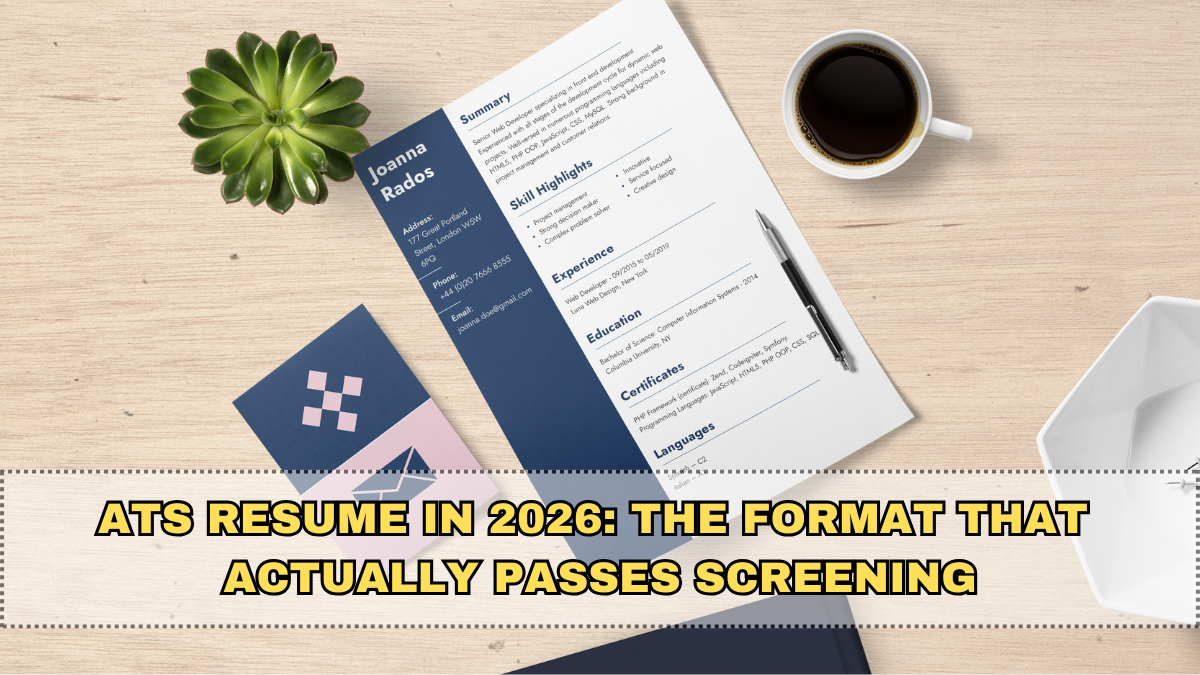
If you’re applying for jobs in 2026 and not getting callbacks, your problem is probably not skills—it’s formatting. The resume ATS 2026 reality is brutal: most resumes are rejected by software before a human ever sees them. Good candidates lose to mediocre ones simply because their resumes don’t survive automated screening.
This guide explains how ATS systems actually read resumes in 2026, what formats work (and don’t), how to use keywords without sounding fake, and how freshers and experienced candidates should structure resumes to pass screening consistently.
What ATS Really Does to Your Resume
ATS (Applicant Tracking Systems) don’t “read” resumes like humans. They parse text, map keywords, and score relevance.
What ATS checks first:
• File readability
• Section labeling
• Keyword match
• Job-title alignment
• Chronology and consistency
If parsing fails, your resume is invisible—no matter how impressive you are.
Why ATS Rejections Increased in 2026
Hiring volume hasn’t dropped. Filtering has intensified.
Reasons ATS became stricter:
• Higher applicant volume per role
• AI-assisted resume screening
• Keyword scoring thresholds
• Faster recruiter workflows
In resume ATS 2026, clarity beats creativity every time.
The Only Resume Format That Works Reliably
Forget “modern” designs. ATS prefers boring—and that’s good.
Use this structure:
• Header (Name, phone, email, city, LinkedIn)
• Professional summary
• Skills
• Work experience
• Education
• Certifications (if any)
Avoid:
• Columns
• Tables
• Text boxes
• Icons or graphics
• Unusual section titles
If ATS can’t parse it, recruiters won’t see it.
Professional Summary: How ATS Uses It
Your summary isn’t for storytelling—it’s for alignment.
Make sure it includes:
• Target job title
• 2–3 core skills
• Industry keywords
• Years of experience (if applicable)
Example mindset: mirror the job description, not your personality.
ATS Keywords: How to Use Them Without Stuffing
Keywords decide survival—but stuffing kills readability.
Smart keyword strategy:
• Pull keywords from the job description
• Use exact phrasing where natural
• Place them in skills + experience
• Repeat core skills 2–3 times max
In resume ATS 2026, relevance beats volume.
Skills Section: What ATS Wants to See
This section is heavily weighted.
Best practices:
• Use bullet points
• Separate technical and soft skills
• Avoid vague terms like “hardworking”
• Match skill names exactly
Example:
Instead of “Data handling,” use “Data analysis (Excel, SQL)”.
Work Experience: The ATS-Friendly Way to Write It
ATS prioritizes what you did over how it sounded.
Use this format:
• Job title
• Company name
• Dates (MM/YYYY format consistently)
• Bullet points with action verbs
Each bullet should include:
• Skill used
• Action taken
• Outcome achieved
This structure feeds ATS scoring and recruiter scanning.
Fresher Resume: What Changes (and What Doesn’t)
Freshers assume ATS ignores them. Wrong.
For a fresher resume:
• Replace experience with projects/internships
• Use coursework and tools explicitly
• Include certifications
• Keep format identical to experienced resumes
ATS doesn’t care where skills came from—only that they exist.
Education Section: Keep It Simple
ATS doesn’t need decoration.
Use:
• Degree name
• Institution
• Year of completion
• CGPA/percentage (if decent)
Avoid paragraphs. Avoid logos.
Certifications: Where They Actually Help
Certifications help when they:
• Match job requirements
• Are industry-recognized
• Appear in both skills and certification sections
Random certificates dilute relevance.
File Type: This Still Gets People Rejected
Yes, this still matters.
Best options:
• PDF (text-based, not scanned)
• DOCX (if explicitly requested)
Never upload:
• Image-based PDFs
• Canva exports with layers
• Zip files
If ATS can’t extract text, you’re done.
Common ATS Mistakes That Kill Resumes
These mistakes are fatal:
• Creative section titles (“My Journey”)
• Using headers/footers for key info
• Missing job titles
• Keyword dumping without context
• Inconsistent date formats
Fixing these alone improves callback rates dramatically.
How Job Portals Change ATS Behavior
Different job portals apply different parsing rules, but the fundamentals stay the same:
• Clean text
• Standard sections
• Relevant keywords
Optimise for ATS first. Humans come second.
How to Test Your Resume Before Applying
Never apply blindly.
Do this:
• Copy resume text into a plain text editor
• Check if structure survives
• Compare keywords with job description
• Ask: “Would a machine understand this?”
If yes, you’re safe.
Should You Customize Resume for Every Job?
Yes—but lightly.
What to customize:
• Job title in summary
• Skill order
• 3–4 keywords
What NOT to rewrite:
• Entire experience section
• Format
• Core structure
Efficiency matters.
What ATS Cannot Judge (Your Advantage)
ATS cannot assess:
• Work ethic
• Learning speed
• Team attitude
• Cultural fit
That’s where interviews come in. First, get past the gate.
Conclusion
The resume ATS 2026 game isn’t unfair—it’s just technical. Candidates who understand how ATS reads, scores, and filters resumes consistently outperform those chasing design trends. Clean formatting, correct keywords, and structured experience aren’t optional anymore—they’re survival tools.
Beat the software first. Then convince the human.
FAQs
What is an ATS resume in 2026?
A resume formatted and written to be correctly parsed and ranked by applicant tracking systems.
Do creative resumes work with ATS?
No. Most creative formats fail parsing and reduce visibility.
How many keywords should I include?
Only relevant ones—usually 8–15 core terms from the job description.
Is PDF or Word better for ATS?
PDF works if it’s text-based. DOCX is safest when allowed.
Can freshers pass ATS screening?
Yes, if they structure projects, skills, and keywords correctly.