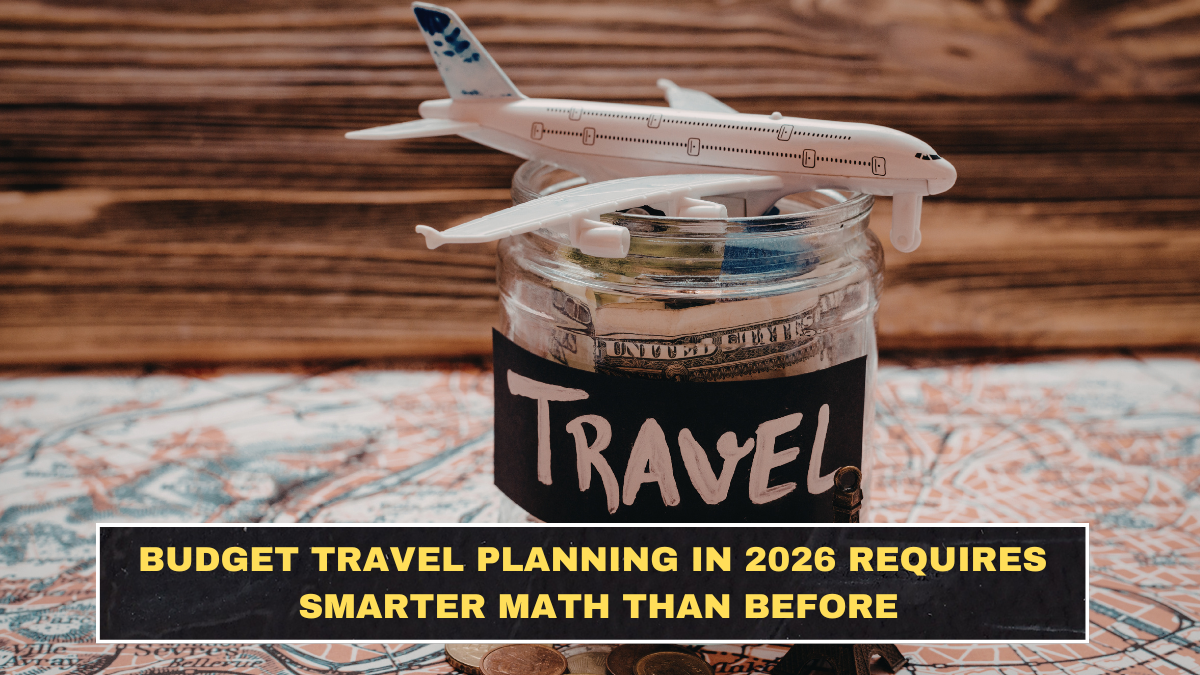
Travel budgeting in 2026 is harder because the visible price is often not the real price. Deloitte’s 2026 travel outlook says economic uncertainty is making travelers plan more cautiously, while airlines are also pushing up certain add-on costs. Reuters reported on April 7, 2026 that Delta and Southwest raised checked-bag fees as jet fuel prices surged, which is exactly the kind of change that breaks a weak trip budget.
The mistake most travelers make is budgeting only for airfare and hotel. That is amateur math. A realistic budget has to include baggage, seat selection, airport transfers, food, local transport, taxes, insurance, and hotel extras. The U.S. Department of Transportation’s fee-transparency rule discussion specifically noted that undisclosed baggage fees can make one flight more expensive overall than another option that first looked pricier.

Why is budget travel planning tougher in 2026?
Because cost pressure is hitting multiple parts of the trip at once. Deloitte says travelers are acting more frugally in 2026, while hotel pricing outlooks cited by travel-industry coverage show average daily rates still rising globally in 2026. At the same time, airlines are relying more on ancillary fees instead of keeping travel simple.
That means the old strategy of “find a cheap flight and book fast” is weaker now. A low base fare can become mediocre once bags, seats, and timing penalties are added. A budget trip in 2026 needs total-trip math, not headline-price excitement.
What should a real travel budget include?
Start with five buckets: transport, stay, daily spending, pre-trip costs, and emergency buffer. Transport includes airfare, baggage, seat fees, airport transfers, and local transit. Stay includes the room rate, taxes, and possible resort or facility fees. Daily spending covers food, mobile data, and activities. Pre-trip costs can include visas, insurance, and documents. Then add a buffer, because pretending nothing will go wrong is how cheap trips become expensive trips.
| Budget part | What to include | Why it gets missed |
|---|---|---|
| Flight total | Base fare, bags, seat choice, boarding extras | People focus only on ticket price |
| Hotel total | Room, taxes, resort fees, deposits | Fees appear later in checkout |
| Ground costs | Airport transfer, metro, taxis | Often ignored in early planning |
| Daily spend | Food, water, data, small purchases | Small costs add up fast |
| Buffer | 10% to 15% extra | Most travelers budget too tightly |
This is the part people avoid because it forces honesty. If your flight is cheap but the bag fee, seat fee, and airport transfer wipe out the difference, then it was never truly cheap. NerdWallet’s recent fee coverage and Reuters’ baggage-fee reporting both support that point.
How can travelers save without ruining the trip?
First, compare total cost, not just the fare. Second, travel lighter when possible because baggage fees are rising. Third, watch hotels for mandatory resort-style charges, which NerdWallet says can run about $15 to $50 per day. Fourth, be flexible on trip timing and hotel tier, because price pressure does not hit every date equally.
The smarter savings move in 2026 is selective compromise. Deloitte says consumers are least willing to compromise on hotel location, convenient flight itineraries, and destination choice. That means many travelers would do better cutting extras and trip length before wrecking the parts of the trip that actually matter. Cheap travel that creates exhaustion, extra transfers, and hidden fees is often false savings.
What hidden expenses catch travelers most often?
The usual traps are checked bags, seat selection, hotel resort fees, airport food, exchange-rate leakage, and overpaying for local transport. Spirit’s 2026 fee guide even notes charges around airport boarding-pass printing in some cases, which shows how far fee-based travel can go. Resort fees are another classic trap because they appear on top of the room rate instead of inside it.
That is why a solid budget should include a small daily overrun cushion plus a final emergency reserve. If you do not plan for friction, the trip will plan it for you.
What is the smartest budget travel approach in 2026?
Build the budget backwards. Decide the maximum total trip spend first. Then divide it across transport, stay, food, and local costs before booking anything. This forces discipline early and keeps you from overspending on the flight or hotel and pretending you will “figure out the rest later.” In a year with cautious travel behavior, rising add-on fees, and higher hotel costs, smarter math matters more than flashy hacks.
FAQs
Should I budget only for airfare and hotel?
No. That is the fastest way to underestimate your trip. A real budget also needs baggage, transfers, food, taxes, fees, and a buffer.
Are hidden travel fees a bigger problem in 2026?
Yes. Baggage-fee increases and ongoing hotel extra charges make hidden costs a bigger budgeting issue than many travelers expect.
How much emergency buffer should a travel budget have?
A practical travel budget should usually include about 10% to 15% extra for overruns, especially when fees and local costs are uncertain. This is an inference based on the range of common add-on charges and price variability shown in current travel coverage.
What is the biggest budget travel mistake?
Confusing a low base price with a low total price. In 2026, that mistake gets expensive fast.
Click here to know more