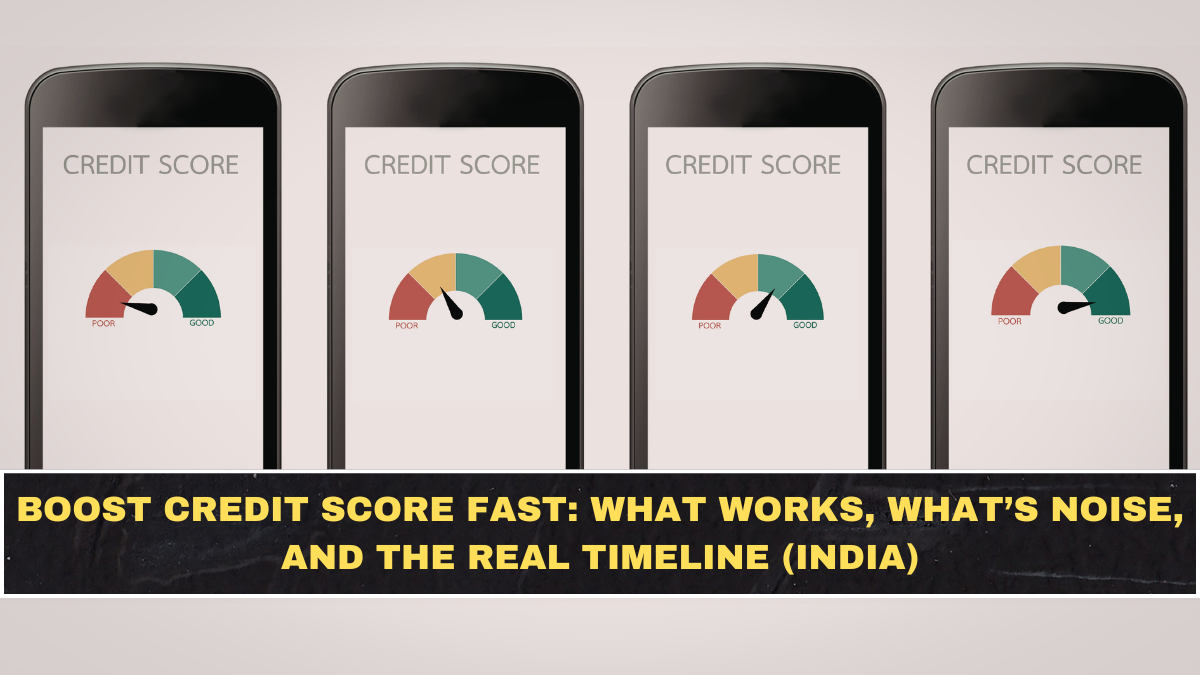
A good credit score is one of the most powerful financial assets you can have. It affects your ability to get loans, credit cards, lower interest rates, and even faster approvals. Yet most people don’t understand what actually improves their credit score and how long it takes.
Many follow random advice like taking multiple loans, closing old cards, or making unnecessary transactions — often damaging their score instead of improving it.
This guide explains what truly impacts your CIBIL score, how quickly changes reflect, and the realistic timeline to improve your credit score in India.
What Is a Credit Score and Why It Matters
A credit score is a three-digit number that represents your creditworthiness based on borrowing and repayment behavior. In India, the CIBIL score ranges from 300 to 900.
Lenders use this score to evaluate risk before approving loans or credit cards.
Generally accepted ranges include:
- 750 and above — Excellent
- 700–749 — Good
- 650–699 — Average
- Below 650 — Risky for lenders
A higher score increases approval chances and reduces borrowing costs.
What Actually Impacts Your Credit Score
Credit scores are calculated using specific factors. Understanding these helps you focus on actions that truly improve your score.
Payment History (Most Important Factor)
Your repayment record has the highest impact. Late payments, defaults, or missed EMIs significantly reduce your score.
Paying every bill and EMI on time consistently improves your score over time.
Credit Utilization Ratio
This is the percentage of your credit limit that you use. Using more than 30% of your available credit negatively affects your score.
Lower utilization signals financial discipline and improves your credit profile.
Credit Mix
Having a mix of secured loans (home loan, car loan) and unsecured loans (credit cards, personal loans) shows responsible credit behavior.
However, taking loans only to improve score is not recommended.
Length of Credit History
Older accounts improve credibility. Closing old credit cards may reduce your score by shortening your credit history.
Credit Inquiries
Frequent loan or card applications create multiple “hard inquiries,” which temporarily reduce your score.
Credit Score Improvement Timeline (What to Expect)
Credit score improvement takes time because lenders update information periodically. Here is a realistic timeline.
Within 30–45 Days
- Correction of reporting errors
- Payment of overdue amounts
- Reduction in credit utilization
- Clearing credit card dues
These actions may show quick improvement.
Within 3–6 Months
- Consistent on-time payments
- Reduced credit usage
- Stabilized credit behavior
Gradual improvement becomes visible.
6–12 Months or More
- Recovery from major defaults
- Long-term credit discipline
- Strong repayment track record
Major score improvements require sustained consistency.
Fastest Ways to Improve Credit Score
If you want quick improvement, focus on high-impact actions.
- Pay all outstanding dues immediately
- Keep credit utilization below 30%
- Correct errors in credit report
- Avoid new loan applications temporarily
- Enable automatic EMI and bill payments
These steps deliver faster results than most strategies.
How to Check and Fix Errors in Credit Report
Errors in your credit report can reduce your score unfairly. Common issues include incorrect loan status, duplicate accounts, or wrong payment records.
You can request your credit report from authorized credit bureaus and check details carefully. If you find mistakes, raise a dispute through the bureau’s official process. Corrections typically take 30–45 days.
Fixing errors is one of the fastest ways to improve your score.
Common Myths About Credit Score Improvement
Many people follow advice that does not help or even harms their credit profile.
- Taking loans just to improve score
- Closing unused credit cards immediately
- Checking your score frequently reduces it
- Using full credit limit regularly improves score
These practices either have no benefit or negatively impact your credit health.
Habits That Maintain a High Credit Score
Improving your score is only part of the process — maintaining it requires discipline.
- Always pay EMIs and bills on time
- Keep credit usage low
- Avoid unnecessary borrowing
- Monitor credit report regularly
- Maintain long credit history
Consistent financial behavior keeps your score strong.
Conclusion
Improving your credit score is not about quick tricks but consistent financial discipline. Payment history, credit utilization, and responsible borrowing are the biggest factors that influence your score.
By focusing on high-impact actions, correcting errors, and maintaining good financial habits, you can steadily improve your credit score and unlock better financial opportunities. Patience and consistency always deliver better results than shortcuts.
FAQs
How fast can a credit score improve in India?
Minor improvements can be seen within 30–45 days after correcting errors or clearing dues, while major improvements may take 6–12 months of consistent behavior.
Does checking my credit score reduce it?
No. Checking your own credit score is a soft inquiry and does not affect your score.
What is the ideal credit utilization ratio?
Keeping credit utilization below 30% of your total credit limit is generally recommended for maintaining a healthy score.
Should I close unused credit cards to improve my score?
Closing old cards may reduce your credit history length and increase utilization ratio, which can lower your score.