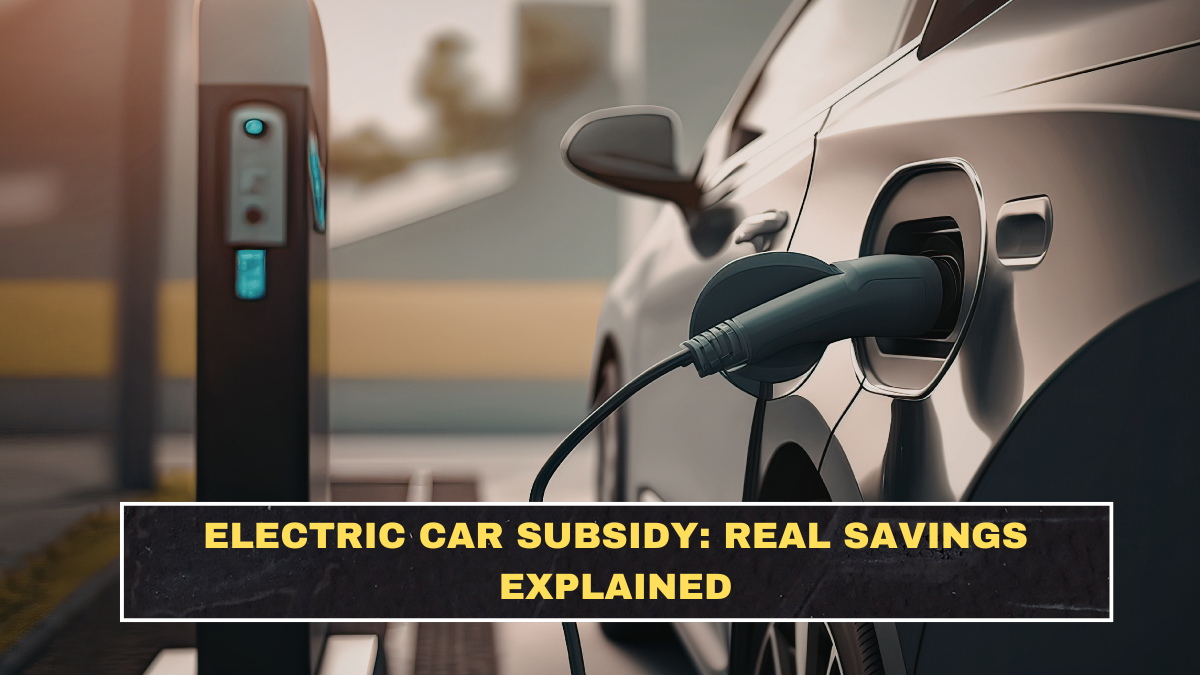
Electric cars sound like the future—but are they actually saving you money today?
You’ve probably heard, “EV pe subsidy milti hai, petrol bach jata hai.” But that’s only half the story.
The reality is more complicated. Yes, subsidies reduce the price. Yes, running cost is lower. But if you don’t understand the full picture, you might end up spending more upfront without getting real savings
 .
.
Why This Matters
Buying a car is one of the biggest financial decisions for any household. When people hear about subsidies, they assume EVs are automatically cheaper. That assumption is dangerous.
Because savings don’t depend only on subsidy—they depend on usage, electricity cost, charging setup, and long-term ownership. If you get this wrong, you’re not investing—you’re just following a trend.
Main Explanation
Let’s break this down in the simplest way possible.
Think of an EV like buying a slightly expensive machine that promises lower running cost. You pay more today, hoping to save tomorrow. The subsidy reduces your initial cost, making the purchase feel more attractive.
But here’s what actually happens. Even after subsidy, EVs often have a higher upfront price than petrol cars. The real savings come from lower running cost—electricity is cheaper than fuel. But this saving depends on how much you drive.
If you drive daily and long distances, EV can save money over time. But if your usage is low, the extra upfront cost may not justify the savings.
Table: EV vs Petrol Cost Comparison
| Factor | Electric Car | Petrol Car |
|---|---|---|
| Initial cost | Higher (subsidy reduces it) | Lower |
| Running cost | Low (electricity) | High (fuel) |
| Maintenance | Lower | Higher |
| Charging/fueling | Needs charging setup | Easily available |
| Long-term savings | Depends on usage | Predictable |
What’s Happening
India is pushing electric vehicles through subsidies and policy support to reduce fuel dependency and pollution. This has made EVs more accessible, especially in urban areas.
At the same time, charging infrastructure is still developing. While major cities have better availability, smaller towns may still face challenges. This creates a gap between “the idea of EV” and “practical usage.”
What You Should Do
Before buying an EV, calculate your monthly usage. If you drive a lot, EV can make financial sense.
Also check charging availability in your area. If charging is inconvenient, the benefits reduce quickly.
Compare total cost over 3–5 years instead of just looking at purchase price.
Common Mistakes
The biggest mistake is buying an EV only because of subsidy.
Another mistake is ignoring charging convenience. People assume it will “work somehow,” but daily inconvenience becomes frustrating.
Also, many buyers don’t calculate long-term savings properly.
What to Watch Next
Watch government policy changes and subsidy updates. These can directly impact EV pricing.
Also track improvements in charging infrastructure, which will make EVs more practical over time.
Reality Check
Here’s the blunt truth.
EVs are not automatically cheaper—they are cheaper only if your usage supports it.
If you’re buying just because it’s trending, you’re not saving money—you’re experimenting with your budget.
Conclusion
Electric car subsidies reduce the upfront cost, but real savings depend on usage, charging access, and long-term planning.
Make your decision based on numbers, not hype. Because smart buying is not about following trends—it’s about understanding value.
FAQs
Do EV subsidies reduce car price?
Yes, subsidies lower the initial cost of electric vehicles.
Are EVs cheaper than petrol cars?
They can be cheaper in the long run, depending on usage.
What is the biggest advantage of EVs?
Lower running and maintenance cost.
Are EVs practical in India?
More practical in cities, less in areas with limited charging infrastructure.
Should I buy an EV now?
Only if it fits your usage and budget.
Click here to know more.