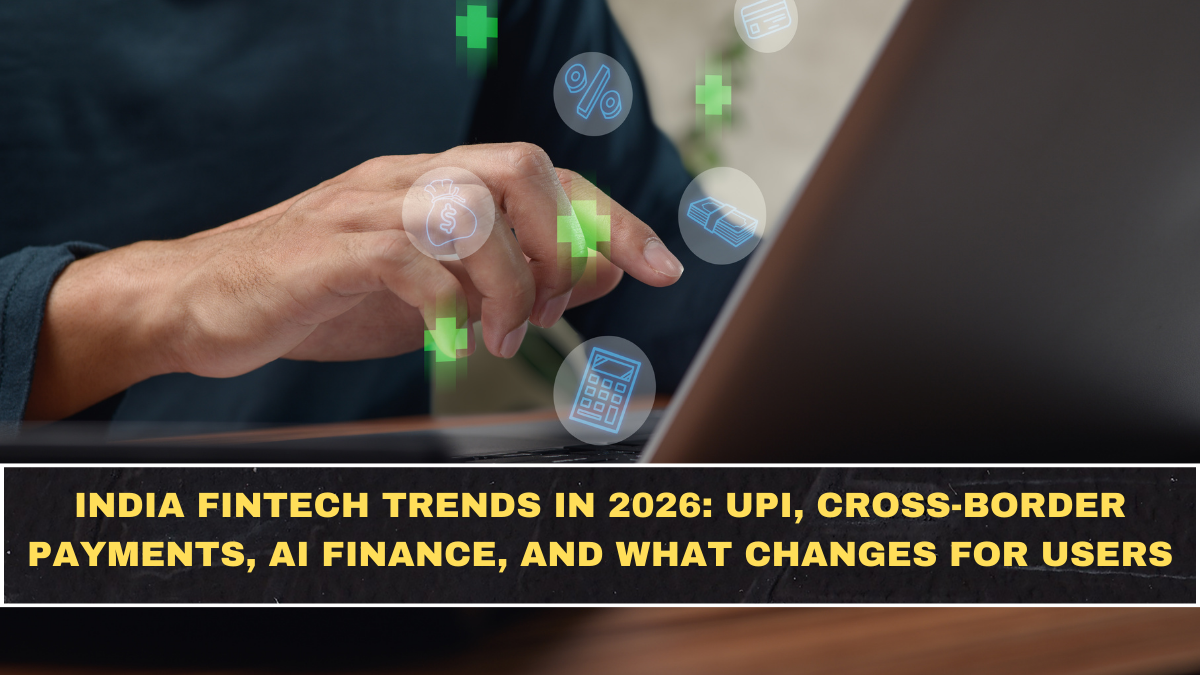
Fintech in India in 2026 feels less like disruption and more like infrastructure. The excitement of early innovation has settled into something more practical, where everyday users care less about buzzwords and more about reliability, cost, and control. Payments, credit, and money management tools are now woven into daily life so deeply that people only notice them when something breaks or changes.
What defines Indian fintech trends in 2026 is maturity. The ecosystem is no longer racing to invent new features every quarter. Instead, it is refining what already works, expanding reach to underserved users, and quietly reshaping how money moves across borders, apps, and institutions. These changes matter not because they are flashy, but because they affect almost every financial interaction.
Why Fintech in India Feels Different in 2026
Earlier fintech waves focused on speed and scale. The goal was rapid adoption, even if user understanding lagged behind. In 2026, the focus has shifted toward stability, compliance, and trust.
Users are more aware of hidden fees, data usage, and long-term consequences. This has forced fintech platforms to simplify interfaces and clarify terms rather than rely on growth hacks.
The result is a more grounded ecosystem where progress feels quieter but more durable.
UPI’s Role Beyond Daily Payments
UPI remains the backbone of Indian fintech, but its role has expanded beyond peer-to-peer transfers. In 2026, UPI is embedded across commerce, subscriptions, and service payments with near-universal acceptance.
What has changed is reliability and scale. Failed transactions are fewer, dispute handling is clearer, and integration with banking systems feels smoother.
UPI is no longer “new.” It is infrastructure, and that status has changed how users and businesses depend on it.
Cross-Border Payments Are Finally Becoming Practical
Cross-border payments have long been slow and expensive. In 2026, fintech platforms are simplifying international transfers by reducing friction and increasing transparency.
Users are seeing clearer fee breakdowns, faster settlement times, and better exchange rate visibility. This matters for freelancers, students, and small businesses that interact globally.
While cross-border fintech is still evolving, it is no longer intimidating for everyday users in 2026.
AI Finance: Where It Helps and Where It Doesn’t
AI in finance is widely discussed, but its real impact is subtle. In 2026, AI is most useful for categorization, pattern recognition, and basic forecasting.
Expense tracking, spending alerts, and risk flagging benefit from AI-driven analysis. These features help users understand behavior rather than make decisions for them.
Where AI struggles is judgment. Automated recommendations still require human oversight, especially for credit and investment decisions.
Credit Is Getting Easier, But Also More Visible
Access to credit has expanded, but so has scrutiny. Fintech lenders in 2026 assess behavior more holistically, considering transaction history and repayment patterns.
This benefits users with limited traditional credit history, but it also means mistakes are recorded more clearly. Late payments and misuse affect future access faster.
Credit feels more accessible, but also more accountable, making financial discipline increasingly important.
The Rise of Embedded Finance
Embedded finance is changing how users interact with money. Payments, lending, and insurance now appear within non-financial apps.
This reduces friction but also blurs boundaries. Users may not always realize when they are entering a financial agreement.
In 2026, awareness matters. Convenience is high, but understanding terms remains essential.
Data Privacy and Consent Are Becoming Central
As fintech platforms collect more data, privacy concerns have moved into the mainstream. Users expect transparency and control over what is shared.
Fintech apps now emphasize consent flows and data usage explanations more than before. This shift is driven by both regulation and user expectation.
In 2026, trust is built not by hiding complexity, but by explaining it clearly.
What This Means for Everyday Users
For users, fintech in 2026 feels more predictable. Payments are faster, credit is clearer, and financial tools feel less intimidating.
However, responsibility has increased. Users are expected to understand their financial behavior and its consequences more actively.
The ecosystem rewards informed participation rather than passive use.
How Small Businesses Are Adapting
Small businesses benefit from easier payments, faster settlements, and simplified compliance tools. Fintech reduces administrative burden and improves cash flow visibility.
At the same time, competition is higher. Transparent pricing and digital records expose inefficiencies quickly.
In 2026, fintech helps small businesses grow, but only if they engage thoughtfully.
Conclusion: Fintech Is Settling Into Everyday Life
Indian fintech trends in 2026 show a clear pattern of stabilization. The focus is no longer on disruption, but on dependable systems that support daily economic activity.
UPI, cross-border payments, and AI finance are evolving in ways that favor clarity over complexity. Users who understand these shifts benefit from lower friction and better control.
Fintech has stopped trying to impress. Instead, it is learning to stay invisible while doing essential work reliably.
FAQs
What is the biggest fintech trend in India in 2026?
The shift toward reliability and infrastructure-like behavior, especially around UPI and payments.
Is UPI still growing in 2026?
Yes, but growth is now about deeper integration and reliability rather than new user adoption.
Are cross-border payments easier through fintech now?
Yes, fees and timelines are clearer, making international transfers more accessible.
How is AI used in finance today?
Primarily for expense tracking, alerts, and pattern analysis rather than full decision-making.
Does fintech improve access to credit?
Yes, but it also increases visibility of repayment behavior and accountability.
What should users be careful about in 2026 fintech apps?
Understanding embedded finance features, data sharing, and long-term credit impact.