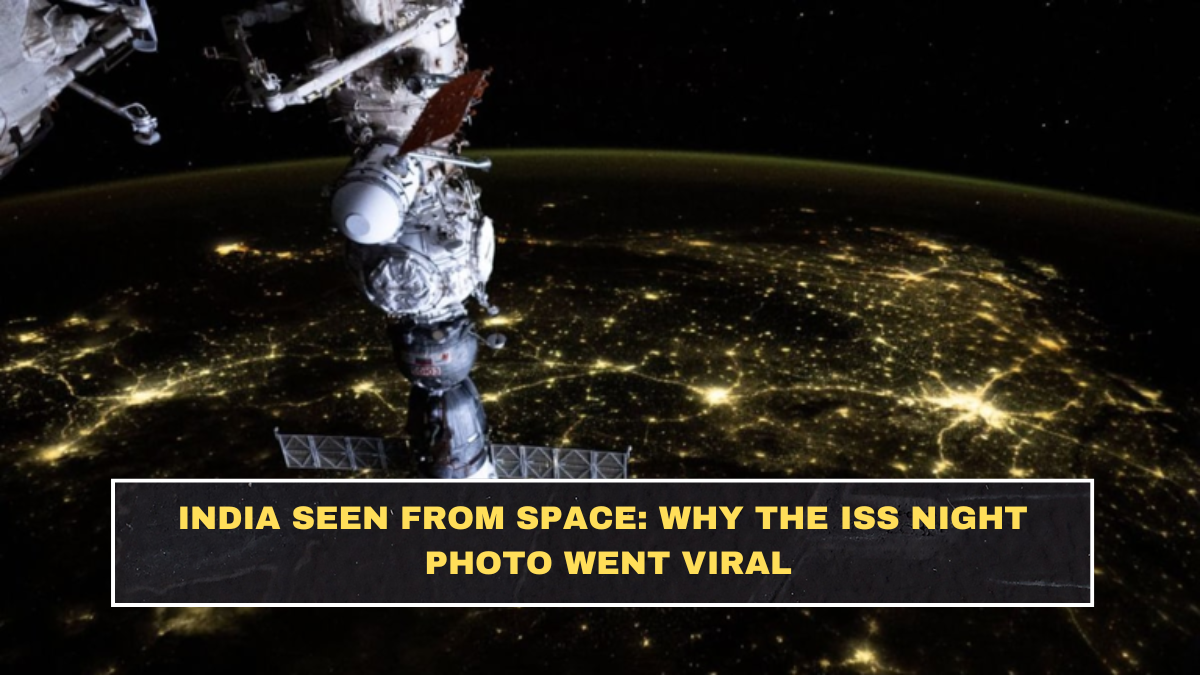
Images of India taken from space regularly attract attention online, but a recent night-view photograph captured from the International Space Station (ISS) has gone particularly viral. The image shows bright city lights across the Indian subcontinent, creating a striking contrast against darker regions such as mountain ranges and oceans.
Many people sharing the image online are curious about how such photographs are captured, what the visible light patterns represent, and why some areas appear brighter than others. Understanding the context of the photograph helps explain what viewers are actually seeing in these images from orbit.
International Space Station Overview
The International Space Station is a permanently inhabited space laboratory orbiting Earth. Astronauts aboard the ISS frequently photograph the planet using high-resolution cameras for research, education, and public outreach.
Below is a quick overview of the ISS.
| Category | Details |
|---|---|
| Name | International Space Station (ISS) |
| Orbit Altitude | ~400 km above Earth |
| Orbit Speed | ~28,000 km per hour |
| Orbit Period | About 90 minutes per orbit |
| Agencies Involved | NASA, Roscosmos, ESA, JAXA, CSA |
Because the station circles Earth multiple times each day, astronauts can capture images of different regions of the planet, including nighttime views of cities.
Why City Lights Are Visible from Space
When astronauts photograph Earth at night, the most visible features are clusters of artificial lights produced by cities and towns. These lights come from street lighting, buildings, vehicles, and other urban infrastructure.
The brightness of different areas often reflects population density and economic activity.
| Feature Visible | What It Represents |
|---|---|
| Bright clusters | Major metropolitan cities |
| Linear light patterns | Highways and transportation routes |
| Dim areas | Rural regions with fewer lights |
| Dark regions | Oceans, forests, or mountains |
This is why large cities such as Delhi, Mumbai, and Kolkata often appear as intense bright areas in satellite or space-station images.
Major Indian Regions Visible at Night
In nighttime images of India captured from orbit, certain geographical features become easy to identify because of the contrast between light and darkness.
Below is a simplified breakdown of what viewers typically notice.
| Region | Appearance from Space |
|---|---|
| Northern Plains | Dense clusters of city lights |
| Western Coast | Bright urban corridor |
| Himalayan Region | Mostly dark due to mountains |
| Arabian Sea | Dark water surface |
These patterns help viewers recognize major geographical features even without detailed maps.
How Astronauts Capture Space Photos
Astronauts aboard the International Space Station use professional digital cameras with specialized lenses to photograph Earth. These cameras are mounted near observation windows such as the Cupola module, which provides wide views of the planet.
The process of capturing nighttime images usually includes several steps.
| Step | Description |
|---|---|
| Camera Setup | Adjusting exposure for low light |
| Orbital Position | Timing the photograph over specific regions |
| Long Exposure | Capturing city lights clearly |
| Image Processing | Adjusting brightness and contrast |
Because the ISS moves at very high speeds, astronauts must carefully time their photographs to capture clear images.
Why the Image Became Viral Online
Images of Earth from space often go viral because they offer a unique perspective of familiar places. When viewers see recognizable regions such as India illuminated at night, it creates a strong visual impact.
Several factors contributed to the viral spread of the image.
| Factor | Influence |
|---|---|
| Visual contrast | Bright cities against dark land |
| Social media sharing | Rapid online distribution |
| Space exploration interest | Public fascination with space |
| Geographic recognition | Viewers identifying familiar regions |
These elements help such images gain attention across social media platforms and news websites.
Scientific Value of Nighttime Earth Images
Beyond their visual appeal, nighttime Earth images are also useful for scientific analysis. Researchers study light patterns to analyze urban growth, energy usage, and environmental changes.
Some applications of nighttime satellite imagery include:
| Research Area | Purpose |
|---|---|
| Urban development | Monitoring city expansion |
| Energy consumption | Studying electricity use patterns |
| Disaster monitoring | Identifying power outages |
| Environmental studies | Observing human activity impact |
These observations help scientists understand how human activity changes the planet over time.
Conclusion
The viral image of India seen from space offers a fascinating look at how human civilization appears from orbit. Captured by astronauts aboard the International Space Station, the photograph highlights city lights across the country while darker areas reveal natural landscapes such as mountains and oceans.
Beyond its visual beauty, the image also demonstrates how space photography contributes to scientific research and public interest in space exploration. As astronauts continue capturing Earth images from orbit, viewers can expect more remarkable perspectives of our planet.
FAQs
How was the India night-view photo taken from space?
Astronauts aboard the International Space Station capture photographs using high-resolution cameras through observation windows.
Why are cities so bright in space photos?
City lights from streets, buildings, and vehicles create bright clusters visible from orbit during nighttime photography.
How high is the International Space Station above Earth?
The ISS typically orbits Earth at an altitude of around 400 kilometers.
Why do some areas appear dark in night images?
Regions such as oceans, mountains, and rural areas have fewer artificial lights, making them appear darker in space photographs.