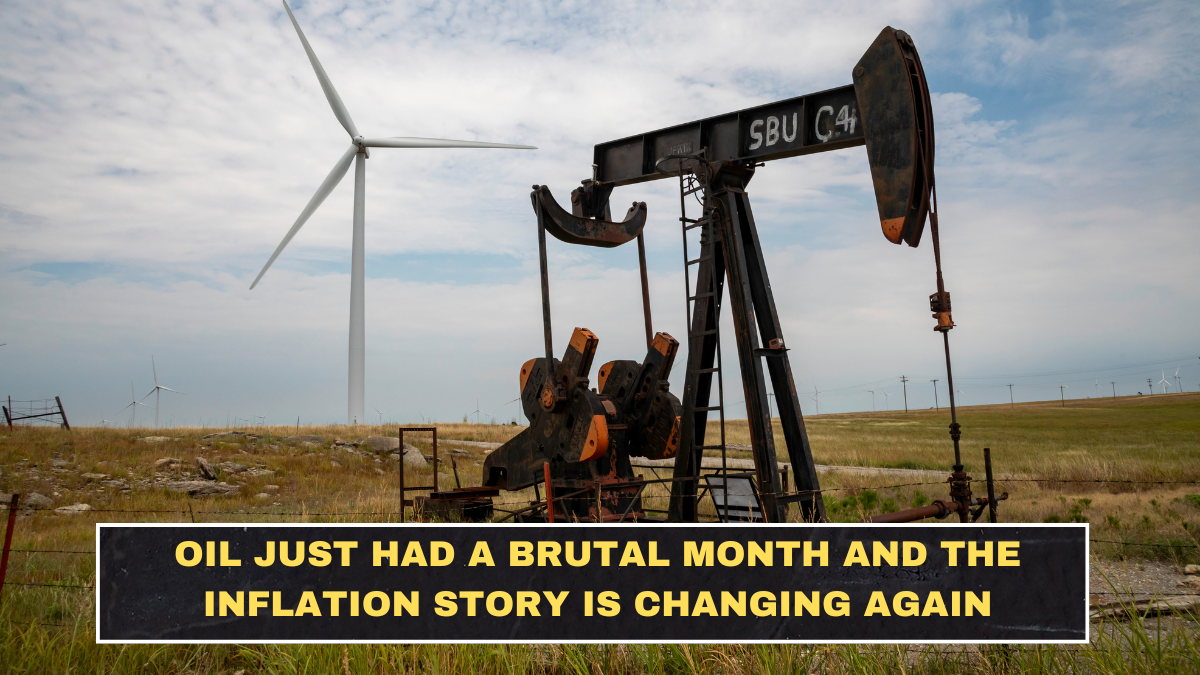
Oil ended March with one of its ugliest moves in years, and the market is not overreacting. Reuters reported that Brent crude briefly hit $113.43 a barrel on March 31, while U.S. crude hovered near $102.90 as traders weighed war escalation, partial hopes of de-escalation, and ongoing disruption around the Strait of Hormuz. The bigger point is the monthly move: Reuters said Brent jumped about 59% in March and WTI about 58%, driven by the Iran war and shipping disruption.
That kind of monthly rally changes the inflation story fast. When oil rises this violently, it stops being just an energy-market problem. It feeds into transport, freight, aviation, food supply chains, and eventually central-bank thinking. Reuters also reported that U.S. gasoline prices have already climbed above $4 a gallon, up 36% since the conflict began in late February.
What drove the March oil surge
The main driver was not generic “Middle East risk.” It was the market pricing a genuine threat to physical supply. Reuters said the Strait of Hormuz, which carries about 20% of the world’s oil and a large share of LNG, has been largely closed by Iran during the conflict. The situation worsened after a Kuwait-flagged tanker carrying around 2 million barrels was struck near Dubai, reinforcing fears that Gulf shipping is now directly exposed.
At the same time, the market is dealing with mixed signals. Reuters reported that traders briefly saw de-escalation hope after reports that President Trump was open to ending the campaign even if Hormuz stayed shut, which caused some intraday volatility. But that did not erase the supply shock. Until normal shipping resumes, the market still has to price in shortage risk.
Why inflation fears are back so hard
This is where most people get lazy. They assume inflation only becomes a problem if oil stays high for months. That is false. Markets react the moment they see a credible energy shock because they start repricing the next few quarters, not just today’s pump price. Reuters noted that the oil surge has already tightened financial conditions and raised broader economic anxiety. AP also reported Brent above $107 on Tuesday as the market continued to price conflict-linked supply risk.
Here is the simpler breakdown:
| Oil shock signal | Verified March 2026 data | Why it matters |
|---|---|---|
| Brent intraday high on March 31 | $113.43/bbl | Shows markets are pricing severe supply risk |
| WTI on March 31 | $102.90/bbl | U.S. crude also reflects the shock |
| Brent monthly gain | About 59% in March | One of the biggest monthly jumps on record |
| WTI monthly gain | About 58% in March | Confirms broad crude-market stress |
| U.S. gasoline price | Above $4/gallon | Consumer inflation is already feeling it |
Why this matters beyond oil traders
The real danger is not just higher crude. It is the return of a stagflation-style setup: weaker growth risk with stronger inflation pressure. Higher oil makes central banks less comfortable about easing, even if growth slows. That is why the March rally matters so much at the end of the month. It resets the conversation from “disinflation is coming” to “energy might break that story again.” Reuters’ market coverage made clear that crude escalation has already become a central driver of broader investor anxiety.
A few points matter most:
- The March rally was driven by real supply-route fear, not just speculation.
- Hormuz disruption matters because roughly one-fifth of global oil moves through it.
- Consumers are already seeing the pass-through in fuel prices.
- Even if diplomacy calms markets briefly, the inflation shock does not fully disappear overnight. That last point is an inference from the continuing shipping disruption and price volatility.
Conclusion
Oil had a brutal March because the market stopped treating the Iran war as a contained geopolitical story and started pricing it as a supply shock. Brent’s move above $113, the roughly 59% monthly rally, and the surge in gasoline prices all point to the same conclusion: inflation fears are back because energy risk is back. The uncomfortable truth is simple. Once oil moves like this, the whole macro story gets messier again.
FAQs
How much did Brent crude rise in March 2026?
Reuters reported that Brent crude rose about 59% in March.
What was Brent crude trading at on March 31?
Reuters said Brent briefly touched $113.43 a barrel on March 31 before turning volatile.
Why did oil rise so sharply?
The main reasons were the Iran war, disruption around the Strait of Hormuz, and direct threats to Gulf shipping, including the tanker attack near Dubai.
Why does this change the inflation outlook?
Because oil shocks quickly raise transport and fuel costs and can force markets and central banks to rethink the path for inflation and rates.