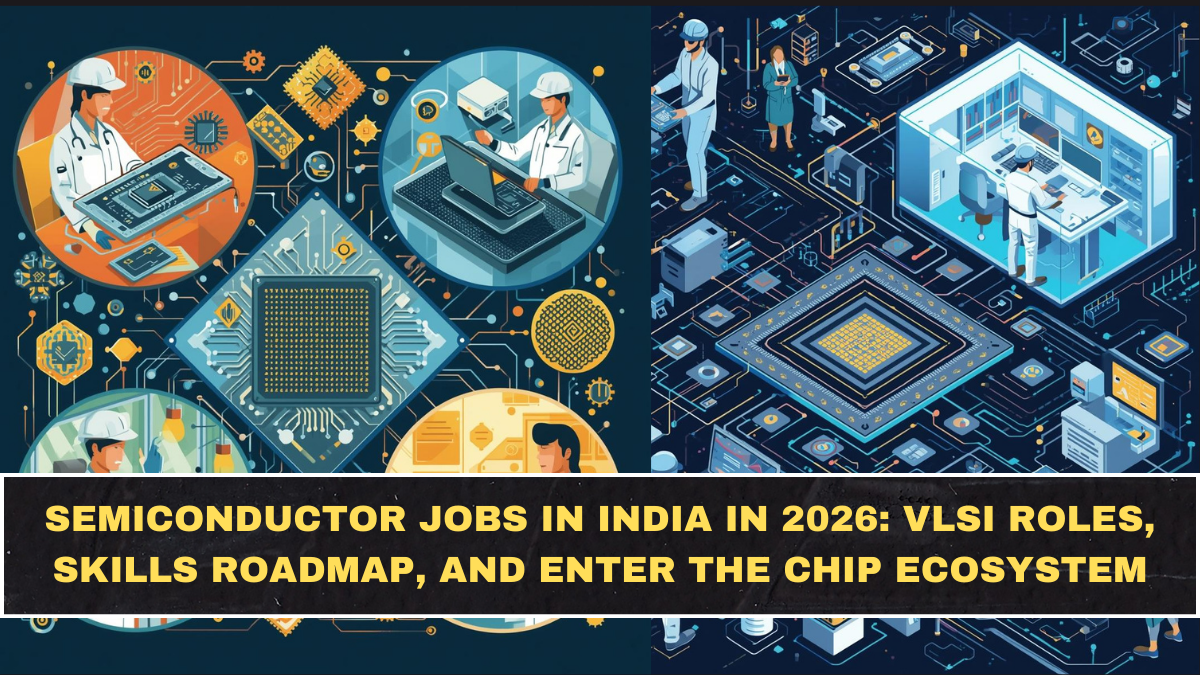
Semiconductor jobs in India in 2026 are no longer just a policy headline or a future promise. They are becoming a real, structured employment ecosystem with clear role definitions, skill expectations, and hiring pipelines. As global supply chains diversify and chip demand grows across industries, India is positioning itself as a serious contributor to design, verification, and system-level semiconductor work rather than only assembly or low-end tasks.
What makes this shift important for professionals is realism. Semiconductor careers are demanding, slow to ramp up, and highly technical, but they also offer stability and deep specialization. In 2026, candidates who understand what semiconductor jobs actually involve are far better positioned than those chasing vague “chip industry” narratives.
Why Semiconductor Hiring Is Rising in India
The rise in semiconductor hiring is driven by long-term strategic needs rather than short-term trends. Chips are now essential for automotive systems, consumer electronics, telecom infrastructure, AI hardware, and industrial automation.
India’s role has focused heavily on design, verification, and embedded systems rather than full-scale fabrication. This plays to the country’s engineering talent base and existing strengths in electronics and software.
In 2026, companies are hiring not because of announcements, but because real projects require skilled engineers who can work across the chip lifecycle.
Core Semiconductor Roles Available in 2026
Semiconductor jobs span multiple specializations. VLSI design engineers work on logic design, architecture, and RTL implementation. Verification engineers validate designs through simulation, testing, and coverage analysis.
Physical design engineers focus on layout, timing closure, and power optimization. There are also roles in DFT, embedded systems, and system validation.
In India, verification and design roles are currently the most accessible entry points for graduates and early-career engineers.
Skills Required for Semiconductor Careers
Strong fundamentals in electronics are non-negotiable. Digital logic, computer architecture, and signal basics form the foundation.
Beyond theory, engineers must learn industry-standard workflows. Understanding RTL design, simulation concepts, and verification methodologies is critical.
In 2026, hiring teams prioritize candidates who show depth in one area rather than shallow exposure to many topics.
VLSI Design Versus Verification: What to Choose
Design roles involve creating hardware descriptions and optimizing performance. These roles require precision and a strong grasp of architecture.
Verification roles focus on ensuring designs behave correctly under all conditions. They demand analytical thinking and attention to detail.
Both paths offer strong careers, but verification often provides faster entry because of higher demand and broader project exposure.
The Reality of Semiconductor Learning Curves
Semiconductor careers have a steep learning curve. Progress is measured in years, not months. Early roles often involve repetitive or narrow tasks.
This is not a flaw; it is how deep systems engineering works. Engineers gradually build context, responsibility, and trust.
In 2026, candidates who accept this reality perform better than those expecting quick progression.
How Students Can Enter the Semiconductor Ecosystem
Entry into semiconductor roles usually requires focused preparation. Academic degrees alone are not sufficient.
Hands-on projects, internships, and practical exposure to tools or workflows significantly improve employability. Clear understanding of fundamentals matters more than tool mastery at entry level.
In India, many successful engineers start in verification or embedded roles and grow steadily over time.
Portfolio and Projects That Matter
Portfolios should focus on fundamentals. Simple but well-explained projects demonstrating logic design, simulation, or verification concepts are effective.
Documentation is crucial. Hiring teams want to see reasoning, not just results.
In 2026, clarity of understanding often outweighs scale or complexity in early-career portfolios.
Where Semiconductor Jobs Are Concentrated in India
Semiconductor jobs are concentrated around established technology hubs with strong electronics ecosystems. Global companies and GCCs play a major role in hiring.
These roles often involve collaboration with international teams, making communication and documentation skills important.
The ecosystem is still maturing, which creates opportunities for early entrants willing to commit long-term.
Salary Expectations and Career Stability
Semiconductor salaries may start slower compared to software roles, but growth is steady and predictable. Specialization increases value over time.
The work is less affected by short-term market fluctuations because hardware development cycles are long.
In 2026, this stability is attractive to professionals seeking durable careers.
Who Should Consider a Semiconductor Career
Semiconductor careers suit individuals who enjoy deep technical work and long-term problem-solving. Patience and discipline are essential.
It may not suit those seeking rapid role changes or frequent domain shifts.
For engineers who value depth over speed, semiconductors offer meaningful and lasting careers.
Conclusion: Semiconductors Reward Commitment, Not Hype
Semiconductor jobs in India in 2026 represent a serious, long-term opportunity rather than a quick trend. The work is demanding, but it builds rare and valuable expertise.
For students and professionals willing to invest in fundamentals and accept gradual growth, the chip ecosystem offers stability, specialization, and global relevance. In a fast-changing tech world, semiconductors remain one of the few domains where deep skill consistently wins.
FAQs
Are semiconductor jobs really available in India in 2026?
Yes, especially in design, verification, and embedded system roles.
Is VLSI the only entry path into semiconductors?
No, verification, embedded systems, and system validation are common entry routes.
Do semiconductor roles pay well in the long run?
Yes, salaries grow steadily with specialization and experience.
Is the learning curve very steep?
Yes, semiconductor careers require patience and long-term commitment.
Can fresh graduates enter semiconductor roles?
Yes, with strong fundamentals and focused preparation.
Is semiconductor work stable compared to software jobs?
Generally yes, because hardware development cycles are longer and less volatile.