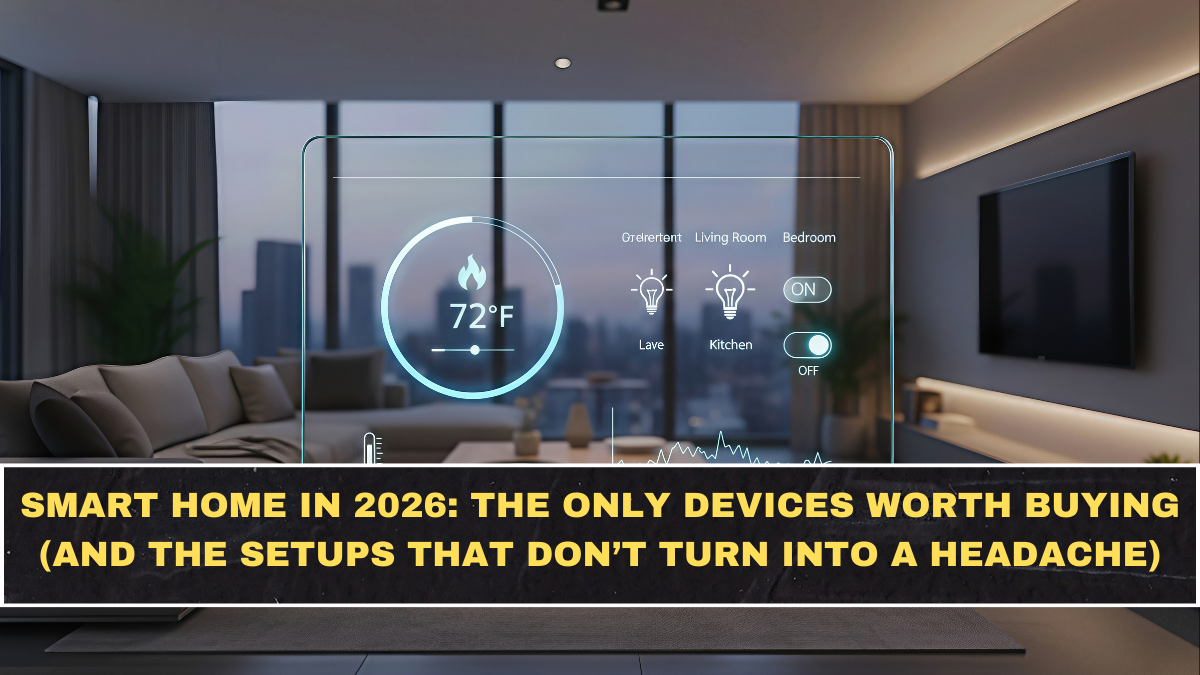
Smart homes in 2026 are no longer a luxury experiment reserved for tech enthusiasts. Devices are cheaper, widely available, and aggressively marketed as “plug and play.” Yet many households that try smart home setups end up frustrated, dealing with unreliable connections, confusing apps, and features they never actually use. The promise is comfort and efficiency, but the reality often feels like digital clutter.
What separates successful smart homes from abandoned ones is not budget or brand. It is restraint, planning, and understanding what genuinely improves daily life. In 2026, the smartest homes are not the most automated ones, but the ones that quietly reduce friction without demanding constant attention.
Why Most Smart Home Setups Fail Early
The biggest reason smart home setups fail is overreach. People buy too many devices too quickly without understanding how they interact. Each device adds another app, account, and point of failure.
Wi-Fi overload is another common issue. Entry-level routers struggle when multiple devices stay connected continuously. When lights or plugs stop responding, trust in the entire system collapses.
In 2026, smart homes fail less because of bad devices and more because of unrealistic expectations and rushed setup decisions.
What “Smart” Actually Means for Normal Homes
A smart home does not mean automation everywhere. It means selective automation where it saves time, improves safety, or reduces energy waste.
Smart homes work best when devices respond predictably. Lights that turn on reliably, plugs that schedule correctly, and sensors that alert only when needed create confidence.
In 2026, smart homes succeed when they simplify routines instead of adding new ones.
Smart Lighting That Is Actually Worth It
Smart lighting remains the most satisfying entry point. Simple smart bulbs or switches allow scheduling, dimming, and remote control without complexity.
The real value is not color effects but consistency. Lights that follow daily rhythms reduce decision fatigue and improve comfort.
In Indian homes, smart switches often make more sense than smart bulbs because they work with existing fixtures and manual control.
Smart Plugs: The Most Underrated Device
Smart plugs deliver high value with minimal setup. They allow control of existing appliances without replacing them.
Scheduling water heaters, chargers, or lamps reduces energy waste and adds convenience. Unlike complex systems, smart plugs rarely confuse users.
In 2026, smart plugs are one of the safest ways to experience automation without risk of system failure.
Security Devices That Make Sense for Homes
Smart security works best when it is simple. Door sensors, basic cameras, and motion alerts provide peace of mind without constant notifications.
Overly sensitive systems that trigger false alerts quickly become ignored. The goal is awareness, not anxiety.
In 2026, good home security setups focus on visibility and control rather than constant surveillance.
Energy-Saving Devices With Real Impact
Energy monitoring plugs and smart thermostats help households understand usage patterns. Awareness often leads to behavior change more than automation alone.
Scheduling high-load appliances reduces unnecessary consumption. Over time, these small changes add up.
In smart homes that last, energy savings come from habit reinforcement, not aggressive automation.
Why Voice Assistants Are Optional, Not Essential
Voice assistants are often the first device people buy, but they are not required for a smart home to function well.
Voice control is convenient, but it introduces privacy concerns and reliance on cloud services. Many users stop using voice commands after novelty fades.
In 2026, the best smart homes treat voice assistants as optional layers, not central control points.
The Importance of Network Stability
A stable network is the foundation of any smart home. Without it, even the best devices fail.
Simple upgrades like better routers, separate networks for smart devices, or wired connections for hubs improve reliability dramatically.
In 2026, investing in network stability often delivers more value than buying additional devices.
Common Smart Home Mistakes to Avoid
Buying incompatible ecosystems creates fragmentation. Devices that do not work together increase complexity.
Ignoring manual override is another mistake. Smart homes must still function when automation fails.
Finally, chasing every new gadget often leads to clutter rather than comfort.
Building a Smart Home That Actually Lasts
Start small and expand slowly. Add one category at a time and live with it before adding more.
Choose reliability over features. Devices that work every day beat devices that impress once.
A smart home that lasts feels boring in the best way. It fades into daily life instead of demanding attention.
Conclusion: Smart Homes Should Reduce Thinking, Not Add It
Smart home essentials in 2026 are defined by usefulness, not novelty. The best setups quietly support routines, improve comfort, and save energy without constant troubleshooting.
Homes that succeed with smart devices focus on a few reliable tools rather than full automation fantasies. They prioritize stability, simplicity, and control.
In the end, a smart home is not one that does everything automatically. It is one that makes daily life feel slightly easier, every single day.
FAQs
What is the best smart home device to start with in 2026?
Smart lighting or smart plugs are the easiest and most reliable entry points for beginners.
Do smart homes increase electricity bills?
No, when used correctly, smart scheduling and monitoring often reduce energy consumption.
Is Wi-Fi quality important for smart homes?
Yes, weak or overloaded networks are the most common cause of smart home failures.
Are voice assistants necessary for smart homes?
No, they are optional. Many smart homes function perfectly without voice control.
Can smart homes work during internet outages?
Some local controls still work, but cloud-based features may stop temporarily.
How many smart devices are too many?
When devices stop responding reliably or create confusion, it is usually a sign of over-automation.