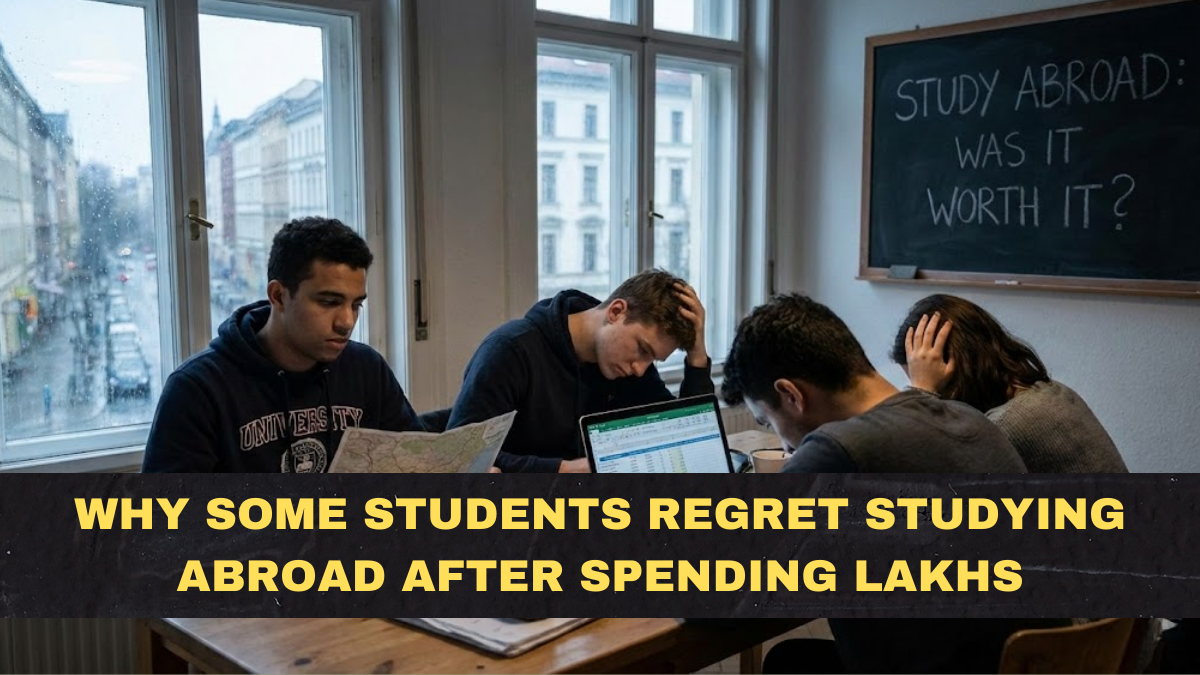
Studying abroad has long been sold as a life-changing upgrade for Indian students. Better education, global exposure, high-paying jobs, and permanent settlement dreams dominate counseling sessions and social media. By 2026, however, a quieter and less glamorous reality has begun surfacing. A growing number of students are privately admitting regret after spending lakhs on foreign education that did not deliver what they expected.
This regret is not about failure or poor effort. It stems from a mismatch between expectations and lived reality. For many, studying abroad turned out to be financially draining, emotionally isolating, and professionally uncertain in ways they were never prepared for.
Why Studying Abroad Looks Like a Guaranteed Upgrade
The idea of foreign education carries powerful symbolism. Western degrees are associated with quality, prestige, and global opportunity.
Agents and consultants reinforce this narrative by highlighting success stories while downplaying risks. Families assume higher cost equals higher return.
In 2026, this belief still drives decisions, even as outcomes have become far more uneven.
The Hidden Financial Pressure Students Underestimate
Tuition fees are only the beginning. Living costs, health insurance, transport, currency fluctuations, and emergency expenses add constant pressure.
Many students rely on loans that accumulate interest silently. Part-time work helps, but rarely covers everything.
By the time students graduate, financial stress overshadows academic achievement, turning opportunity into burden.
When Jobs Don’t Come as Promised
One of the biggest causes of study abroad regret is employment reality. Foreign job markets are competitive and increasingly restrictive.
Local employers often prefer citizens or permanent residents. International students face visa limitations and limited time windows.
In 2026, many graduates return home with foreign degrees but without foreign work experience, questioning the return on investment.
Emotional Isolation and Mental Health Struggles
Living abroad can be lonely. Cultural differences, lack of support systems, and pressure to succeed create emotional strain.
Students hesitate to share struggles with families who made sacrifices to send them abroad. Silence replaces honesty.
This isolation contributes heavily to regret, even when academics go well.
The Reality of Low-Value Degrees and Institutions
Not all foreign institutions offer premium outcomes. Some degrees carry little recognition outside limited regions.
Students realize too late that brand matters globally, not just location. A foreign degree is not automatically superior.
In 2026, many regret choosing destination over reputation.
Visa Uncertainty and Policy Shifts
Immigration policies change frequently. Pathways that existed during admission may close by graduation.
Students build plans around assumptions that no longer hold. This uncertainty adds constant anxiety.
When settlement dreams collapse, regret follows quickly.
Why Returning to India Feels Like Failure
Returning home after studying abroad carries social stigma. Students feel judged for not “making it.”
This perception intensifies regret, even when returning is the most practical decision.
In reality, the issue is narrative, not personal failure.
Who Studying Abroad Still Works For
Studying abroad works best for students with clear goals, strong institutions, and financial resilience.
Those who plan careers realistically and remain flexible adapt better to uncertainty.
In 2026, clarity matters more than aspiration alone.
What Students Should Consider Before Going Abroad
Students must evaluate long-term outcomes, not just admission letters. Job markets, visa rules, and debt impact deserve equal attention.
Talking to recent graduates provides realistic insight. Emotional readiness matters as much as academic preparedness.
Informed decisions reduce regret significantly.
Conclusion: Studying Abroad Is a Tool, Not a Promise
Studying abroad is not a mistake, but it is not a guarantee either. In 2026, the dream works only when expectations match reality.
Many students regret studying abroad not because they failed, but because they were sold an incomplete story.
Understanding the full picture helps future students choose wisely, protecting both their finances and mental health.
FAQs
Why do some students regret studying abroad in 2026?
Many students regret it due to high education loans, limited job opportunities, visa restrictions, and emotional isolation that were not clearly explained before admission.
Is studying abroad still worth it for Indian students?
It can be worth it only when the institution is strong, finances are manageable, and career goals are realistic. Blindly going abroad no longer guarantees success.
Do foreign degrees guarantee high-paying jobs?
No, foreign degrees alone do not guarantee jobs. Employers prioritize local experience, work permits, and skill relevance over just international education.
What is the biggest hidden cost of studying abroad?
Long-term debt stress combined with uncertain employment outcomes is the biggest hidden cost, often affecting students years after graduation.
Why do many students return to India after studying abroad?
Visa limitations, lack of job sponsorship, high living costs, and mental health strain force many students to return despite initial plans to settle abroad.
How can students avoid regretting a study abroad decision?
By researching job markets, visa rules, total costs, institution reputation, and speaking with recent graduates before making a decision.