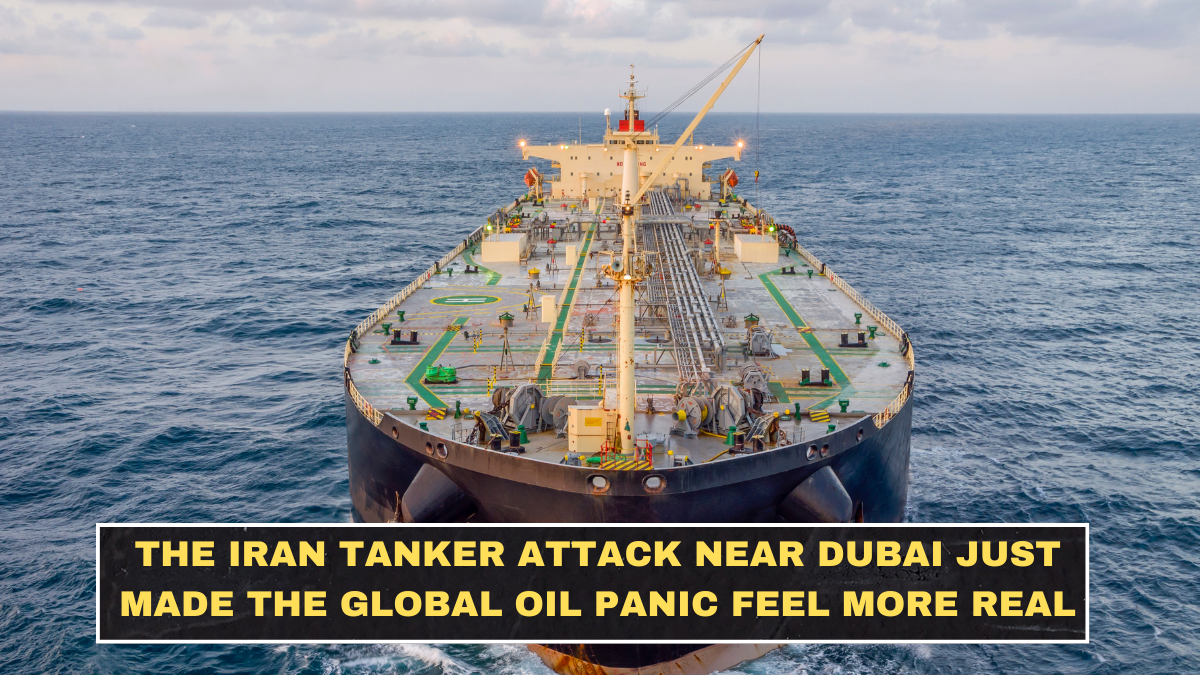
The latest Gulf escalation is not just another war headline. Reuters reported that a Kuwait-flagged supertanker carrying about 2 million barrels of crude was struck near Dubai, set on fire, and later brought under control, while the same day also brought reports of a likely U.S. strike on Isfahan. That combination matters because it hits both the physical oil trade and the broader fear that the war is moving closer to key energy infrastructure.
What happened near Dubai
The tanker incident is the part markets understand immediately. Reuters said the vessel was Kuwait-flagged, fully loaded, and attacked in Dubai waters, with no injuries reported and the fire later extinguished. A tanker carrying that much crude is not a symbolic target. It is a reminder that the Gulf’s oil lanes are now exposed to direct war risk, not just political threats.
The scale matters because Dubai sits near the Strait of Hormuz system, the chokepoint markets obsess over whenever Iran tensions rise. When a loaded crude tanker is hit this close to a major Gulf shipping hub, traders stop treating disruption risk as theoretical. They start repricing freight, insurance, and supply expectations almost immediately. That is why this attack landed so hard in markets.
Why Isfahan made the situation worse
The likely U.S. strike on Isfahan raised the stakes further because Isfahan is not a random city in this conflict. Reporting today described it as a major strategic and military site, with U.S. strikes reportedly targeting ammunition or sensitive infrastructure there. Whether the exact target was nuclear-linked or military-linked, the market takeaway is the same: this is a deeper escalation into core Iranian assets.
That matters because once both sides hit bigger targets, the risk shifts from “contained conflict” to “regional spillover.” One tanker fire near Dubai is serious enough. Add reported U.S. strikes in Isfahan and the message becomes harsher: the war is moving across multiple layers of the energy and security system at once.
Why oil markets care so much
Oil markets care because this is exactly the kind of event chain that can blow up supply expectations fast. Reuters reported that the tanker attack came amid threats around reopening the Strait of Hormuz and wider conflict pressure on energy routes. AP reported Brent crude moved above $107 a barrel as markets reacted to the growing threat to Gulf flows. Once traders think the shipping route itself is vulnerable, price moves stop being about current barrels and start being about future panic.
Here is the simpler breakdown:
| Flashpoint | Verified detail | Why markets reacted |
|---|---|---|
| Tanker near Dubai | Kuwait-flagged tanker carrying about 2 million barrels was struck and caught fire | Direct threat to oil shipping |
| Isfahan strike | Reports of a likely U.S. strike on Isfahan | Signals deeper military escalation |
| Oil price reaction | Brent reported above $107 in AP coverage | Traders are pricing supply disruption risk |
| Hormuz pressure | Conflict linked to the Strait of Hormuz reopening issue | Chokepoint fear raises global energy anxiety |
Why this feels bigger than a single incident
The real issue is not just one tanker or one strike. It is the pattern. Markets can absorb isolated military actions. What they hate is a chain reaction: shipping risk, infrastructure risk, retaliation risk, and uncertainty about whether the next hit lands on a port, refinery, terminal, or another vessel. That is when oil panic starts feeling real rather than speculative.
This is also why the story matters beyond the Middle East. Higher oil prices feed into freight, airline costs, inflation expectations, and central-bank nerves. So when people ask why a tanker fire near Dubai matters globally, the answer is simple: because energy shocks do not stay local for long.
Conclusion
The tanker attack near Dubai made the global oil panic feel more real because it turned war risk into visible shipping damage. Add the likely U.S. strike on Isfahan, and the crisis no longer looks like a narrow exchange. It looks like a conflict spreading across the infrastructure and routes that global energy markets depend on. That is why traders, governments, and central banks are watching this so closely now.
FAQs
What happened near Dubai?
A Kuwait-flagged crude tanker carrying about 2 million barrels was struck in Dubai waters, caught fire, and was later stabilized with no injuries reported.
Why is Isfahan important in this story?
Because reports of a likely U.S. strike on Isfahan suggest escalation against major Iranian military or strategic infrastructure, not just peripheral targets.
Why did oil markets react so strongly?
Because the attack increased fears about Gulf shipping disruption and the wider security of energy routes tied to the Strait of Hormuz.
Does one tanker attack really matter globally?
Yes. When a loaded oil tanker is hit near Dubai during a wider regional war, markets start repricing shipping risk, oil supply risk, and inflation risk all at once.