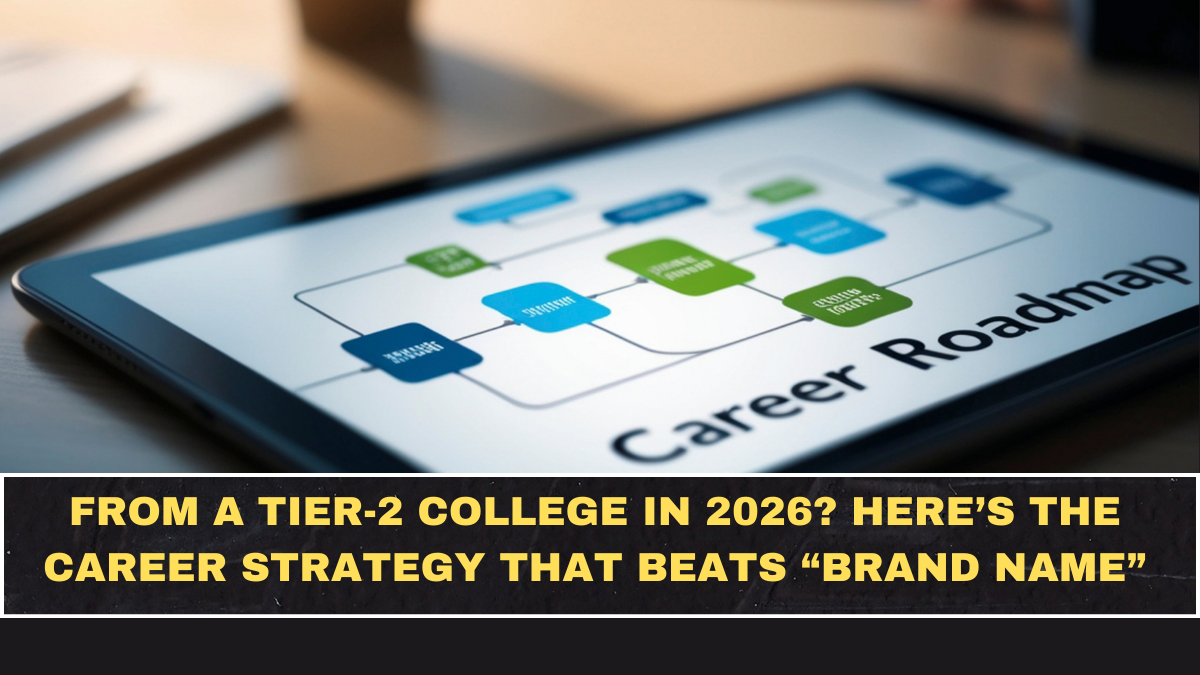
In 2026, graduating from a Tier-2 college in India often comes with a quiet disadvantage that students don’t like to admit. Placement banners, alumni talks, and motivational speeches promise opportunity, but the reality is harsher. Fewer companies visit campus, salary bands are capped, and many capable students are filtered out before interviews even begin. This creates a dangerous belief that success depends purely on college brand.
That belief is wrong, but it is not harmless. Students who wait for campus placements alone usually lose time and confidence. The truth is that Tier-2 college students need a different career strategy, not more hope. In 2026, off-campus hiring has become the real equalizer, but only for those who prepare intentionally and early.
Why College Brand Matters Less Than It Used To
Recruiters still use college brand as a shortcut, but it is no longer a final filter. Companies hiring at scale care about output, reliability, and ramp-up speed more than pedigree.
With remote work, distributed teams, and project-based hiring, proof has become more valuable than reputation. A strong profile reduces brand bias dramatically.
In 2026, college brand influences first impressions, but sustained advantage comes from demonstrated skill.
The Real Problem Tier-2 Students Face
The biggest challenge is not lack of intelligence. It is lack of exposure. Many Tier-2 students graduate without industry-aligned projects, interview practice, or clarity about job roles.
This creates a vicious cycle. Rejections lower confidence, which leads to generic applications and even more rejection.
Breaking this cycle requires shifting focus from placement dependency to profile ownership.
Why Off-Campus Hiring Is the Main Battlefield in 2026
Campus hiring is limited by company budgets and convenience. Off-campus hiring, on the other hand, is driven by need.
Most real entry-level roles are filled through job portals, referrals, internships, and project-based evaluations. This is where Tier-2 students can compete on equal ground.
In 2026, off-campus strategy is not a backup plan. It is the main plan.
Building a Role-Focused Profile Instead of a Generic Resume
Generic resumes kill Tier-2 candidates fastest. Recruiters need clarity, not versatility.
Students must choose one or two target roles and build skills, projects, and narratives around them. A focused profile feels safer to hire.
In 2026, depth in one direction beats shallow exposure across many.
Projects That Compensate for College Brand
Projects are the strongest equalizer. They show how you think, not where you studied.
Tier-2 students should build projects that mirror real job tasks, not academic exercises. These projects must solve practical problems and be explainable end-to-end.
One strong project with clear logic can outperform a top-college resume with weak substance.
How to Use Internships and Apprenticeships Strategically
Internships are not just learning experiences. They are credibility accelerators.
Even short or low-paid internships provide proof of workplace exposure. They reduce employer risk and increase callback rates.
In 2026, experience matters more than stipend when starting out.
Referrals: How Tier-2 Students Should Actually Use Them
Referrals are misunderstood. They are not favors; they are risk signals.
A referral works when your profile is already strong. Cold-asking without preparation usually fails.
Tier-2 students must earn referrals through visible work, not messages alone.
Skill Stacking: The Tier-2 Advantage
Tier-2 students often have more flexibility to build hybrid skill sets. Combining domain knowledge with technical or analytical skills increases uniqueness.
For example, pairing business understanding with data skills or design with marketing logic creates rare profiles.
In 2026, hybrid profiles are harder to ignore than generic specialists.
The Timeline Most Students Miss
Waiting until final year is too late. The best outcomes come from starting in second or early third year.
This timeline allows room for mistakes, learning, and refinement. Panic preparation rarely works.
In 2026, early clarity beats last-minute intensity.
Mental Barriers That Hold Tier-2 Students Back
The biggest enemy is internalized inferiority. Constant comparison with Tier-1 peers creates paralysis.
Confidence built through action is the only cure. Projects, interviews, and rejections all contribute.
Tier-2 students who stop self-rejecting outperform those who overthink.
Conclusion: Brand Opens Doors, Proof Keeps Them Open
Being from a Tier-2 college in 2026 is not a disadvantage unless you treat it like one. The market rewards readiness, not labels.
Students who build focused profiles, strong projects, and off-campus strategies consistently break past brand ceilings. The path is harder, but it is also more controllable.
Your college name may decide your first glance. Your work decides everything after that.
FAQs
Can Tier-2 college students get top jobs in 2026?
Yes, with strong skills, projects, and off-campus strategy, many do.
Is campus placement enough for Tier-2 colleges?
Usually no. Off-campus preparation is essential.
When should Tier-2 students start career prep?
Ideally by second year or early third year.
Do recruiters discriminate based on college name?
Sometimes initially, but strong profiles quickly reduce this bias.
What matters more than college brand?
Projects, practical skills, and the ability to explain your work clearly.
Is it harder than Tier-1 students’ path?
Yes, but it is also more flexible and skill-driven when done right.