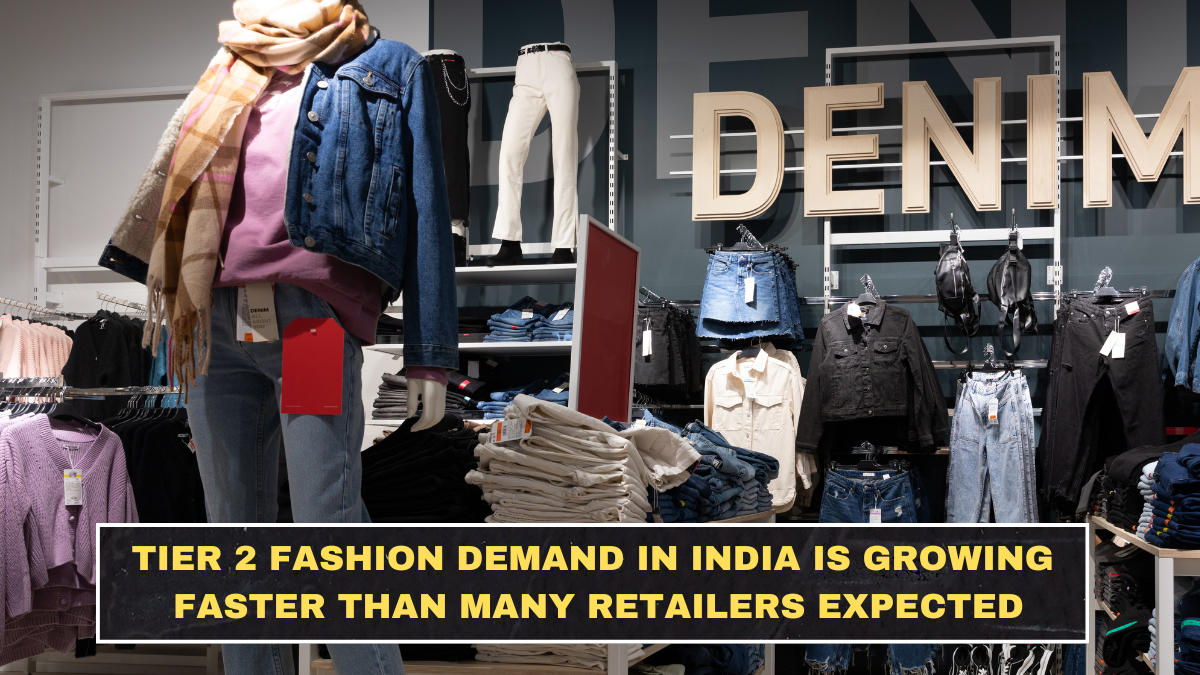
India’s fashion growth story is no longer mainly about metros. Smaller cities are becoming a serious engine for apparel demand, helped by rising incomes, digital access, organized retail expansion, and stronger brand awareness. Industry data now points in the same direction: India’s apparel retail market was estimated at about Rs. 9.3 lakh crore in FY25 and is projected to reach nearly Rs. 16 lakh crore by FY30, while multiple market reports and retail commentary say demand is increasingly shifting toward Tier 2 and Tier 3 cities.
A lot of retailers were late to accept this shift because they kept thinking metros would remain the main fashion-growth centers. That assumption is getting weaker. Bain reported in 2025 that e-retail penetration has expanded from Tier 2 into Tier 3 and smaller cities, and almost 60% of new online customers since 2020 came from Tier 3 and smaller cities. That matters because fashion is one of the categories that usually scales early when aspirational consumption rises.
Why Tier 2 cities are becoming a bigger fashion market
The biggest driver is aspiration with affordability. Consumers in smaller cities do not want “cheap” products as much as they want better-looking products at reachable prices. That is why value fashion, branded basics, festivewear, footwear, and beauty-linked fashion categories are all gaining attention beyond metros. Business Standard reported that Indian retail is entering 2026 with demand increasingly shifting to Tier II and III cities, while brokerage and sector reports also link growth in Tier 2+ markets with organized retail and brandification.
Online access is making this shift faster. Redseer said 59% of online fashion GMV came from T2+ cities over the last three years ending August 2025, showing fashion is spreading beyond metros faster than many other online retail segments. That is not a cosmetic change. It means demand is now broad-based, not just dependent on top urban markets.
What is pushing fashion growth in smaller cities
| Growth factor | What it changes |
|---|---|
| Better internet and app access | Makes fashion discovery easier |
| Organized retail expansion | Builds trust in branded purchases |
| Affordable branded options | Lets aspirational buyers trade up |
| Social media influence | Increases style awareness faster |
| Festive and occasion buying | Lifts repeat apparel demand |
This is also visible in wider digital retail behavior. IBEF noted that two-thirds of shoppers in India’s e-lifestyle market live on the outskirts of the top 50 cities, highlighting the growth potential of Tier 2 and Tier 3 locations. During festive commerce in 2025, non-metro India dominated order volumes, with Tier 2 and Tier 3 cities together making up a very large share of total orders.
What retailers are getting right and wrong
The smart retailers are not treating Tier 2 demand as a smaller copy of metro demand. They are adjusting price points, assortment, store formats, and online merchandising. Value-led players and aspirational brands both have room here, but only if they stop assuming that shoppers in smaller cities are less style-aware. That view is outdated and lazy. Reports on India’s retail and apparel growth increasingly connect future expansion with digitization, organized channels, and stronger demand in Tier 2 and beyond.
The weak players usually make one of two mistakes:
- they send outdated or low-demand inventory to smaller cities
- they underestimate local festive, wedding, and occasion-driven demand
- they focus only on discounts instead of fit, design, and trust
- they ignore omnichannel behavior, where buyers browse online and purchase where convenient
That is foolish because smaller-city consumers are often highly value-conscious, not low-aspiration. Those are not the same thing.
Why this matters in 2026
This trend matters because it changes where future apparel growth will come from. If India’s apparel market is expected to keep expanding strongly through FY30, retailers will not hit those numbers through metro saturation alone. They need repeat demand from emerging city clusters, where fashion access, affordability, and brand exposure are all improving together.
Conclusion
Tier 2 fashion demand in India is not a side story anymore. It is one of the clearest reasons apparel growth still looks strong. Smaller cities are buying more fashion because aspiration is rising, online access is wider, and organized retail is making branded shopping easier. Retailers who still think fashion growth belongs mainly to metros are reading an old map and calling it strategy.
FAQs
1. Why is fashion demand rising in Tier 2 cities?
Because incomes, internet access, retail availability, and brand awareness are all rising together. Consumers in these cities are becoming more aspirational but still price-sensitive, which is why value fashion is doing well.
2. Is online shopping a major reason behind this trend?
Yes. Bain and Redseer both show that non-metro markets are contributing a growing share of new online customers and online fashion GMV, which is accelerating fashion demand beyond metros.
3. Are Tier 2 shoppers only buying low-cost fashion?
No. That is a shallow assumption. Many shoppers want branded, stylish, and better-quality options, but at sensible prices. The demand is not only for cheap clothing; it is for affordable aspiration.
4. Why should brands care about this now?
Because future apparel growth in India will depend heavily on markets beyond metros. If brands miss Tier 2 and Tier 3 demand, they are likely to miss a large part of the next expansion cycle.
Click here to know more