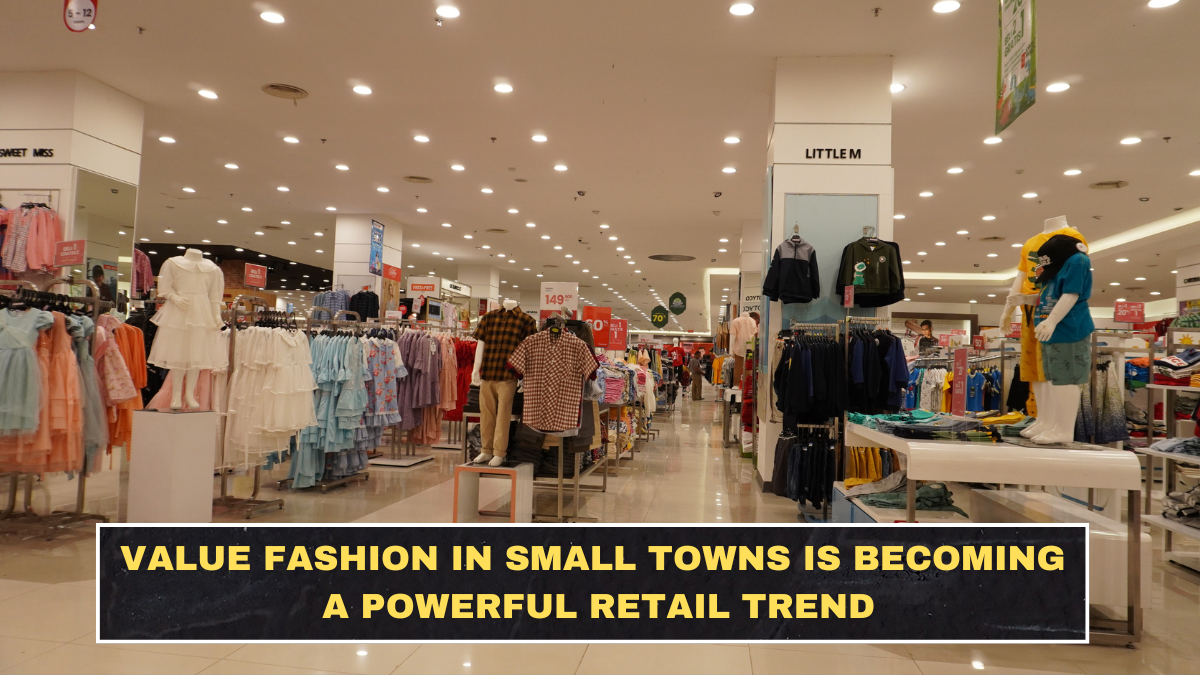
Value fashion is growing in India’s small towns because shoppers want more than low prices. They want better style, branded trust, and wider choice without paying metro-level premiums. That shift is becoming too large for retailers to ignore. India’s apparel retail market was estimated at about Rs. 9.3 lakh crore in FY25 and is projected to reach nearly Rs. 16 lakh crore by FY30, supported by rising incomes, digitisation, and demand across categories.
The lazy assumption is that small-town buyers only chase the cheapest product. That is outdated. Redseer’s 2025 analysis on value-first retail says Indian consumers are becoming more aspirational while still staying highly price-conscious, which is exactly why value-led retail models are gaining strength. In plain words, people want fashion that looks better than its price tag.
Why small towns are driving this trend
The biggest reason is access. Online retail and organised retail have made fashion discovery easier in places where branded choice used to be limited. Bain’s 2025 report says India’s e-retail market is around $60 billion GMV and that almost 60% of new online shoppers added since 2020 came from Tier 3 and smaller cities. That is not a side note. It means future fashion growth is increasingly coming from outside major metros.
Demand is also becoming more visible in real sales events. Business Standard reported that Myntra’s June 2025 sale saw more than half of orders come from non-metro areas. That matters because fashion is one of the clearest categories where aspiration shows up quickly once access improves.
What “value fashion” really means now
Value fashion is not just low-cost clothing piled into discount bins. It now means a mix of affordability, acceptable quality, trend awareness, and brand familiarity. That is why small-town demand is spreading across everyday wear, festivewear, footwear, and accessories rather than staying limited to basic utility purchases. Redseer says India’s apparel market could reach $130–150 billion by 2030, with branded apparel growing at more than twice the pace of unbranded.
| Trend driver | Why it matters in small towns |
|---|---|
| Better online access | More brands and price comparison |
| Price-conscious aspiration | Shoppers want style without overspending |
| Brand trust | Organised labels reduce purchase risk |
| Festive and occasion buying | Apparel demand rises beyond daily basics |
| Social media influence | Trends spread faster beyond metros |
What retailers are learning
Retailers that treat small-town India like a dumping ground for old inventory are missing the point. The stronger strategy is to offer fresh designs, sensible pricing, regional relevance, and easy online-offline access. Business Standard reported in late 2025 that demand was increasingly shifting to Tier II and III cities as India entered 2026, which matches what broader retail and apparel reports are already showing.
This also explains why value-first models are winning. They match the real mindset of these buyers:
- style matters
- price still matters
- trust matters even more
- convenience is now expected, not optional
- festive and family purchases still drive strong volumes
That combination is powerful. A shopper who once bought only occasional clothing from a local unbranded market can now browse branded options online, compare prices, wait for sales, and purchase with more confidence. That changes the market permanently.
Why this trend matters in 2026
This is not just a fashion story. It is a sign of how Indian consumption is widening geographically. If apparel retail is expected to keep growing strongly through FY30, metros alone will not deliver that expansion. Smaller cities and towns will carry much of the next demand wave. The brands that understand affordable aspiration will grow. The ones still stuck in metro-first thinking will lose relevance slowly and then all at once.
Conclusion
Value fashion in small towns is becoming a major retail trend because the buyer has changed. Consumers want affordable products, but they also want style, quality, and choice. Better digital access and stronger brand exposure are accelerating that shift. Retailers who still think small-town demand is only about cheap products are not reading the market clearly.
FAQs
1. Why is value fashion growing in small towns?
Because buyers in smaller cities want fashionable and reliable products at practical prices. Rising digital access and wider brand availability are making those purchases easier.
2. Does value fashion only mean low-price clothing?
No. That is a weak definition. It usually means a balance of affordability, style, quality, and trust rather than the absolute cheapest option.
3. Are non-metro markets really important for fashion growth?
Yes. Recent data points from Bain and Myntra’s 2025 sale performance both show that non-metro consumers are becoming a major part of India’s online fashion demand.
4. What should brands do differently for small towns?
They need the basics done right: better assortment, sensible price points, fresh inventory, omnichannel convenience, and stronger trust-building. Sending weak stock and assuming low expectations is a bad strategy.