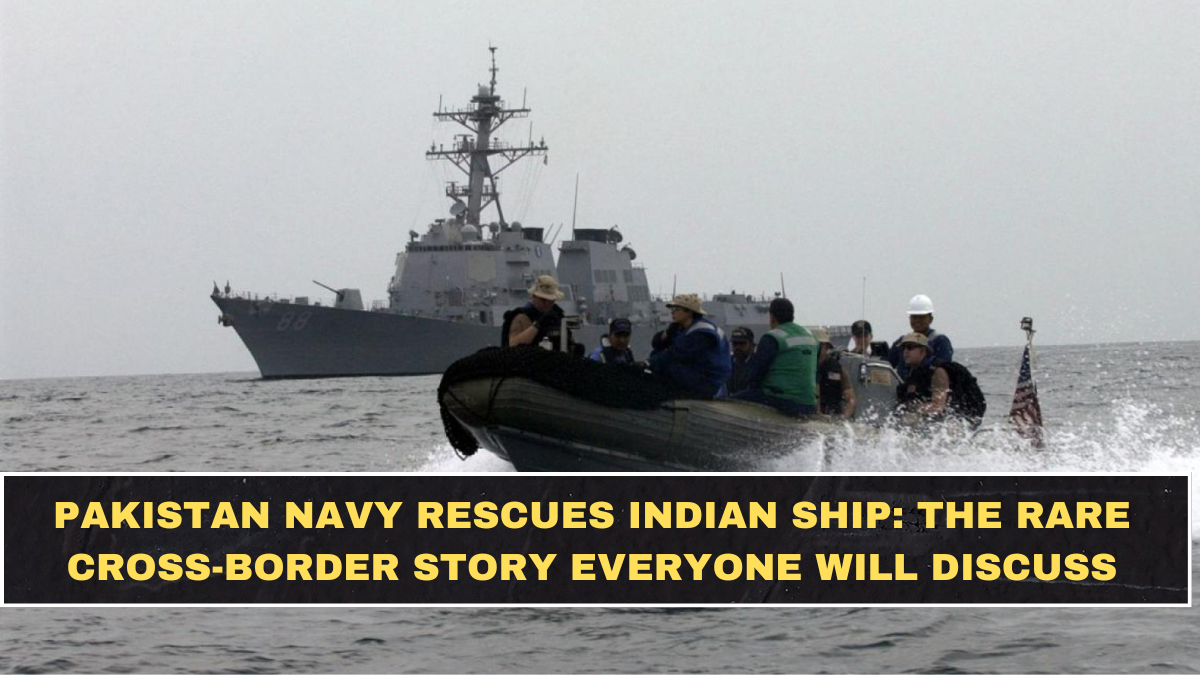
Pakistan Navy assisted an Indian vessel stranded in the Arabian Sea after it sent a distress call following a serious technical failure. Reuters reported that the vessel, MV Gautam, was travelling from Oman to India when it became stuck at sea with seven crew members on board. The crew included six Indian nationals and one Indonesian national, making the rescue both humanitarian and diplomatically sensitive.
The story is going viral because India-Pakistan headlines are usually dominated by tension, border disputes and political hostility. This incident offers a rare opposite image: a Pakistani naval unit responding to an Indian vessel’s emergency call and providing food, medical aid and technical support. That does not erase political realities, but it does show that maritime safety sometimes cuts through national rivalry.
What Actually Happened In The Arabian Sea?
According to reports, MV Gautam suffered a critical technical fault while en route from Oman to India. After the distress alert was received, Pakistani naval forces deployed assistance and helped stabilise the situation. NDTV reported that PMSS Kashmir was sent for rescue and emergency support operations after the Indian ship was left stranded at sea.
| Key Detail | Reported Information |
|---|---|
| Vessel Name | MV Gautam |
| Route | Oman to India |
| Problem | Major technical failure |
| Crew On Board | Seven crew members |
| Crew Nationality | Six Indians, one Indonesian |
| Help Provided | Food, medical aid and technical support |
| Rescue Force | Pakistan Navy / Pakistan Maritime Security Agency |
The most important point is that this was not a political photo-op first; it was an emergency response. At sea, delays can become dangerous quickly because technical failure can leave a vessel exposed to weather, navigation risk and crew distress. The fact that assistance arrived matters more than which flag the stranded ship carried.
Why Is This Story So Unusual?
This story feels unusual because India and Pakistan rarely make positive headlines together. Their public relationship is shaped by conflict, suspicion and constant political messaging. So when one country’s naval forces help the other country’s crew in open waters, it naturally attracts attention and discussion.
But people should not over-romanticise it either. Maritime law and naval ethics place strong importance on helping vessels in distress, regardless of nationality. The real story is not that rivalry disappeared; the real story is that humanitarian duty worked despite rivalry. That is why this incident feels rare but also normal in the best possible way.
Why Does Maritime Rescue Matter So Much?
At sea, politics cannot be allowed to delay emergency response. A stranded vessel can face worsening mechanical failure, lack of supplies, medical distress or navigation danger. That is why naval and coast guard forces often treat distress calls as urgent humanitarian situations before anything else.
The Arabian Sea is also a busy and strategically important region. Ships travelling between the Gulf, Oman, Pakistan and India face heavy commercial movement, weather risks and security monitoring. When a vessel gets stranded, nearby maritime forces may be the fastest practical help available, regardless of national tension.
What Makes This A Bigger India-Pakistan Moment?
The bigger significance is symbolic. Pakistan’s assistance to an Indian vessel gives both countries a rare example of practical cooperation in a hostile political environment. Times of India described the incident as a humanitarian response after an Indian ship was stranded due to serious technical failure.
Why the incident is being discussed:
- It involved an Indian vessel and Pakistani naval assistance
- The crew included six Indian nationals
- The rescue happened during normal maritime duty, not diplomacy
- It created a rare positive India-Pakistan headline
- It reminded people that emergency aid should cross borders
The brutal truth is that one rescue will not change India-Pakistan relations. Anyone pretending this is a diplomatic breakthrough is exaggerating. But it is still a useful reminder that even rival states can act responsibly when human lives are at risk.
Conclusion: Why Will This Rescue Be Remembered?
The MV Gautam incident will be remembered because it gave people a rare cross-border story that was not built around conflict. Pakistan Navy and maritime forces helped a stranded Indian vessel, supported a crew that included six Indians, and responded to an SOS call in the Arabian Sea. In a region where suspicion usually dominates, that alone made the story stand out.
The honest takeaway is simple: this was not friendship diplomacy, but it was responsible maritime conduct. That distinction matters. India and Pakistan may remain politically tense, but at sea, a distress call is still a distress call. Human safety came first here, and that is exactly how it should be.
FAQs
What Was The Name Of The Indian Ship Rescued By Pakistan Navy?
The vessel was named MV Gautam. It was reportedly travelling from Oman to India when it became stranded in the Arabian Sea due to a serious technical failure.
How Many Crew Members Were On The Ship?
There were seven crew members on board MV Gautam. Reports said the crew included six Indian nationals and one Indonesian national.
What Help Did Pakistan Provide?
Pakistani naval and maritime forces provided emergency assistance including food, medical aid and technical support. Reports also said PMSS Kashmir was deployed to help the stranded vessel.
Why Is This Rescue Being Called Rare?
It is being called rare because India and Pakistan usually appear in headlines around tension and conflict. A Pakistani naval response helping an Indian vessel created an unusual humanitarian story in a sensitive regional context.