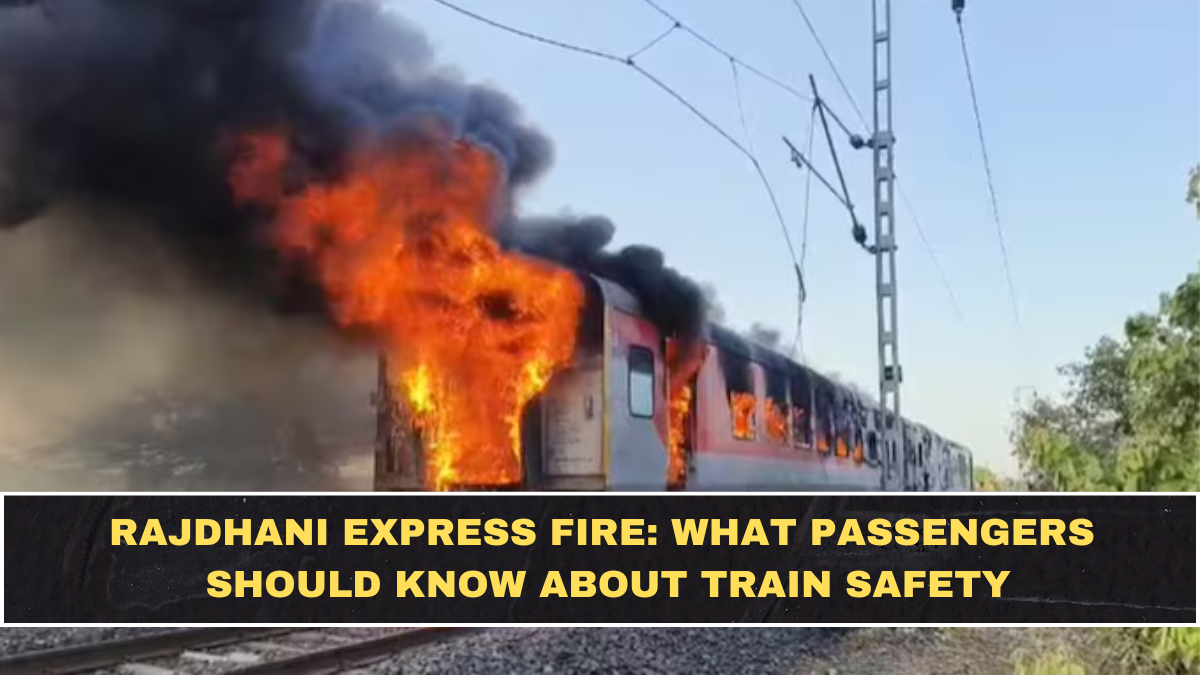
A fire broke out in the B-1 AC coach of the Thiruvananthapuram-Hazrat Nizamuddin Rajdhani Express near Ratlam in Madhya Pradesh early on May 17, 2026. Officials said the coach had 68 passengers, all of whom were safely evacuated within around 15 minutes, and no casualties were reported. The train was travelling towards Delhi when the flames were noticed and emergency action was taken.
This incident matters because Rajdhani trains carry high passenger confidence and are seen as premium long-distance services. When a fire breaks out in an AC coach, it naturally raises questions about coach maintenance, electrical safety, passenger response and emergency preparedness. The good news is that a major disaster was avoided, but the uncomfortable question remains: why did the fire start in the first place?
Where Did The Fire Start?
Reports say the fire was detected around 5:15 AM in the B-1 coach of train number 12431, between Vikramgarh Alot and Luni Richha stations in Ratlam district. The guard reportedly noticed flames and alerted the loco pilot, after which the train was stopped and passengers were evacuated. The second luggage-cum-guard van behind the B-1 coach was also damaged.
| Detail | Update |
|---|---|
| Train | Thiruvananthapuram-Hazrat Nizamuddin Rajdhani Express |
| Train Number | 12431 |
| Location | Near Ratlam, Madhya Pradesh |
| Affected Coach | B-1 AC coach |
| Passengers In Coach | 68 |
| Casualties | None reported |
The quick evacuation appears to have prevented a much bigger tragedy. But passengers should not take that as proof that everything was fine. A train fire can spread fast, especially when people panic, block exits or delay evacuation to collect luggage. In such situations, seconds matter more than suitcases.
Why Was A Probe Ordered?
Railways has formed a high-level inquiry committee to investigate the cause of the Rajdhani Express fire and examine safety measures. According to Indian Express, West Central Railway formed a six-member high-level committee with senior officers from WCR, ICF and RDSO, with the Principal Chief Safety Officer of WCR as convener.
This probe is important because passengers need more than a basic statement saying “no one was injured.” The investigation must identify whether the issue was electrical, mechanical, maintenance-related, material-related or linked to some other cause. Until the cause is officially established, making confident claims would be irresponsible.
What Should Passengers Do First?
During a train fire, the first rule is simple: move fast and stay calm. Passengers should follow railway staff instructions, move away from the affected coach and avoid crowding near doors. Trying to record videos, collect every bag or argue with staff is not bravery; it is dangerous behaviour that slows evacuation.
Important steps during a train fire:
- Leave luggage behind if evacuation is urgent
- Follow railway staff instructions immediately
- Move away from smoke and affected coaches
- Do not block coach doors or gangways
- Help children, elderly passengers and injured people
- Avoid spreading rumours inside the train
The blunt truth is that passenger behaviour can either reduce risk or multiply it. A fire emergency is not the time to protect expensive bags, search for chargers or film content for social media. If smoke or flames are visible, survival and safe movement come first.
What Should Railways Fix?
The bigger responsibility sits with railway safety systems. Premium trains must have strict inspection of electrical systems, fire detection response, coach maintenance, staff training and emergency equipment. If a fire breaks out in an AC coach, passengers have every right to expect a transparent explanation and visible corrective action.
The high-level committee should not become just another paperwork exercise. It must answer hard questions about the coach condition, fire origin, response time, equipment readiness and whether similar risks exist elsewhere. If the same safety weaknesses remain after the probe, then the investigation will have failed its real purpose.
Why Should Travellers Care?
Many passengers assume train fire incidents are rare and therefore irrelevant to them. That is lazy thinking. You may not control railway maintenance, but you can control your awareness, your luggage placement, your response to staff instructions and your understanding of emergency exits. Safety begins before panic starts.
Passengers should check coach layout after boarding, avoid blocking aisles with luggage and keep essential medicines or documents in a small easy-to-carry pouch. This does not mean travelling in fear. It means travelling intelligently, especially on long-distance overnight trains where emergencies can happen while people are asleep.
Conclusion?
The Rajdhani Express fire near Ratlam was serious, but a major tragedy was avoided because all 68 passengers in the affected coach were evacuated safely and no casualties were reported. Railways has ordered a high-level probe, and the final findings will be important for understanding the exact cause and preventing similar incidents.
The key lesson is not to panic, but also not to ignore railway safety. Passengers should know basic emergency behaviour, while Railways must ensure stronger inspection, maintenance and accountability. A safe escape is good news, but the real success will be preventing the next fire.
FAQs?
When did the Rajdhani Express fire happen?
The fire broke out early on May 17, 2026, in the B-1 AC coach of the Thiruvananthapuram-Hazrat Nizamuddin Rajdhani Express near Ratlam in Madhya Pradesh.
Were passengers injured in the Rajdhani Express fire?
No casualties were reported. Officials said all 68 passengers in the affected coach were evacuated safely within around 15 minutes.
Why has Railways ordered a high-level probe?
Railways has formed a high-level committee to investigate the cause of the fire and examine safety measures. The probe is expected to look into technical, operational and safety-related aspects.
What should passengers do during a train fire?
Passengers should follow railway staff instructions, leave luggage behind if needed, move away from smoke, avoid crowding at doors and help vulnerable passengers. Panic and delay can make the situation worse.