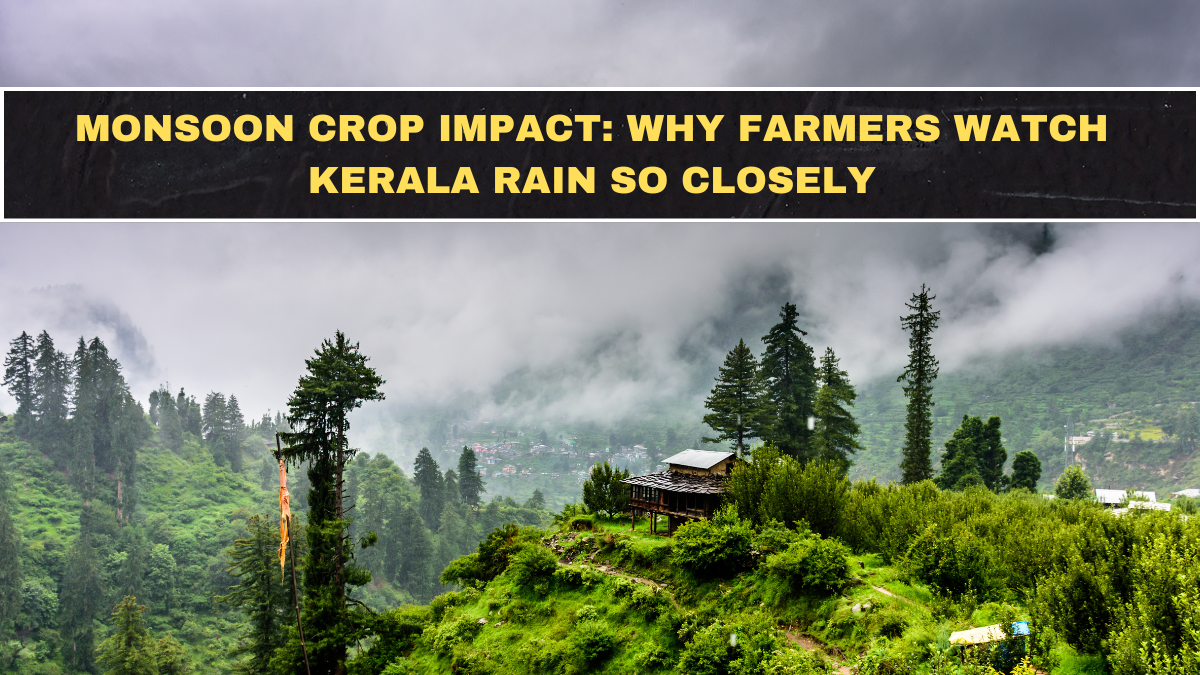
Monsoon crop impact in India begins with one big signal: when the southwest monsoon reaches Kerala. IMD has forecast the 2026 monsoon onset over Kerala around May 26, with a model error of plus or minus four days. This is earlier than the normal June 1 onset, which is why farmers, traders and policymakers are watching the update closely.
But early Kerala rain is not a magic guarantee for farmers. It only shows the beginning of the mainland monsoon phase, not the full season’s strength. Crop success depends on whether rainfall spreads properly into major farming belts and continues at the right time.
Which Crops React First?
Kharif crops are closely linked to monsoon rainfall because sowing begins with the arrival of seasonal rain. Reports say early monsoon arrival can support planting hopes for crops such as rice, corn, soybean and sugarcane. These crops need timely rain, but they also need proper rainfall gaps, soil moisture and regional spread.
| Crop | Why Monsoon Matters |
|---|---|
| Rice | Needs strong water availability during sowing and growth |
| Corn | Needs timely rain for germination and early growth |
| Soybean | Sensitive to poor rainfall and waterlogging |
| Sugarcane | Needs long-term moisture and irrigation support |
| Pulses | Often vulnerable in rain-fed areas |
This is where farmers must avoid emotional decisions. One strong early shower can create excitement, but sowing too early without stable soil moisture can backfire. The better approach is to wait for local rainfall confirmation and agriculture department advisories.
Can Early Rain Help Farmers?
Yes, early rain can help farmers begin land preparation and plan kharif sowing earlier. If rainfall continues steadily, it can improve soil moisture, reduce irrigation pressure and support timely planting. This is especially useful for farmers who depend heavily on rain instead of assured canal or groundwater irrigation.
Farmers should track these points before sowing:
- Local rainfall amount, not just state-level news
- Soil moisture after repeated showers
- IMD district alerts and short-term forecasts
- Seed variety advice from local agriculture officers
- Risk of dry spells after the first rain
The blunt truth is simple: early rain is useful only if it is followed by reliable rain. A fast start followed by a long break can damage germination and force re-sowing. That means farmers should plan carefully instead of rushing only because the monsoon headline looks positive.
Where Is The Biggest Risk?
The biggest risk is uneven rainfall distribution. Some areas may receive heavy rain, while others may stay dry for days or weeks. A below-normal or poorly distributed monsoon can hit crops differently, especially in regions where irrigation coverage is weak and farmers rely directly on seasonal rainfall.
Moneycontrol reported that a below-normal monsoon forecast could hit pulses, soybean and cotton harder because these crops are concentrated in states with weaker irrigation coverage. That is the real danger: not every crop has the same protection against weak rain.
Can Food Prices Rise?
Yes, monsoon weakness can affect food prices if crop output is hit in major growing regions. Rice, pulses, edible oils, vegetables and sugar can become sensitive if rainfall disappoints during key crop stages. Poor rainfall can also affect fodder, rural wages and local farm spending.
Recent reports also point to El Niño-related concerns for kharif output, with studies showing sharp yield pressure in several districts during El Niño years. Paddy and maize are among the crops that can face production stress when rainfall patterns turn unfavourable.
What Should Farmers Watch Next?
Farmers should watch how the monsoon moves from Kerala into Karnataka, Maharashtra, central India, eastern India and north India. The most important factor is not just onset but sustained rainfall during sowing and crop growth. A good monsoon must arrive, spread and stay active at the right time.
For smarter planning, farmers should follow official weather updates, local mandi trends and crop advisories. They should also avoid depending only on WhatsApp forecasts or YouTube predictions. Weather is already uncertain; adding fake confidence on top of that is a bad farming decision.
Conclusion?
Monsoon crop impact in India starts with Kerala rain, but it does not end there. The 2026 monsoon is expected to reach Kerala around May 26, raising hopes for early kharif planting. Rice, corn, soybean and sugarcane may benefit if rain spreads steadily and supports soil moisture.
The honest warning is clear: early monsoon does not guarantee a strong crop season. Farmers should watch local rain, dry spells, irrigation support and crop advisories before sowing. In agriculture, timing matters, but rainfall distribution decides the real outcome.
FAQs?
Why do farmers watch Kerala monsoon onset?
Farmers watch Kerala monsoon onset because it signals the beginning of the southwest monsoon over mainland India. It helps them estimate when kharif sowing may begin in different regions.
Which crops depend most on monsoon rain?
Rice, corn, soybean, sugarcane, pulses and cotton are closely linked to monsoon rainfall. These crops need timely and well-distributed rain for sowing, growth and yield stability.
Does early monsoon mean better crop output?
No, early monsoon does not automatically mean better crop output. Crop success depends on rainfall distribution, soil moisture, dry spells, irrigation support and rain during key growth stages.
Can weak monsoon increase food prices?
Yes, weak or uneven rainfall can increase food price pressure if crop output falls in major growing regions. Rice, pulses, edible oils, vegetables and sugar are especially important to watch.