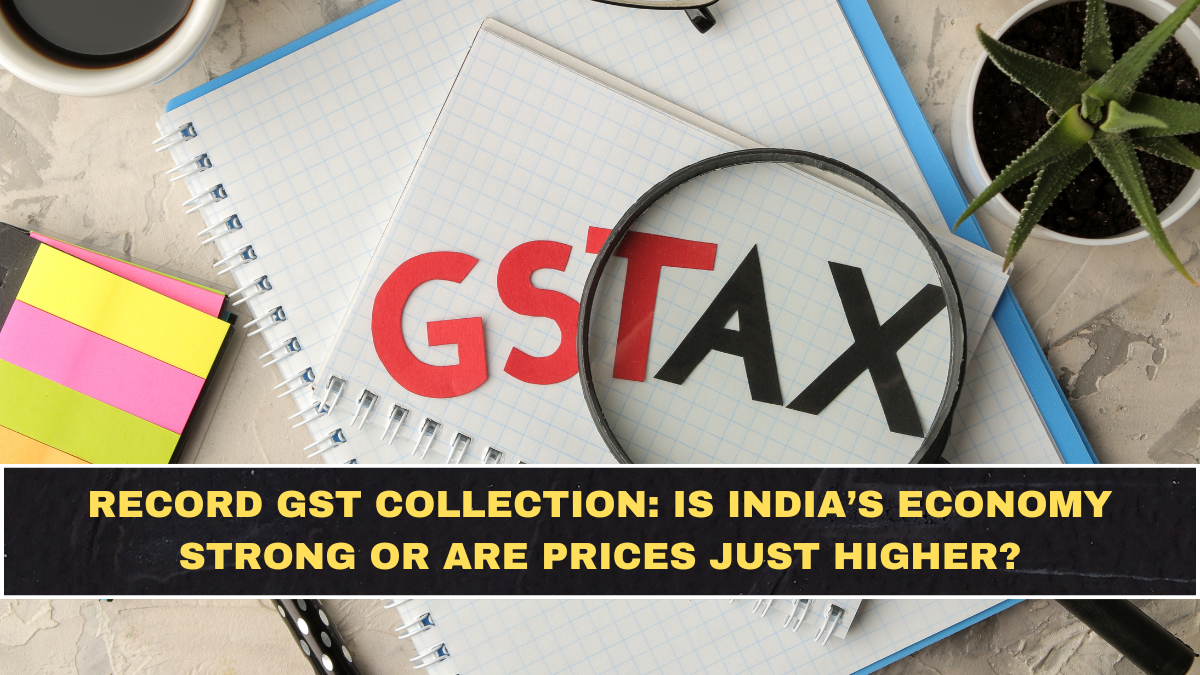
India’s GST collection hit a record high in April 2026, and that is why the number is making national headlines. Reuters reported that India collected ₹2.43 trillion in Goods and Services Tax in April, up 8.7% compared with the same month last year. The figure was released by the government and marks one of the strongest monthly GST readings since the tax system was launched.
This sounds like a clean sign of economic strength, but the story is not that simple. High GST revenue can mean stronger consumption, better tax compliance, higher imports, higher prices, or a mix of all these factors. Anyone saying “record GST means economy is booming” without reading the details is oversimplifying the data.
What Does The April 2026 GST Data Show?
The April number crossed the earlier record and came in around ₹2.43 lakh crore. Economic Times reported that gross GST collections rose to a record ₹2.42 lakh crore, showing 8.7% year-on-year growth. Moneycontrol also reported that net GST revenue stood at ₹2.11 lakh crore, up 7.3% from a year earlier.
The import-linked part of the data is important. Moneycontrol reported that import-related GST revenue surged 25.8% year-on-year, while domestic consumption growth showed signs of moderation. That means the record number is strong, but it may not fully prove that Indian consumers are spending aggressively across the board.
| GST Indicator | April 2026 Reported Data | What It Suggests? |
|---|---|---|
| Gross GST collection | Around ₹2.43 lakh crore | Record-high monthly revenue |
| Year-on-year growth | 8.7% | Revenue rose from April 2025 |
| Net GST revenue | Around ₹2.11 lakh crore | Growth after refunds was lower |
| Net GST growth | 7.3% | Strong, but less than gross growth |
| Import-linked GST growth | 25.8% | Imports played a major role |
| Domestic demand signal | Moderation reported | Consumption story is not fully clean |
Does Record GST Mean India’s Economy Is Strong?
Yes, it does suggest economic resilience, but it does not prove everything is perfect. GST collections usually rise when more goods and services are sold, businesses file taxes properly and compliance improves. A record number means the formal economy is generating taxable activity at a very large scale.
But here is the part many headlines ignore. GST is collected on value, not just volume. If prices are higher, tax collections can rise even when people are not buying much more in quantity. So a high GST number can reflect both stronger activity and price pressure. The smart reading is not “boom” or “bad inflation” alone; it is mixed.
Are Higher Prices Also Helping GST Collections?
Yes, higher prices can push GST collections up because GST is charged as a percentage of transaction value. If food, services, fuel-linked costs, electronics, restaurant bills or consumer goods become more expensive, GST collected on those transactions can increase. That does not always mean consumers are better off.
This is why the article title asks the uncomfortable question: is the economy strong, or are prices just higher? The answer is likely both. India’s formal tax base has improved, compliance systems are stronger, and consumption remains active. But inflation and import values can also lift tax revenue without improving household comfort.
Why Does Import-Led GST Growth Matter?
Import-led GST growth matters because it tells us where part of the revenue strength is coming from. Moneycontrol reported that import-related GST revenue grew 25.8% year-on-year in April 2026. That is a sharp jump and suggests imports contributed heavily to the record GST print.
This can be good or worrying depending on the context. Higher imports can mean businesses are buying more inputs and consumers are buying imported goods. But if import values rise because global prices are higher or the rupee is weaker, GST collections rise without necessarily showing stronger real demand. That distinction matters for economic interpretation.
Why Is Net GST Lower Than Gross GST?
Gross GST is the total amount collected before refunds, while net GST is what remains after refunds are adjusted. In April 2026, gross GST was around ₹2.43 lakh crore, while net GST was about ₹2.11 lakh crore. Moneycontrol reported that net GST revenue grew 7.3%, lower than gross growth of 8.7%.
This matters because net revenue gives a cleaner view of what the government actually retains after refund payments. A strong gross number looks good in headlines, but net numbers show the real fiscal impact more clearly. If refunds rise, the headline collection can look stronger than the government’s usable revenue position.
What Does This Mean For Consumers?
For consumers, record GST collection does not automatically mean life is easier. It can mean people and businesses are spending more, but it can also mean they are paying tax on higher prices. If your grocery bill, restaurant bill, school expenses, phone, insurance or travel costs rise, GST revenue may rise too.
The government may see strong tax receipts, but households may still feel squeezed. That is the disconnect people often miss. A strong tax number can coexist with stressed family budgets. So consumers should not assume record GST means inflation pressure has disappeared.
What Does This Mean For The Government?
For the government, strong GST revenue is positive because it improves fiscal flexibility. Higher tax collections can support infrastructure spending, welfare schemes, state transfers and deficit management. A record GST number also strengthens the argument that formalisation and digital compliance are working.
But the government should not become complacent. Business Standard reported that like-for-like GST growth in FY26 slowed to a five-year low of 5.57%, with import revenues outpacing domestic demand and refunds affecting net revenue. That warning means policymakers should look beyond one record month and study the quality of growth.
Is This A Good Sign For FY27?
April is an important month because it starts the financial year with a strong revenue signal. A record April number gives the government a good opening, especially if collections stay healthy in the following months. It also shows that the GST system has become a powerful revenue engine for India.
But one month cannot define the whole year. The real test will be whether domestic consumption improves, whether inflation stays controlled and whether import-led growth remains healthy rather than price-driven. If future collections rise because people are buying more in real terms, that is stronger. If they rise mainly because prices are higher, the celebration should be quieter.
Conclusion
India’s record GST collection in April 2026 is a strong headline and an important fiscal signal. Gross collections touched around ₹2.43 lakh crore, rising 8.7% year-on-year, while net revenue reached about ₹2.11 lakh crore. That shows resilience, better compliance and continued taxable activity across the economy.
But the blunt truth is that record GST does not automatically mean every household is doing better. Import-linked GST surged, net growth was lower than gross growth, and domestic demand showed signs of moderation. So the answer is not one-sided: India’s economy is showing strength, but higher prices and import effects may also be helping push the GST number higher.
FAQs
How much GST did India collect in April 2026?
India collected around ₹2.43 lakh crore in gross GST revenue in April 2026. Reuters reported the figure as ₹2.43 trillion, up 8.7% compared with the same month last year. This made it a record-high monthly GST collection.
Does record GST collection mean the economy is booming?
It suggests economic resilience, but it does not prove a clean boom. GST can rise because of stronger consumption, better compliance, higher imports or higher prices. The April 2026 data shows a strong headline number, but import-linked GST growth and moderated domestic demand make the picture more mixed.
What was the net GST collection in April 2026?
Net GST revenue was reported at around ₹2.11 lakh crore in April 2026, up 7.3% from a year earlier. This is lower than the gross GST growth rate because refunds are adjusted before calculating net revenue. Net numbers matter because they show what the government retains after refunds.
Why are imports important in the GST data?
Imports matter because import-related GST revenue reportedly surged 25.8% year-on-year in April 2026. That helped lift the overall GST number, but it also means the record collection may not be driven only by domestic consumption. Higher import values can reflect demand, price pressure or currency effects.