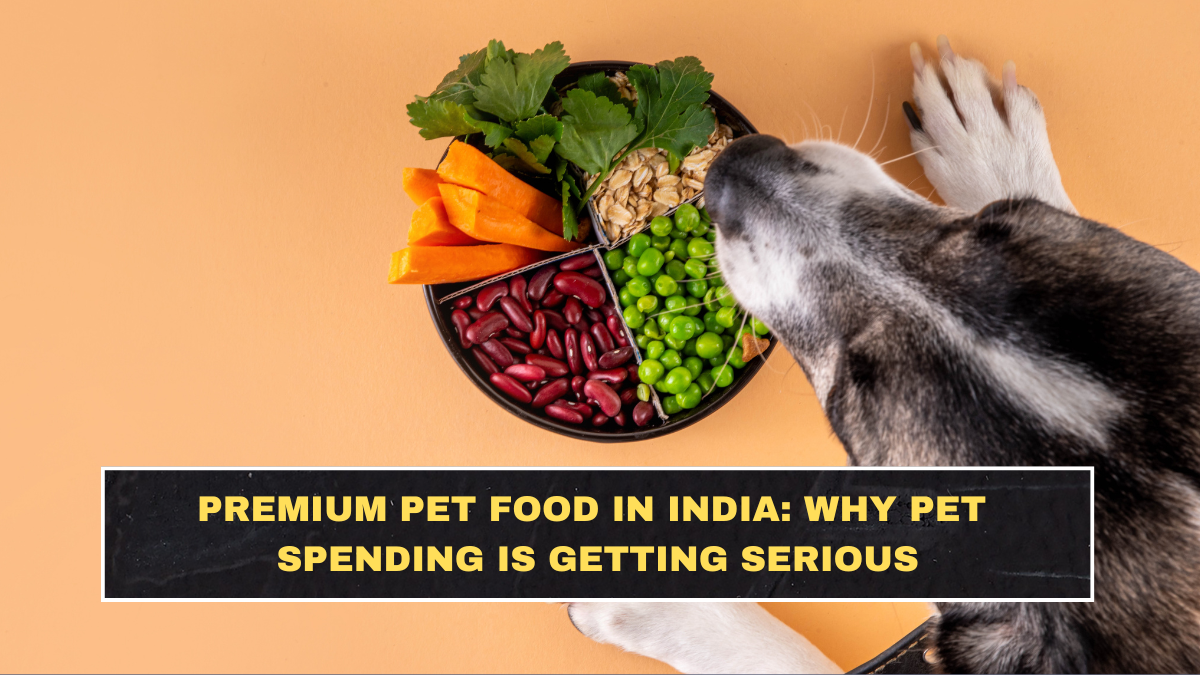
Premium pet food in India is getting serious because pet ownership is shifting from basic care to managed lifestyle spending. Younger urban owners are not just feeding pets whatever is cheap or convenient. They are comparing ingredients, asking about digestion, coat health, breed suitability, and whether packaged food is better than home leftovers. Market estimates vary by methodology, but they all point in the same direction: India’s pet food and pet care categories are growing fast as urban adoption, e-commerce access, and pet humanization rise. Mordor Intelligence estimates India’s pet food market at about $0.98 billion in 2026, up from $0.87 billion in 2025, while Nexdigm estimates the broader India pet care market at about $720 million based on its own framework.
The bigger point is not the exact number. It is the behavior behind it. Mordor says only 29% of India’s owned-dog population is fed commercial diets daily, which means the market still has a lot of room to grow as more owners move from kitchen scraps and mixed feeding toward packaged nutrition. Quick-commerce coverage across 42 cities is also helping trial and repeat buying, which matters because premium pet food is easier to adopt when it is convenient to reorder.
Why are Indian pet owners spending more on premium food now?
Because the emotional status of pets has changed. Younger owners in cities increasingly treat dogs and cats more like dependents than animals sitting in the background of household life. Recent Hindi business reporting said Gen Z and millennials are driving India’s pet care market and that spending on platforms like Flipkart has risen sharply, with demand expanding beyond metros into smaller cities as well.
There is also a health reason. Urban vets are seeing more pet obesity, poor diet habits, and lifestyle-linked illness. A Times of India report quoted vets and nutritionists saying many Indian urban pets are being overfed, under-exercised, and given inappropriate diets, with one Pune vet saying around 30% of his pet patients are overweight. That kind of problem naturally pushes owners toward “better food” solutions, especially premium labels promising portion control, breed-specific nutrition, gut support, or better protein quality.
What does premium pet food actually mean in India?
Usually it means food marketed around better protein quality, cleaner ingredient perception, life-stage targeting, breed-specific formulas, fresh or functional positioning, or imported-style nutrition standards. It does not automatically mean the food is objectively excellent. Sometimes premium just means nicer packaging and stronger emotional branding. But the category is clearly moving beyond generic kibble.
Mordor’s 2026 India pet food outlook says the market is being helped by rising awareness of pet health and nutrition, while open-market reporting around newer launches points to premium fresh-protein positioning and wider city-level availability. The Ministry of Food Processing Industries’ pet food sector profile also frames India as a category with growing value-add potential and stronger formal-sector interest.
Which factors are pushing premium pet food adoption fastest?
Convenience is one major driver. If an owner can compare brands online, get delivery quickly, and subscribe to repeat orders, they are much more likely to move from irregular feeding habits to standardized food routines. Mordor explicitly notes that quick-commerce and broader retail access are shortening replenishment cycles and encouraging trial among first-time buyers.
The second driver is wellness anxiety. Owners are increasingly worried about digestion, shedding, allergies, obesity, and long-term health. That concern may be exaggerated sometimes, but it still drives spending. The Times of India obesity report makes it clear that urban pet health problems are no longer rare edge cases, which gives premium nutrition brands an easy narrative: “pay more now, avoid problems later.”
What are buyers actually looking for in premium pet food?
Most are looking for reassurance more than scientific perfection. They want food that feels safer, smarter, and more appropriate than random household leftovers or the cheapest bag on the shelf. In practice, that usually means stronger protein claims, functional add-ons, life-stage formulas, and easier portioning.
Here is the practical breakdown:
| What buyers look for | Why it matters | What sounds premium | Main risk |
|---|---|---|---|
| Better protein | Owners link protein with strength and coat health | Fresh meat, higher meat content, breed-specific claims | Marketing may outrun ingredient quality |
| Digestive support | Gut issues and stool quality worry owners | Prebiotics, probiotics, easier digestion language | Owners may overpay for vague claims |
| Weight control | Urban obesity is rising in pets | Portion guidance, sterilized-pet formulas, light diets | Food alone will not fix inactivity |
| Life-stage targeting | Puppies, adults, and seniors have different needs | Puppy, adult, senior, breed-size formulas | Too many owners still overfeed anyway |
| Convenience | Regular feeding improves compliance | Subscription, quick-commerce, wider city delivery | Premium habits collapse if reorder is hard |
That table matters because Indian buyers are not simply buying food. They are buying confidence.
Is premium pet food always better than home food?
No. That is where people get sloppy. Premium packaged food can offer consistency, clearer portioning, and easier nutrient targeting, but expensive food does not automatically beat a well-planned feeding routine. The problem is that many home diets are not actually well planned. The Times of India report specifically warned that many owners rely on inappropriate human foods like chapatis or rice-heavy feeding patterns that do not meet pets’ nutritional needs.
So the real comparison is not “premium bag versus perfect home diet.” It is often “premium bag versus inconsistent, owner-driven feeding habits.” In that comparison, premium food can absolutely look more sensible.
What does this say about India’s new pet economy?
It says the category is becoming more formal, more urban, and more emotionally loaded. Mordor projects India’s pet food market to reach about $1.68 billion by 2031, while other market trackers project multi-year growth in both food and broader pet care. Even though estimates differ, the direction is obvious: food-led spending is becoming a serious part of India’s consumer landscape.
It also says pet care is no longer a niche hobby for a few wealthy households. Demand is spreading through e-commerce, younger consumers, and more cities. But the blunt truth is that some of this spending is genuinely about pet health, and some of it is about owners projecting their own lifestyle values onto animals. Both are happening at once.
Conclusion
Premium pet food in India is growing because pet ownership is becoming more deliberate, more urban, and more health-conscious. Owners are moving toward products that promise better nutrition, easier routines, and fewer health worries. Some of that is smart. Some of it is marketing dressed up as care. The difference comes down to whether the food solves a real need, fits the pet’s age and condition, and is used with proper portions and exercise. Expensive food alone does not make someone a responsible pet parent. Consistent, informed care does.
FAQs
Is premium pet food really growing in India?
Yes. Different market reports use different models, but they consistently show growth in India’s pet food and pet care sectors, driven by urban adoption, rising awareness, and stronger retail access.
Why are Indian pet owners buying more packaged food?
Convenience, nutrition awareness, quick-commerce availability, and concern about pet health are all pushing more owners toward regular commercial feeding.
Does premium pet food automatically mean healthier pets?
No. It can help with consistency and targeted nutrition, but overfeeding, poor exercise, and blind trust in marketing can still create health problems.
Is home food bad for pets in India?
Not automatically, but many owners feed inconsistent or nutritionally weak home diets. That is one reason packaged premium food is gaining traction.