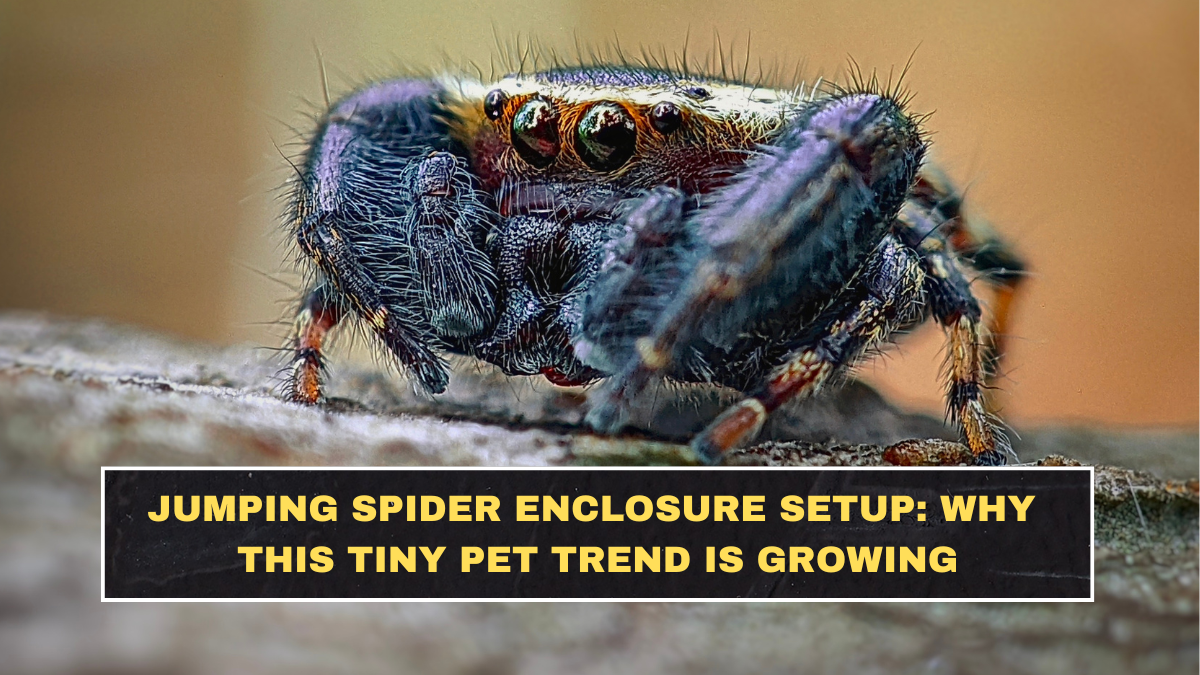
Jumping spider enclosures are getting more attention because jumping spiders sit in a very specific sweet spot for pet hobbyists: they are small, visually interesting, relatively low-space, and far less demanding than many larger exotic pets. The enclosure trend is growing alongside that interest, with newer care guides, enclosure products, and hobby shops increasingly focused on species like Phidippus regius and similar arboreal jumpers. Recent care coverage in 2025 and 2026 also shows that enclosure design is now treated as a serious part of the hobby rather than an afterthought.
What Makes a Good Jumping Spider Enclosure?
A good jumping spider enclosure is usually taller than it is wide, because most common pet jumping spiders use vertical space and often build their sleeping hammock near the top. That single fact already kills one of the most common beginner mistakes: buying a low, ground-focused box like the spider is a terrestrial species. Reputable care sources consistently recommend vertical or arboreal-style enclosures with strong cross ventilation and multiple elevated anchor points such as branches, cork bark, leaves, or ledges.
Front-opening or bottom-opening designs are also smarter than top-opening ones. The reason is simple and easy to miss: jumping spiders often build their hammock at the top, so opening from the top can destroy the structure they sleep and molt in. That is not a small inconvenience. It is a husbandry mistake that stresses the spider and makes the setup worse than it needed to be.
What Conditions Should the Enclosure Have?
Most jumping spider care sources point to normal warm room conditions, generally around 21°C to 28°C or roughly 72°F to 82°F, with moderate humidity rather than constantly wet conditions. Several current guides place humidity somewhere around 40% to 70% depending on species, while also stressing that airflow matters as much as the raw number because stagnant, wet air encourages mold and mites. That is the key point beginners keep missing: humidity without ventilation is not care, it is a mold recipe.
Light misting on one side of the enclosure every couple of days is commonly recommended so the spider can drink water droplets, but the enclosure should not stay soaked. Current guides repeatedly warn against excess moisture buildup and direct sun exposure, since overheating and damp stagnant air can both create problems fast. Bright ambient light and a simple day-night rhythm are usually enough; specialized UVB is not typically required for common pet jumping spiders.
| Setup Factor | Better Standard | Why It Matters |
|---|---|---|
| Enclosure shape | Taller than wide | Most jumping spiders use vertical space |
| Opening style | Front or bottom opening | Protects top hammocks from damage |
| Ventilation | Strong cross ventilation | Helps prevent mold and stale air |
| Humidity | Moderate, not constantly wet | Supports hydration without creating rot |
| Decor | Branches, bark, leaves, anchor points | Gives climbing paths and retreat spots |
This is the buying logic most people should use. If the enclosure looks cute but fails on airflow or vertical structure, it is not a good enclosure. It is just aesthetic clutter.
What Should You Put Inside?
A solid setup usually includes climbing surfaces, at least one sheltered retreat area, and enough visual cover for the spider to feel secure. Cork bark, twigs, faux or live plants, leaves, and elevated hide points are commonly recommended because jumpers like to explore upward and often choose high corners or leaf cover for resting and molting. Substrate matters less than many beginners assume, since the spider spends much of its time off the ground, but a thin layer below can help manage moisture and keep the enclosure looking stable and finished.
Do not overbuild the setup either. This is another beginner problem. People either leave the enclosure barren or turn it into a decorative jungle with too much damp substrate and too little usable space. The smarter goal is function: climbing, anchoring, airflow, and one or two safe retreat spots.
How Should You Handle Water and Feeding?
Jumping spiders usually drink from fine droplets left on the side of the enclosure, which is why light misting one side is common advice. Current care sources recommend avoiding oversized droplets for very small spiderlings and avoiding total enclosure saturation for all sizes. The spider needs access to water, but not a swamp.
For feeding, current care guides typically recommend live prey sized appropriately for the spider, with routines depending on age and size. The Bio Dude and similar care sheets emphasize a safe feeding routine and enclosure design that makes observation easier. That means one obvious thing: uneaten prey should not be ignored. Live feeders left in the enclosure too long can stress the spider, especially around molting periods.
What Mistakes Do Beginners Make Most Often?
The first mistake is poor ventilation. Multiple current guides stress cross ventilation because without it, humidity turns stale and mold develops faster. The second mistake is choosing the wrong opening style and destroying the spider’s hammock every time the enclosure is accessed. The third is overmisting. Beginners often think “more humidity” means “better care,” when in reality moderate moisture plus drying time is the safer pattern.
Another common mistake is putting a tiny sling straight into a large enclosure. Current hobby guidance specifically warns against that, because small spiders are harder to monitor, harder to feed efficiently, and easier to lose in oversized setups. Bigger is not automatically better. Bigger is often just harder to manage.
Is This Tiny Pet Trend Actually Easy to Keep?
Easier than many exotics, yes. Effort-free, no. Jumping spiders are popular partly because they do not need huge tanks or constant hands-on care, but the enclosure still has to be correct. If the airflow is bad, the opening style is wrong, or the habitat stays damp and moldy, the setup fails no matter how small the pet is. That is the truth people avoid because “tiny pet” sounds easier than “proper husbandry.”
Conclusion?
Jumping spider enclosures are growing as a pet-hobby topic because jumping spiders are compact, engaging, and appealing to people who want something unusual without needing a large exotic setup. But the enclosure is where most of the success or failure starts. Go vertical, prioritize cross ventilation, mist lightly instead of soaking everything, and do not destroy the top hammock with a bad lid design. If you get those basics right, this tiny pet trend makes sense. If you ignore them, you are just keeping a fragile animal in a badly designed box.
FAQs
Do jumping spiders need a tall enclosure?
Usually yes. Most common pet jumping spiders are arboreal and use vertical space, with many building hammocks high in the enclosure.
What humidity is best for a jumping spider enclosure?
Moderate humidity is usually recommended, often somewhere around 40% to 70% depending on species, but good ventilation is just as important as the humidity number itself.
Should you mist a jumping spider enclosure every day?
Not always. Many guides recommend light misting every couple of days or as needed, with the enclosure allowed to dry between mists to avoid mold.
What is the biggest beginner mistake?
Poor airflow is one of the worst mistakes, followed closely by using a top-opening enclosure that destroys the spider’s hammock.