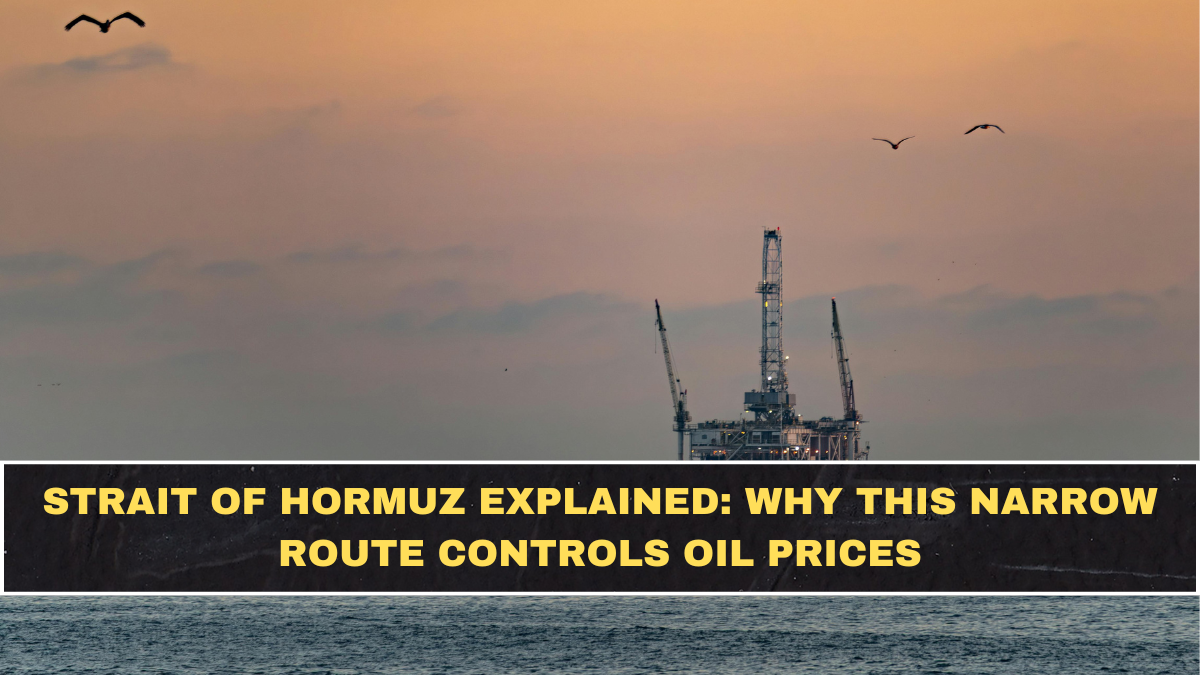
The Strait of Hormuz is a narrow sea passage between Iran and the Arabian Peninsula, connecting the Persian Gulf with the Gulf of Oman and the Arabian Sea. It is the main export route for oil and gas from major Gulf producers including Saudi Arabia, UAE, Kuwait, Qatar, Iraq, Bahrain and Iran. That is why one regional crisis near this route can quickly become a global energy problem.
The numbers explain the fear better than any dramatic headline. The International Energy Agency says around 20 million barrels per day of crude oil and oil products moved through the Strait in 2025, equal to about 25% of global seaborne oil trade. In 2024, the U.S. Energy Information Administration put flows at about 20 million barrels per day, equal to roughly 20% of global petroleum liquids consumption.
Why Can’t Ships Just Avoid It?
The problem is that Hormuz is not like a normal traffic jam where ships can easily take another road. Only Saudi Arabia and the UAE have operational crude pipelines that can partly bypass the Strait, and the IEA estimates available bypass capacity at only 3.5 million to 5.5 million barrels per day. That is far below the nearly 20 million barrels per day of oil exports moving through the route.
This means a full or long disruption cannot be solved by simple rerouting. Countries like Iran, Iraq, Kuwait, Qatar and Bahrain rely on the Strait for the vast majority of their oil exports. If ships cannot move safely, energy cargoes get delayed, shipping insurance becomes expensive, buyers panic, and global benchmark prices can jump before physical shortages even fully appear.
What Moves Through Hormuz?
| Energy Flow | Latest Reported Scale | Why It Matters |
|---|---|---|
| Crude oil and oil products | Around 20 mb/d in 2025 | Nearly 25% of world seaborne oil trade |
| Crude oil alone | Nearly 15 mb/d in 2025 | Around 34% of global crude oil trade |
| Oil products | Around 5 mb/d in 2025 | Impacts diesel, jet fuel and refined fuels |
| LNG | Over 110 bcm in 2025 | Almost one-fifth of global LNG trade |
| Asia-bound oil/product flows | Around 80% | India, China, Japan and Korea are highly exposed |
The table shows why Hormuz controls market psychology. It is not only crude oil moving through this route; refined products, LPG and LNG also depend on it. The IEA says China and India together received 44% of crude oil exports that passed through Hormuz in 2025, which is why Asian economies watch every escalation closely.
Why Should India Worry?
India should worry because Hormuz pressure can hit the economy through several doors at once. Higher crude prices can increase India’s import bill, weaken the rupee, raise refinery costs and create pressure on petrol, diesel and LPG pricing. Even when pump prices do not rise immediately, the cost can move through transport, logistics, food prices and business margins.
The LPG angle is especially serious. Reuters reported that India’s LPG consumption fell 16.2% year-on-year in April 2026 to 2.2 million metric tons after supply disruption linked to the Strait of Hormuz closure. Reuters also reported that Reliance cut alkylates exports and increased LPG output to respond to India’s fuel shortage, showing that the crisis has already forced domestic supply adjustments.
What Happens If It Closes?
If the Strait closes or stays unsafe, oil markets do not wait calmly. Traders price in risk immediately, shipping firms demand higher premiums, refiners look for alternative cargoes, and governments may use emergency reserves. The IEA’s March 2026 oil report said Middle East conflict had pushed flows through Hormuz from around 20 mb/d before the war to a “trickle,” creating the largest disruption in oil-market history.
The impact can spread beyond oil. IEA data shows over 110 bcm of LNG moved through Hormuz in 2025, mostly from Qatar and the UAE, with no practical alternative route for those volumes. It also warned that fertiliser, aluminium and sulphur trade are exposed to disruptions, which means a Hormuz shock can hit energy, food costs, manufacturing and construction together.
What Should Readers Track?
- Brent crude price: The fastest signal of global panic and supply-risk pricing.
- Rupee-dollar rate: A weaker rupee makes imported oil more expensive for India.
- LPG availability: India’s household and commercial gas supply is a sensitive pressure point.
- Shipping insurance: War-risk premiums can increase costs even without full closure.
- Government action: Fuel tax cuts, emergency reserves and import diversification can reduce damage.
These indicators are more useful than social media panic. Hormuz stories often create dramatic headlines, but the real impact depends on duration. A short disruption hurts sentiment, while a long disruption can create physical shortages, inflation pressure and hard policy choices for countries like India.
What Is The Final Conclusion?
The Strait of Hormuz controls oil prices because it carries a massive share of the world’s seaborne energy trade through one narrow and politically sensitive route. Around 20 million barrels per day of oil and products moved through it in 2025, and alternative pipelines cannot replace that volume. That makes Hormuz one of the most important pressure points in the global economy.
For India, the risk is not abstract. Hormuz disruption can affect crude prices, LPG supply, the rupee, inflation and business costs. The blunt truth is simple: India may not control this sea route, but Indian households can still feel its impact in fuel bills, cooking gas supply and grocery prices if the crisis continues.
Frequently Asked Questions
What is the Strait of Hormuz?
The Strait of Hormuz is a narrow sea passage between Iran and the Arabian Peninsula. It connects the Persian Gulf with the Gulf of Oman and the Arabian Sea. It is important because major Gulf energy exporters use it to send crude oil, oil products and LNG to global markets, especially Asia.
Why is the Strait of Hormuz important for oil prices?
It is important because around 20 million barrels per day of crude oil and oil products moved through the Strait in 2025. That is about one-quarter of global seaborne oil trade. If the route becomes unsafe, oil buyers fear delays and shortages, which can push prices higher quickly.
Why does the Strait of Hormuz matter to India?
India matters in this story because it is a major Asian energy importer. The IEA says China and India together received 44% of crude exports moving through Hormuz in 2025. A disruption can raise India’s import bill, pressure the rupee, affect LPG availability and increase inflation risk.
Can oil exports bypass the Strait of Hormuz?
Only partly. Saudi Arabia and the UAE have pipelines that can bypass Hormuz, but the IEA estimates available capacity at only 3.5 million to 5.5 million barrels per day. That is much lower than the nearly 20 million barrels per day of oil exports moving through the Strait, so a full bypass is not realistic.