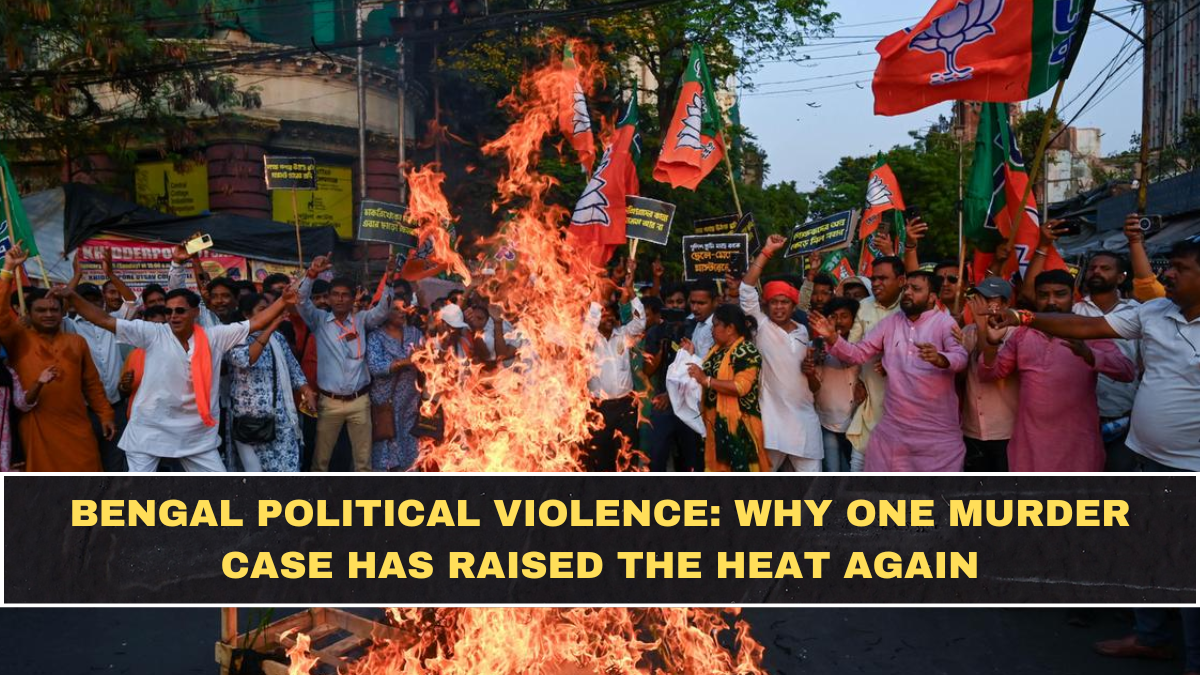
Bengal’s post-election violence debate has returned sharply after the murder of Chandranath Rath, a close aide of Suvendu Adhikari. Rath was killed in Madhyamgram, North 24 Parganas, soon after the Assembly election results, and the case quickly became politically sensitive because of his association with one of Bengal’s most powerful political figures. The CBI has now taken over the investigation from West Bengal Police and formed a seven-member team.
This murder has raised the temperature because Bengal politics already carries a long history of party-worker clashes, local intimidation allegations and post-poll revenge narratives. One killing near Kolkata is now being viewed not only as a criminal case, but as a symbol of whether political violence is again becoming normalised after elections. That is why the case has moved from crime pages to national political debate.
What Happened In The Chandranath Rath Case?
| Key Detail | Current Update | Why It Matters |
|---|---|---|
| Victim | Chandranath Rath | Close aide of Suvendu Adhikari |
| Location | Madhyamgram, North 24 Parganas | Politically sensitive area near Kolkata |
| Nature of attack | Reportedly shot near home | Indicates targeted violence angle |
| Initial probe | Bengal Police/SIT | State police began first investigation |
| Arrests | Three people arrested from UP and Bihar | Interstate links increased seriousness |
| Current probe | CBI has taken over | Case now has central agency scrutiny |
Times of India reported that Rath was shot by gunmen around 170 metres from his home, and three people were later arrested from Uttar Pradesh and Bihar. The report also said one accused was identified as the alleged sharpshooter, though legal claims have questioned parts of the arrest process. This is why the CBI probe now carries heavy pressure to separate evidence from political noise.
Why Did CBI Taking Over Matter?
CBI taking over matters because politically sensitive cases in Bengal often become credibility battles between parties. If the state police investigate, opponents may allege bias. If a central agency investigates, the ruling side may allege political misuse. The agency has officially stepped in, which raises public expectations for a cleaner, more transparent probe.
The real issue is not which party gets a talking point. The real issue is whether investigators can prove motive, identify the full chain behind the killing and establish whether this was a political murder, personal rivalry, contract killing or something else. Without hard evidence, every party will twist the case to fit its own narrative.
Why Is Post-Poll Violence So Explosive In Bengal?
Post-poll violence is explosive in Bengal because party control often runs deep at the local level. Political identity is not limited to voting day; it can affect neighbourhood power, local contracts, worker safety, booth-level dominance and everyday fear. When violence follows elections, it sends a message that losing or switching sides can carry consequences.
Economic Times reported earlier that Rath’s killing had raised fears of retaliation and territorial battles after the election. The report also noted that BJP could use the incident to highlight alleged intimidation, while the killing deepened insecurity among grassroots workers. That is exactly why one murder case has become bigger than one police file.
What Are Both Sides Saying?
The political reaction is predictable, but still important. BJP-linked voices are likely to frame the murder as proof of Bengal’s dangerous political climate, while TMC has also condemned the killing and demanded a CBI probe, according to reports. Amar Ujala reported that TMC condemned Rath’s murder and called for a court-monitored CBI investigation into post-poll violence.
The problem is that both sides can condemn violence while still weaponising it politically. That is the uncomfortable truth. If parties really want justice, they must allow the investigation to follow evidence, not party convenience. Otherwise, the victim becomes a slogan, and the violence ecosystem remains untouched.
What Should Investigators Check Now?
The CBI investigation has to go beyond arrest headlines. In a politically sensitive murder case, weak evidence can collapse the case and strengthen conspiracy theories. Investigators need to verify the full chain of planning, execution, payment, movement and communication before drawing conclusions about motive.
Key points to watch now include:
- Whether CCTV footage confirms the accused persons’ movement.
- Whether call records show planning or contact with handlers.
- Whether payment trails, including UPI links, support the arrest theory.
- Whether the weapon source and escape route are established.
- Whether any political motive is backed by evidence, not claims.
- Whether the accused alibi claims survive proper verification.
Why Should Bengal Be Worried?
Bengal should be worried because political violence damages democracy at the ground level. It does not only kill individuals; it scares workers, silences voters and creates permanent hostility between communities. When people fear party-linked revenge after elections, voting stops feeling like a free democratic act and starts feeling like a risky public declaration.
The state needs strong policing, fast prosecution and visible neutrality. If violence is punished selectively, it will continue. If leaders condemn only when their own side suffers, the public will stop believing them. Bengal does not need another cycle of speeches after every killing; it needs cases that actually end in proven accountability.
Conclusion?
The Chandranath Rath murder case has reignited Bengal’s post-poll violence debate because it sits at the intersection of crime, politics and public fear. CBI taking over the probe has changed the scale of scrutiny, but it has not automatically solved anything. The investigation must now prove who killed Rath, who planned it and whether politics was truly behind it.
The harsh reality is that Bengal’s violence problem will not end through outrage alone. Every party condemns violence when it is useful, but real change needs consistent punishment, neutral policing and leaders who stop treating workers as disposable soldiers. Until that happens, one murder case will keep raising the heat again and again.
FAQs?
Why Is Bengal Political Violence Trending Again?
Bengal political violence is trending again because Chandranath Rath, a close aide of Suvendu Adhikari, was murdered after the Assembly election results. The case has become more serious after the CBI took over the investigation from West Bengal Police.
Who Was Chandranath Rath?
Chandranath Rath was a close aide of Suvendu Adhikari. He was reportedly shot near his home in Madhyamgram, North 24 Parganas, making the case politically sensitive because of his link to Bengal’s power structure.
How Many People Have Been Arrested?
Three people have reportedly been arrested from Uttar Pradesh and Bihar in connection with the murder case. One accused has been described in reports as the alleged sharpshooter, though legal questions have been raised around parts of the arrest story.
Why Is CBI Probe Important In This Case?
The CBI probe is important because the case is politically sensitive and involves serious questions about post-poll violence. A central agency investigation may help examine wider links, but the final credibility will depend on evidence, not political claims.