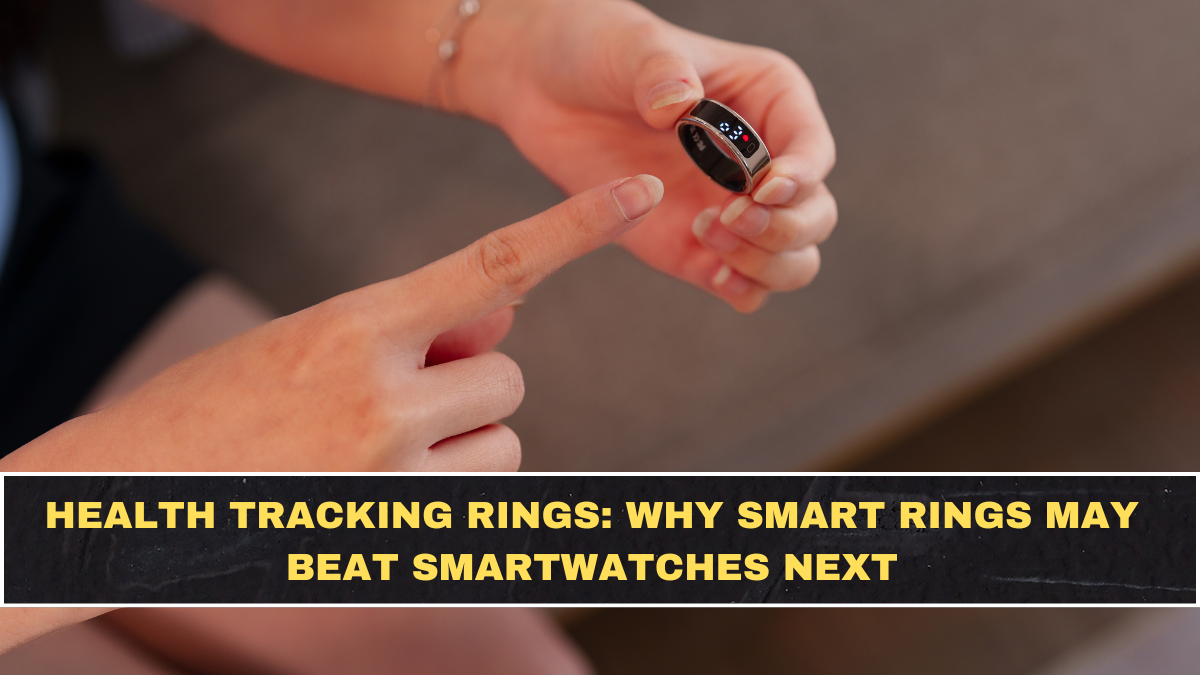
Health tracking rings are becoming one of the most interesting wearable trends because they solve a problem smartwatches never fully fixed: comfort. A watch can feel bulky during sleep, distracting during work and unnecessary for people who do not want another screen on their wrist. A smart ring, on the other hand, quietly tracks health data from the finger while looking more like jewellery than a gadget.
The trend is no longer limited to early adopters. IDC reported that global wearable device shipments grew 9.1% year over year in 2025, reaching 611.5 million units, helped by new products, wider price options and refresh demand. Smart rings are still a smaller part of the market, but they are growing because people want passive health tracking without wearing a smartwatch all day.
Why Are Smart Rings Suddenly Getting Attention?
Smart rings are gaining attention because they focus on the health metrics people actually check daily: sleep, heart rate, recovery, temperature trends, stress and activity. Oura says its ring collects data on 50+ health and wellness metrics across day and night, while Samsung’s Galaxy Ring tracks sleep, heart rate, blood oxygen, skin temperature and activity through Samsung Health.
The real advantage is passive tracking. A smartwatch often asks for attention through notifications, apps and alerts, while a ring can sit quietly on the finger. That makes it more attractive for people who want health insights but do not want a mini-phone on their wrist. This is exactly why smart rings are becoming popular among sleep-focused users, fitness-conscious professionals and people who prefer minimal tech.
How Do Smart Rings Compare With Smartwatches?
| Feature | Smart Ring | Smartwatch |
|---|---|---|
| Best Use | Sleep, recovery, passive tracking | Fitness, apps, calls, notifications |
| Comfort | Usually better for sleep | Can feel bulky overnight |
| Screen | No screen | Touchscreen display |
| Battery Life | Often longer | Usually shorter |
| Style | Looks like jewellery | Looks like tech |
| Workout Control | Limited | Stronger for live workouts |
| Distraction Level | Low | Higher due to notifications |
This comparison shows the real point: smart rings are not replacing smartwatches for everyone. If someone wants GPS workouts, calls, messages, maps and apps, a smartwatch still makes more sense. But if someone wants health tracking without screen addiction, a smart ring becomes the cleaner option.
What Health Data Can These Rings Track?
Most smart rings are built around sleep and recovery because the finger can be a useful place to measure signals during rest. Samsung says Galaxy Ring can track sleep patterns using heart rate, blood oxygen and skin temperature while the user sleeps. It also offers Energy Score, which analyses sleep, daily activities and heart-rate data to give users a wellness snapshot.
Common smart ring tracking features include:
- Sleep duration, sleep stages and sleep quality.
- Resting heart rate and heart-rate trends.
- Blood oxygen during sleep.
- Skin temperature changes.
- Activity, steps and calorie estimates.
- Recovery or readiness-style scores.
- Menstrual cycle or temperature-based insights in some models.
Why Are People Choosing Rings Over Watches?
People are choosing rings because they want health tracking that does not scream for attention. A ring can be worn at night, during office hours, while travelling and even during social events without looking like a fitness device. That matters because wearables fail when people stop wearing them. Comfort and consistency are not small features; they decide whether health data becomes useful or useless.
The sleep angle is especially powerful. Many users buy wearables because they feel tired, stressed or poorly recovered, but wearing a bulky watch overnight can be irritating. Smart rings avoid that problem for many people. This is why brands like Oura and Samsung are leaning heavily into sleep, readiness and recovery instead of only step counting.
What Are The Weak Points Nobody Should Ignore?
The biggest weakness is that smart rings are not medical devices for most users. Samsung clearly says its Energy Score is intended for general wellness and fitness purposes only. That means users should not treat ring data like a doctor’s diagnosis. A ring can show trends, but it cannot replace medical testing, clinical advice or proper treatment.
The second weakness is cost and ecosystem lock-in. Some rings are expensive, some require subscriptions, and some work best only with specific phones or apps. Sizing is also more complicated than buying a watch because a ring must fit the finger properly. If users ignore sizing, battery life, app compatibility and data privacy, they may end up buying an expensive gadget they barely use.
Conclusion: Are Smart Rings The Future Of Wearables?
Smart rings are not killing smartwatches yet, but they are clearly becoming the most serious alternative in wearable health tech. They work best for people who care about sleep, recovery, heart-rate trends and low-distraction wellness tracking. Their biggest advantage is simple: people are more likely to keep wearing something comfortable and invisible than a device that constantly interrupts them.
Still, buyers should not fall for the hype blindly. A health tracking ring is useful for trends, habits and self-awareness, not for replacing doctors or medical tests. If brands improve accuracy, battery life, pricing and privacy, smart rings can become the next major wearable category. If they stay expensive and confusing, they will remain a premium wellness trend for selective users.
FAQs
What Is A Health Tracking Ring?
A health tracking ring is a small wearable device worn on the finger to measure wellness signals such as sleep, heart rate, temperature trends, activity and recovery. It connects to a mobile app where users can view insights and scores. The main appeal is that it tracks data passively without needing a screen on the wrist.
Are Smart Rings Better Than Smartwatches?
Smart rings are better for people who want comfortable sleep tracking, low distraction and a jewellery-like design. Smartwatches are better for workouts, GPS, notifications, calls and app use. The better choice depends on whether the user wants passive health insights or a full wrist-based smart device.
Can Smart Rings Track Sleep Accurately?
Smart rings can track sleep patterns using signals like heart rate, movement, blood oxygen and skin temperature. They are useful for spotting trends in sleep duration, recovery and rest quality. However, they should be treated as wellness tools, not medical-grade sleep diagnosis devices unless specifically cleared for that purpose.
Should You Buy A Smart Ring In 2026?
A smart ring makes sense if sleep, recovery and low-distraction health tracking matter more to you than smartwatch features. Before buying, check size, battery life, phone compatibility, app costs and data privacy. Buying only because the trend looks stylish would be a shallow decision and probably a waste of money.