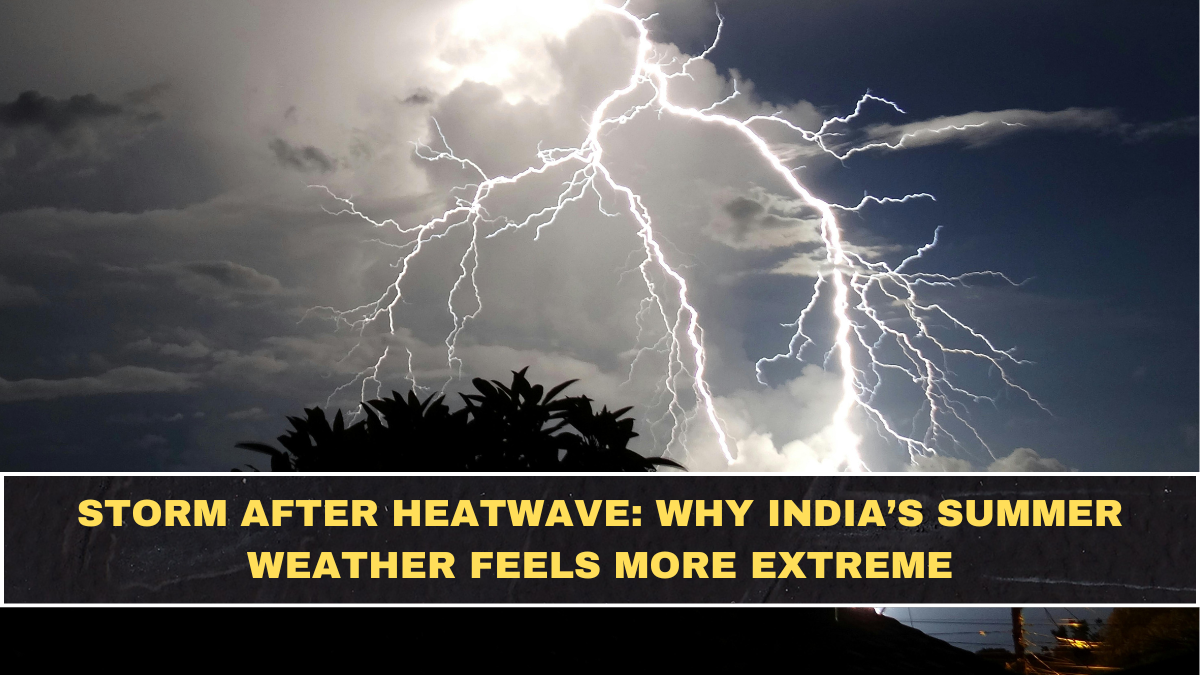
India’s summer weather is feeling more unstable because many regions are seeing sharp switches between heatwave, dust storm, rain, thunderstorm and lightning. On May 15, 2026, IMD warnings included heatwave conditions in parts of north India along with thunderstorm, lightning, heavy rain and squally wind alerts across several other regions. This mix makes the weather feel confusing because people can face extreme heat in the afternoon and strong winds or rain by evening.
This is not just a “weather mood swing.” Pre-monsoon months often carry heat buildup, moisture inflow, western disturbances, local wind systems and low-pressure activity. When these systems collide, the result can be sudden storms after hot days. The danger is that people relax after rainfall and forget that heat can return quickly, sometimes within 24–48 hours.
Why Can Storms Come Right After Heatwaves?
Heatwaves occur when land heats strongly and maximum temperatures rise sharply. Storms can develop when this heated surface air interacts with moisture, wind changes or weather systems moving through the region. That is why places suffering intense heat can suddenly see dust storms, lightning and short rain spells, especially during pre-monsoon months.
Rajasthan recently saw heatwave conditions followed by dust storms and rain that brought temporary relief, while Ahmedabad recorded 43.7°C as Gujarat faced intense heat. Gurgaon also saw light rain bringing short relief, but heatwave conditions were again expected from May 16. This shows the uncomfortable pattern clearly: relief does not always mean the heat is over.
| Weather Swing | What It Looks Like | Real Risk |
|---|---|---|
| Heatwave to storm | Hot afternoon, dusty evening, sudden rain | Dehydration plus wind damage |
| Rain to heatwave | Short relief, then temperature rises again | False sense of safety |
| Storm with lightning | Cloudy sky, thunder, strong gusts | Outdoor injury and power disruption |
| Dust storm | Low visibility and strong winds | Road accidents and breathing trouble |
| Heavy rain after heat | Sudden showers in hot areas | Waterlogging and crop damage |
Why Does Rain Not Always End The Heat?
Rain can reduce temperature for a few hours, but it does not automatically end a heatwave pattern. If the broader region remains hot, dry winds return, or skies clear quickly, temperatures can rise again. This is why people should not assume that one evening shower means the next day will be comfortable.
IMD’s extended heat warning for May 15–21 mentioned heatwave conditions at many places with severe heatwave conditions in isolated pockets. At the same time, separate IMD updates showed thunderstorm and rainfall activity over other regions. This overlap explains why India can feel like it is moving through two seasons in the same week.
Is This Only Normal Summer Weather?
Some summer instability is normal in India, especially before the monsoon. But the frequency and sharpness of these swings are becoming harder for people to ignore. Down To Earth reported that May 2026 was expected to remain cooler than usual in many parts because of rainfall, while some regions could still suffer heatwaves. That itself shows the uneven nature of the season.
The mistake is thinking “cooler month” means “safe month.” A month can average cooler because of rain, while individual cities still face dangerous heat days. Similarly, a heatwave-hit state can still get storms in some districts. Weather risk is now more local, more sudden and less predictable for ordinary people relying only on old seasonal assumptions.
What Should Families Do During These Weather Swings?
Families need two plans at the same time: heat safety and storm safety. During the day, people should avoid peak heat exposure, drink enough water, protect children and elderly people, and avoid unnecessary outdoor work. During thunderstorm alerts, they should move indoors, stay away from trees and electric poles, secure loose items and avoid filming storms from rooftops.
Basic precautions include:
- Keep drinking water, ORS and light food ready during heatwave days.
- Avoid outdoor work during peak afternoon heat when possible.
- Secure balcony items, tin sheets and loose objects before storms.
- Do not stand under trees during lightning or strong winds.
- Avoid flooded roads, low-visibility highways and weak structures.
- Check IMD or local district alerts before long travel.
What Should Farmers And Workers Watch Closely?
Farmers, labourers, delivery workers, construction workers and street vendors face the worst side of this weather swing. They are exposed to both heat stress and thunderstorm danger. A person working in an open field may face heat exhaustion in the afternoon and lightning risk by evening, which makes planning extremely important.
Farmers should watch local alerts before irrigation, spraying, harvesting or moving livestock. Strong winds can damage banana, papaya and horticulture crops, while lightning can be dangerous for people and animals in open areas. Ignoring alerts because “we have seen storms before” is weak thinking; past survival does not guarantee safety in the next event.
Conclusion?
India’s storm-after-heatwave pattern feels extreme because different weather risks are now overlapping in short timeframes. Heatwaves, rain, dust storms, lightning and squally winds can affect different regions within the same week, and sometimes the same city within hours. The result is confusion, but the safety response should be clear.
The blunt takeaway is simple: stop treating rain as permanent relief and stop treating heat as the only summer danger. Track local alerts, prepare for both heat and storms, and do not take risks outdoors during lightning or strong winds. India’s summer is no longer something you can handle with old casual habits.
FAQs?
Why Do Storms Happen After Heatwaves?
Storms can happen after heatwaves when intense surface heating combines with moisture, wind shifts or active weather systems. The hot air rises, instability increases and thunderstorms, dust storms or rain can develop quickly during pre-monsoon conditions.
Does Rain Mean Heatwave Is Over?
No, rain does not always mean the heatwave is over. A short rain spell can lower temperature temporarily, but heat can return quickly if dry winds, clear skies or regional heat conditions continue. People should keep following official forecasts after rainfall.
Which Is More Dangerous, Heatwave Or Storm?
Both can be dangerous in different ways. Heatwaves can cause dehydration, heat exhaustion and heatstroke, while storms can bring lightning, falling branches, flying objects and road accidents. The bigger risk comes when people prepare for only one and ignore the other.
How Can Families Stay Safe During Sudden Weather Changes?
Families should follow local weather alerts, avoid peak heat exposure, keep water ready, secure loose objects before storms and move indoors during thunder or lightning. Children, elderly people, outdoor workers and livestock need extra attention during rapid weather changes.