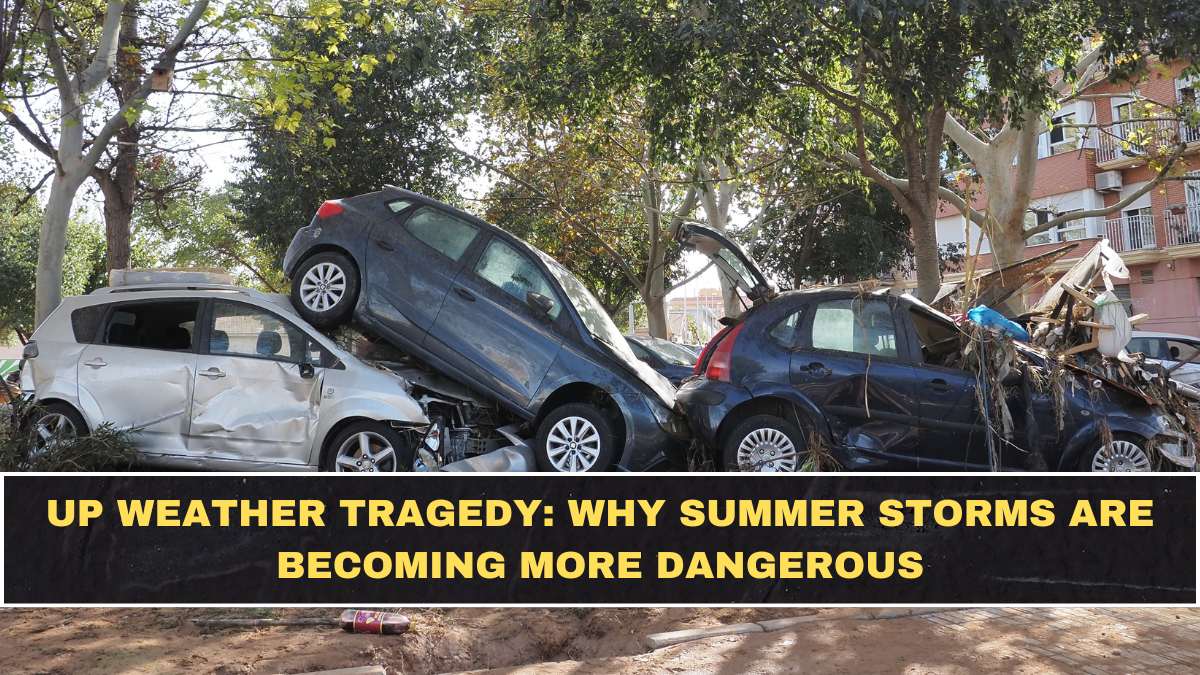
Uttar Pradesh has faced one of the deadliest recent weather shocks after violent storms, rain, hail and lightning swept across several districts. Early official reports put the death toll at 89, while later reports said the number had crossed 100 as rescue and damage assessments continued. Reuters reported that more than 100 people were killed, 59 were injured, 87 homes were damaged and 114 livestock died in the storm.
This is not just another seasonal rain event. The tragedy shows how quickly summer storms can turn fatal when strong winds, lightning, weak structures, falling trees and power disruptions hit together. The real danger is that many people still treat these storms casually until the damage is already happening.
What Happened Across Uttar Pradesh?
The storm hit late Wednesday, bringing dust, heavy rain, lightning and damaging winds across multiple districts. AP reported that dust storms, heavy rain and lightning killed at least 96 people in northern India, with Uttar Pradesh suffering the worst impact. Many deaths were linked to collapsing structures, falling trees and lightning strikes, while emergency crews were deployed to clear roads and railway tracks.
Several districts reported major damage to homes, crops, roads and electricity networks. Prayagraj, Bhadohi and Mirzapur were among the badly affected areas, according to local reports. The Uttar Pradesh government ordered relief efforts, damage surveys and compensation for affected families as officials continued assessing the scale of the disaster.
| Impact Area | Reported Damage | Why It Matters |
|---|---|---|
| Death toll | 89 to 100+ in reports | Shows disaster scale |
| Injured | Around 50–59 people | Medical response needed |
| Homes damaged | 87 reported | Shelter risk rises |
| Livestock deaths | 114 reported | Rural income hit |
| Main causes | Lightning, falling trees, wall collapse | Preventable safety gaps |
Why Are Summer Storms So Deadly?
Summer storms in North India are dangerous because they often arrive suddenly after extreme heat. Hot surface air, moisture, wind shifts and local instability can create fast-moving thunderstorms before the monsoon arrives. These storms may last for a short time, but the wind force, lightning and flying debris can create deadly conditions within minutes.
The bigger problem is exposure. Many people are outdoors during evening storms, working in fields, travelling, running shops or trying to protect roofs, vehicles and animals. That instinct is understandable, but it is also dangerous. During strong winds, saving property can become the exact reason people lose their lives.
What Did IMD Warn?
The India Meteorological Department’s May 14 update warned of isolated light to moderate rainfall with thunderstorms, lightning and gusty winds reaching 40–50 kmph over Uttar Pradesh on May 14. The same weather bulletin also warned of thunderstorm and lightning activity across several other regions, showing that unstable pre-monsoon weather remains active.
The Economic Times also reported alerts for parts of Uttar Pradesh, including orange and yellow warnings for several districts, with thunderstorms, lightning, gusty winds and moderate rainfall expected. Such alerts are not decorative weather updates. They are survival signals, especially for people in rural, semi-urban and open areas.
What Should People Never Ignore?
People need to stop underestimating thunderstorms. A storm does not need to become a cyclone to kill. A falling wall, a tree branch, a tin roof, lightning or a loose electric wire is enough to turn a normal evening into a tragedy. The Uttar Pradesh deaths prove that weak structures and outdoor exposure are often the deadliest combination.
During storms, people should follow these rules:
- Move indoors as soon as strong winds begin
- Stay away from trees, electric poles and old walls
- Do not hold tin sheds, banners or temporary roofs
- Avoid open fields during lightning
- Do not ride two-wheelers in strong crosswinds
- Keep phones charged for emergency alerts
- Follow IMD and district administration warnings
Why Is Rural India More Vulnerable?
Rural and semi-urban areas face higher risk because many homes, shops, sheds and animal shelters may not be built to withstand strong storm winds. Trees, electric poles and weak boundary walls also become major hazards. When storms arrive suddenly, people often have very little time to move to safe shelter.
Livestock loss also matters because it directly affects rural income. A storm that kills animals, damages crops and breaks homes is not just a weather event; it becomes an economic shock for families. Relief money helps, but it rarely replaces everything that poor households lose.
What Is The Final Warning?
The Uttar Pradesh weather tragedy should force a change in how people respond to summer storms. These are no longer events to watch from balconies or record for social media. When alerts mention lightning, gusty winds and thunderstorms, people need to treat them seriously.
The blunt truth is simple: most people are not killed by “rain.” They are killed by the things storms trigger — falling trees, collapsing walls, lightning, flying roofs and exposed electric lines. Safety begins before the storm reaches full force, not after disaster has already started.
Conclusion
The Uttar Pradesh storm deaths are a painful reminder that summer weather can become deadly within minutes. With reports of 89 to more than 100 deaths, dozens injured and widespread damage, this tragedy cannot be treated as a normal seasonal event. It exposes weak structures, poor preparedness and risky public behaviour during storms.
The lesson is clear. People must respect weather alerts, move indoors early and stop trying to save property during violent winds. Authorities must improve warning systems, inspect risky structures and respond faster in vulnerable districts. Storms may be natural, but many deaths can still be prevented.
FAQs
How Many People Died In The Uttar Pradesh Storm?
Reports varied as damage assessments continued. Early official reports mentioned 89 deaths, while later reports said the toll had crossed 100. Reuters reported more than 100 deaths, along with injuries, damaged homes and livestock losses.
What Caused The Deaths During The Storm?
Many deaths were linked to lightning strikes, falling trees, collapsing walls and damaged structures. These are common dangers during severe thunderstorms, especially when people remain outdoors or stay near weak buildings and loose metal structures.
Did IMD Issue A Weather Warning For Uttar Pradesh?
Yes. IMD warned of thunderstorms, lightning and gusty winds reaching 40–50 kmph over Uttar Pradesh on May 14. Several districts also came under alert as unstable weather conditions continued.
How Can People Stay Safe During Summer Storms?
People should move indoors early, avoid trees and electric poles, stay away from weak walls and tin sheds, avoid open fields during lightning and follow official weather alerts. Trying to save property during strong winds can be extremely dangerous.