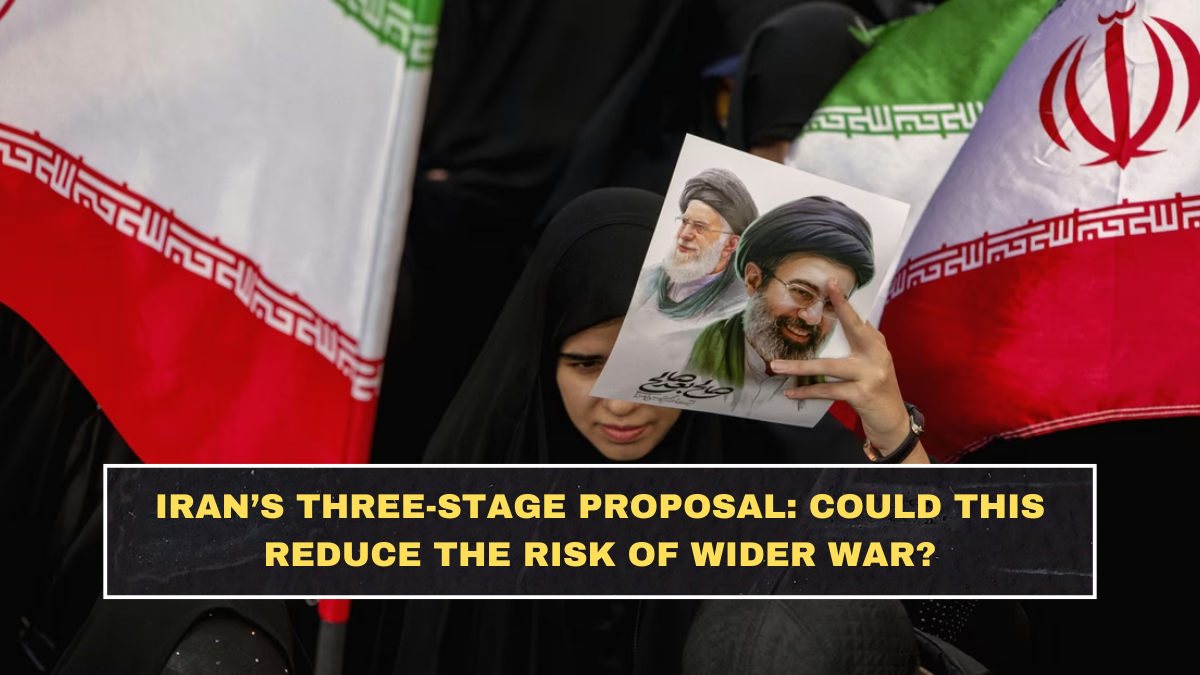
Iran’s reported three-stage proposal to the United States is an attempt to separate the immediate war and Strait of Hormuz crisis from the harder nuclear dispute. According to Reuters, citing Axios, Iran presented a proposal to the US through Pakistani mediators to reopen the Strait of Hormuz and end the ongoing conflict, while leaving nuclear negotiations for a later phase.
Reports describe the broad formula as: first, ending the war and securing guarantees against renewed attacks; second, discussing management of the Strait of Hormuz after the first stage; and third, moving nuclear talks to a later stage. NDTV reported that the second round of US-Iran talks in Pakistan ended in a stalemate, making this phased approach more important.
The idea is simple: solve the burning crisis first, then talk about the most difficult issue later. But that is also the weakness. The US wants nuclear guarantees, while Iran appears to want de-escalation and Hormuz relief before nuclear concessions. That gap is exactly why the proposal may be useful but not easy to accept.
Why Is The Strait Of Hormuz At The Centre Of The Crisis?
The Strait of Hormuz is at the centre of the crisis because it is one of the world’s most important energy routes. Any disruption there affects oil, LNG, shipping insurance, freight costs, and inflation expectations across Asia and beyond. When this route becomes unstable, global markets react quickly because energy supply chains are deeply connected to it.
The Associated Press reported that Iran has offered to end its chokehold on the Strait of Hormuz if the US lifts its blockade, while the US remains focused on Iran’s nuclear programme and wider security demands. That means Hormuz is not just a shipping issue. It has become a bargaining chip in a much larger geopolitical fight.
| Proposal Stage | What It Appears To Focus On | Why It Matters |
|---|---|---|
| Stage 1 | End the war and prevent renewed attacks | Reduces immediate military risk |
| Stage 2 | Discuss Strait of Hormuz management | Helps restore energy shipping confidence |
| Stage 3 | Move to nuclear negotiations later | Leaves the hardest issue unresolved |
| US concern | Nuclear limits and security guarantees | Washington may resist delaying this |
| Iran concern | Ending blockade and military pressure | Tehran wants relief before deeper concessions |
Why Does Iran Want Nuclear Talks Later?
Iran likely wants nuclear talks later because the nuclear issue is the hardest part of any deal with the US. Nuclear negotiations involve uranium enrichment, inspections, sanctions relief, regional security, and trust between two governments that have been hostile for decades. If Iran puts nuclear concessions at the front, talks may collapse before any de-escalation happens.
Axios reported that Iran’s approach is meant to fast-track a deal on reopening Hormuz and ending hostilities while postponing nuclear negotiations to a later phase. This is a classic diplomatic move: push the most explosive issue into a later box and try to stabilise the immediate crisis first.
But Washington may see this as a trap. If Hormuz reopens and the war cools down without nuclear concessions, Iran may gain breathing room while keeping its nuclear leverage. That is why the US response matters. A phased deal can reduce risk, but only if both sides believe the later stages will actually happen.
How Has The US Responded So Far?
The US has not publicly accepted the proposal in full. The Associated Press reported that President Donald Trump remained sceptical and stressed that any deal must address Iran’s nuclear ambitions. He said improved proposals had been received but did not give full details.
That scepticism is predictable. For the US, the nuclear issue is not a side topic; it is the central concern. If Iran says “end the war now, discuss nukes later,” Washington may ask why it should reduce pressure before getting the main security concession it wants.
This is the hard part of diplomacy. Iran wants pressure relief before nuclear talks. The US wants nuclear assurances before full relief. Both sides believe they are being rational. That is exactly why mediators like Pakistan and other regional actors matter, but they cannot force an agreement if the core demands remain far apart.
Why Are Oil Markets Watching This Proposal Closely?
Oil markets are watching this proposal because any sign of progress or failure can move crude prices. Reuters reported that oil prices jumped more than 2% as US-Iran peace talks stalled and supply through the Strait of Hormuz remained restricted. Brent crude was reported at $106.68 a barrel and WTI at $95.35.
This matters for countries like India, Japan, South Korea, and China because they are major energy importers. If Hormuz disruption continues, crude and LNG prices can remain elevated. That can raise import bills, weaken currencies, and increase inflation pressure through fuel, transport, fertiliser, power, and manufacturing costs.
The market logic is brutal. Traders do not wait for a signed treaty. They price risk immediately. Even rumours of progress can cool prices, while failed talks can push prices higher. That is why the three-stage proposal is not only a diplomatic story; it is also an economic story.
Could This Proposal Reduce The Risk Of Wider War?
Yes, it could reduce the risk of wider war, but only if both sides treat it as a serious starting point rather than a public relations move. A phased proposal can create room for de-escalation. Ending active hostilities and reopening Hormuz would lower immediate pressure on global energy markets and regional militaries.
But the proposal can also fail quickly if the US insists that nuclear commitments must come first, or if Iran refuses meaningful nuclear talks after getting relief on Hormuz. The Guardian reported that peace efforts had stalled, with both the US and Iran refusing to yield and no clear headway in negotiations.
So the realistic answer is cautious. This proposal may reduce the temperature, but it does not solve the core conflict. It buys time. Whether that time becomes a path to peace or just another pause before escalation depends on what happens after the first stage.
What Should Readers Understand Without The Diplomatic Noise?
Readers should understand that this proposal is about sequencing. Iran wants to end the war and reopen Hormuz first, then discuss nuclear issues later. The US wants nuclear guarantees to remain central. That difference may sound technical, but it decides whether talks move forward or collapse.
The uncomfortable truth is that both sides are trying to keep leverage. Iran’s leverage is Hormuz and regional pressure. America’s leverage is military power, sanctions, and blockade pressure. Neither side wants to give away its strongest card too early.
For ordinary people, the impact is not abstract. If talks fail, oil and gas prices can remain high. If Hormuz stays unstable, shipping costs rise. If the crisis expands, inflation and global growth risks increase. This is why one diplomatic proposal can affect fuel bills far beyond West Asia.
Conclusion?
Iran’s three-stage proposal is important because it creates a possible path to de-escalation: end the war, reopen or manage Hormuz, and postpone nuclear talks to a later stage. That structure could reduce immediate military and energy-market pressure.
But it is not a full solution. The nuclear issue remains the hardest part, and the US is unlikely to accept a deal that completely sidelines it. The proposal can lower the risk of wider war only if both sides use it as a bridge to serious talks, not as a way to delay the real conflict.
FAQs
What Is Iran’s Three-Stage Proposal?
Iran’s reported three-stage proposal focuses first on ending the war, then discussing the Strait of Hormuz, and later moving to nuclear negotiations. The proposal was reportedly passed to the US through Pakistani mediators.
Why Is The Strait Of Hormuz Important?
The Strait of Hormuz is a key global route for oil and LNG shipments. Disruption there can raise crude prices, shipping costs, insurance rates, and inflation pressure in energy-importing countries.
Why Does The US Care So Much About Iran’s Nuclear Programme?
The US sees Iran’s nuclear programme as a major security concern. Washington wants limits, inspections, and guarantees that Iran will not develop nuclear weapons before offering major relief.
Can This Proposal End The War?
It could help reduce immediate tensions, but it cannot guarantee an end to the conflict unless both sides agree on enforcement, Hormuz access, blockade relief, and future nuclear talks.