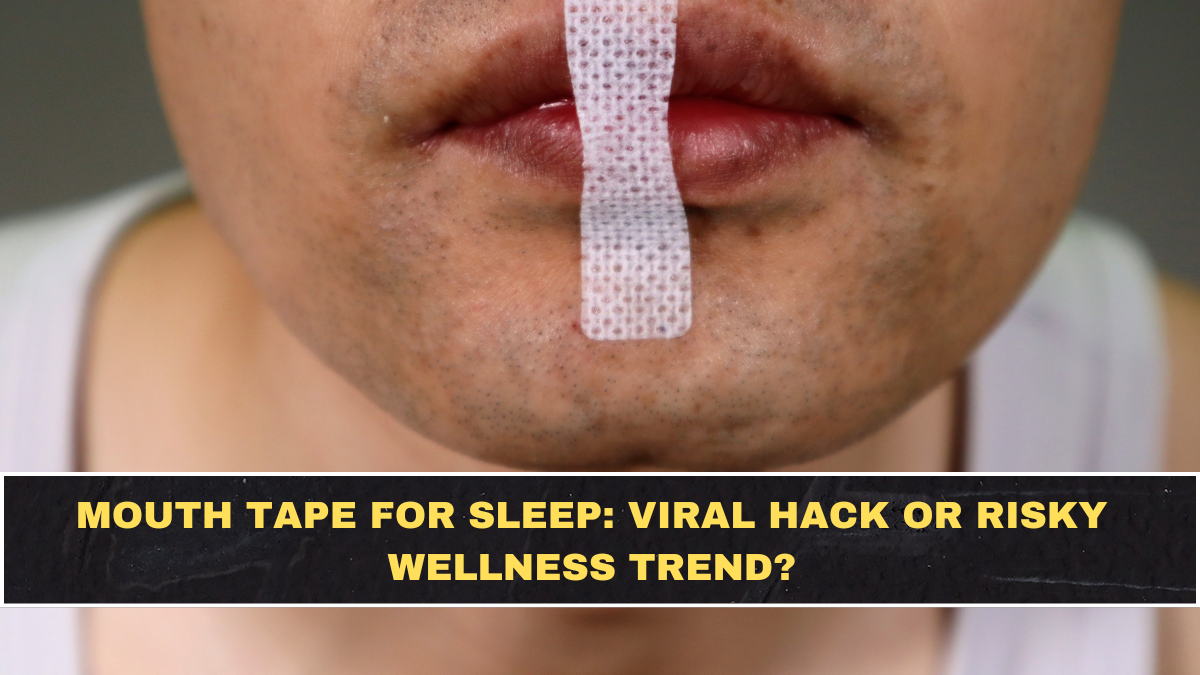
Mouth taping has become a viral sleep trend because influencers claim it can reduce snoring, improve nasal breathing, stop dry mouth and make sleep deeper. The idea sounds simple: tape the lips shut before sleeping so the body is forced to breathe through the nose. But this is exactly where people need to slow down, because a trend becoming popular does not mean it is medically safe or proven. Doctors have warned that mouth taping can be risky for people with sleep apnea, nasal blockage or breathing problems.
Why Are People Taping Their Mouth At Night?
The trend is based on the belief that nasal breathing is healthier than mouth breathing during sleep. Nasal breathing can help filter, warm and humidify air, while mouth breathing may cause dry mouth, throat irritation and noisy sleep. That part is not completely nonsense, but the jump from “nasal breathing is useful” to “tape your mouth shut” is where social media oversimplifies the issue. Good sleep is essential for health, but poor sleep problems should be evaluated properly instead of being treated with viral hacks.
| Claim Around Mouth Taping | What The Evidence Says |
|---|---|
| Reduces snoring | May help some mild cases, but evidence is limited |
| Improves sleep apnea | Not proven as a treatment and may be risky |
| Forces nasal breathing | Only safe if nasal airflow is clear |
| Stops dry mouth | May help some users, but cause must be checked |
| Better sleep quality | Not strongly proven in high-quality research |
| Safe for everyone | False and potentially dangerous |
What Does Science Actually Say?
A 2025 systematic review published in PLOS One looked at 10 studies involving 213 participants. The review found that only some studies showed limited improvements in sleep apnea markers, while other studies showed no clear benefit and raised safety concerns such as asphyxiation risk when nasal obstruction is present. That is not strong enough evidence to sell mouth taping as a universal sleep solution.
This is the biggest blind spot in the trend. People see before-after videos, celebrity routines and wellness claims, then assume the science is settled. It is not. The current evidence is small, mixed and not strong enough to treat snoring or sleep apnea casually with tape. If someone is snoring loudly, waking up tired or gasping at night, the smarter move is a sleep evaluation, not a strip of tape.
Who Should Avoid Mouth Taping?
Mouth taping should be avoided by people who snore heavily, have untreated sleep apnea, chronic nasal congestion, allergies, asthma flare-ups, breathing difficulty, acid reflux risk, or panic when the mouth is restricted. Cleveland Clinic warns that mouth taping can cause difficulty breathing, skin irritation, anxiety and disrupted sleep, and says it is not part of current practice to treat sleep disorders.
People should be extra careful if they have:
- Blocked nose, sinus issues or deviated septum.
- Loud snoring or suspected sleep apnea.
- Night-time choking, gasping or breathing pauses.
- Anxiety or claustrophobia.
- Acid reflux, vomiting risk or alcohol use before sleep.
- Sensitive skin or allergy to adhesive tape.
What Are Safer Alternatives?
The safer path is to identify why someone is mouth breathing in the first place. It may be due to nasal congestion, allergies, poor sleep posture, weight gain, alcohol use, smoking, sleep apnea or structural nasal issues. Sleep Foundation says mouth taping should not be used by people with untreated sleep apnea, chronic nasal congestion or difficulty breathing through the nose.
Better options include sleeping on the side, treating allergies, using nasal strips, improving bedroom humidity, reducing alcohol before bed and seeking medical advice for persistent snoring. Mayo Clinic also recommends basics like keeping a consistent sleep schedule, creating a restful environment and avoiding heavy meals, caffeine and alcohol close to bedtime. These boring habits are not viral, but they are safer than copying random wellness hacks.
Conclusion: Should You Try Mouth Tape For Sleep?
Mouth tape for sleep is not automatically evil, but it is badly overhyped. For a healthy adult with clear nasal breathing and mild mouth breathing, it may feel helpful, but the evidence is still limited. For someone with snoring, sleep apnea, blocked nose or breathing problems, it can be risky and may delay proper treatment. That is the part influencers conveniently ignore.
The brutal truth is simple: if your sleep is bad, your body is giving you a signal, not asking for a viral shortcut. Before taping your mouth shut, understand why you are mouth breathing. Fix the cause, not just the symptom, because sleep problems can hide real health issues that tape cannot solve.
FAQs
Is Mouth Taping Safe For Everyone?
No, mouth taping is not safe for everyone. It can be risky for people with nasal blockage, sleep apnea, breathing issues, acid reflux or anxiety around restricted breathing. Anyone with loud snoring or poor sleep should speak to a doctor before trying it.
Can Mouth Tape Stop Snoring?
Mouth tape may reduce snoring in some mild mouth-breathing cases, but it is not a proven snoring treatment. Loud or regular snoring can be a sign of obstructive sleep apnea, which needs proper evaluation. Treating snoring with tape without checking the cause is a careless move.
Does Mouth Taping Treat Sleep Apnea?
No, mouth taping should not be treated as a sleep apnea cure. The 2025 PLOS One review found limited and mixed evidence, with safety concerns in some situations. Sleep apnea may require medical treatments such as CPAP, oral appliances or lifestyle changes guided by a professional.
What Should I Do If I Breathe Through My Mouth At Night?
Start by checking for nasal congestion, allergies, poor sleep posture or signs of sleep apnea. Try safer steps like nasal strips, allergy treatment, side sleeping and better sleep hygiene. If mouth breathing is frequent or linked with snoring and daytime tiredness, get medical advice instead of copying a trend.