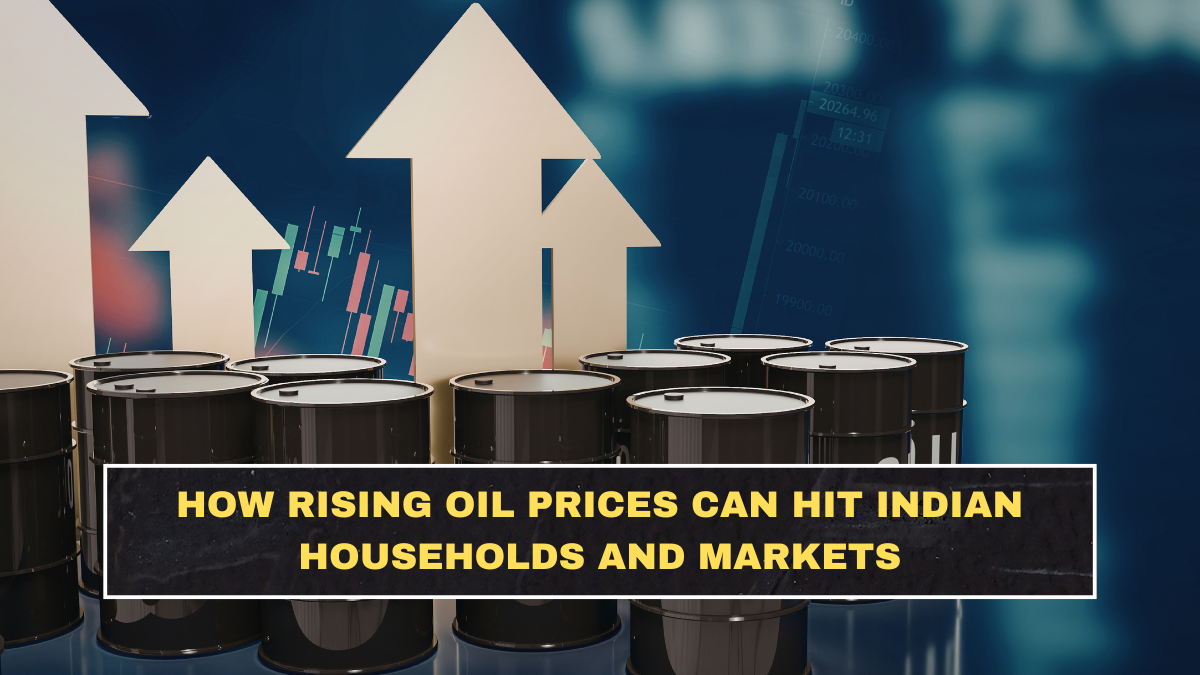
Rising oil prices are a big problem for India because the country depends heavily on imported crude oil. India’s crude import dependence has stayed around 88% in recent years, which means global oil shocks quickly become domestic economic pressure. When crude becomes expensive, India has to spend more dollars on imports, and that can affect inflation, the rupee, company margins and government finances.
The pressure became sharper in April 2026 as Brent crude hovered around $106 amid US-Iran tensions and concerns around the Strait of Hormuz. Indian markets reacted nervously because higher crude is not just an energy-sector issue. It can hit transport, food prices, airline costs, paint companies, chemical firms, logistics, FMCG margins and even household budgets indirectly.
How Do Higher Oil Prices Affect Petrol And Diesel?
Higher oil prices usually increase pressure on petrol and diesel prices because crude oil is the main raw material for fuel. However, Indian consumers do not always see immediate pump-price increases because the government and public-sector oil companies sometimes absorb part of the shock. That may protect households temporarily, but it does not remove the cost from the system.
On April 23, 2026, the government said state-run fuel retailers were losing about ₹20 per litre on petrol and ₹100 per litre on diesel, while also saying there were no immediate plans to raise prices. This shows the hidden burden clearly. If prices are not passed to consumers, oil companies or government finances carry the pain. If prices are passed on, households and businesses feel it directly.
| Impact Area | How Rising Oil Prices Hurt | Who Feels It First? |
|---|---|---|
| Petrol and diesel | Fuel retailers face higher crude costs | Oil companies, later consumers |
| Inflation | Transport and input costs rise | Households and small businesses |
| Rupee | Higher oil imports need more dollars | Currency market and importers |
| Stock market | Margins shrink in oil-sensitive sectors | Investors and companies |
| Government finances | Subsidy or tax decisions get harder | Budget planners |
| Airlines and logistics | Fuel cost becomes heavier | Travellers, exporters, delivery firms |
| Food prices | Transport cost affects supply chains | Consumers |
Why Can Oil Prices Increase Inflation?
Oil prices can increase inflation because fuel is connected to almost every part of the economy. Even if petrol and diesel prices stay unchanged for some time, transportation, freight, packaging, farm input costs and industrial energy expenses can still feel pressure. When companies face higher costs, they either absorb them through lower margins or pass them to customers through higher prices.
India’s retail inflation rose to 3.40% in March 2026 from 3.21% in February, and Reuters reported that economists were watching Middle East war risks and weak monsoon concerns because they could lift energy and food prices. That is the key link. Oil does not only affect your fuel tank; it can affect vegetable prices, delivery charges, airline tickets and packaged goods over time.
Why Does Crude Oil Affect The Rupee?
Crude oil affects the rupee because India pays for oil imports largely in dollars. When oil prices rise, India needs more dollars to buy the same quantity of crude. That increases demand for dollars and can put pressure on the rupee. A weaker rupee then makes imports even more expensive, creating a second round of pressure.
Reuters reported that the rupee extended its losing streak as Iran war jitters lifted oil to around $100 earlier in the week. This currency pressure matters because India imports not only oil but also electronics, machinery, chemicals and other goods. If the rupee weakens while oil rises, the economy faces a double hit.
How Do Higher Oil Prices Hit The Stock Market?
Higher oil prices hit the stock market because investors worry about inflation, margins and economic growth. On April 24, 2026, Indian shares fell as higher oil prices and weak Infosys guidance hurt sentiment. Reuters reported that Brent crude hovered around $106, keeping market sentiment fragile amid escalating US-Iran tensions.
Oil-sensitive sectors usually face the first pressure. Airlines suffer because aviation fuel is a major cost. Paint and chemical companies face input-cost pressure because crude derivatives are used in raw materials. Logistics and transport companies may face margin compression if they cannot pass costs quickly. Banks can also feel indirect pressure if inflation and rate expectations change.
Why Are Global Tensions Making Oil More Sensitive?
Global tensions make oil more sensitive because crude supply depends heavily on shipping routes, producer stability and refinery availability. In April 2026, Reuters reported that Asian refineries were cutting crude throughput due to Iran war disruption, with Asian crude imports falling 22% year-on-year to 20.4 million barrels per day. Diesel and jet fuel supplies also faced risk because refiners were losing access to key medium-sour crude grades.
The Strait of Hormuz is especially important because it is one of the world’s most critical oil transit routes. When investors fear disruption there, oil prices can rise quickly even before actual shortages reach consumers. Markets price fear early. That is why crude prices can jump on war headlines, shipping risks or refinery disruption before petrol-pump prices change.
Which Indian Households Feel The Impact Most?
Lower and middle-income households feel the impact most because fuel and food take a bigger share of their monthly budget. Even if petrol prices do not rise immediately, transport costs, school van fees, delivery charges and grocery prices can slowly move higher. Families that already have tight budgets feel these small increases more sharply.
Urban households may feel it through commute costs, cab fares and delivery charges. Rural households may feel it through diesel-linked farming costs, transport of produce and higher prices for basic goods. The harsh truth is that oil inflation is unfair. Wealthier households can absorb it; lower-income families are forced to cut spending elsewhere.
What Can Consumers Do During High Oil Prices?
Consumers cannot control crude oil, but they can control wasteful spending and fuel use. Combining errands, using public transport where practical, carpooling, maintaining tyre pressure and avoiding unnecessary idling can reduce fuel consumption. These actions sound small, but they matter when prices stay high for months.
Households should also avoid panic spending. Buying extra fuel, rushing into gold, or making emotional investment decisions because oil prices rose is poor planning. The better move is to review monthly expenses, keep emergency savings ready and avoid unnecessary debt. Oil shocks hurt most when people have no financial buffer.
Conclusion?
Rising oil prices can hit India through fuel costs, inflation, rupee weakness, stock-market pressure and household budgets. The risk is bigger because India imports around 88% of its crude oil requirement, so global shocks do not stay global for long. When crude rises, India feels the pressure through imports, companies, markets and daily living costs.
The smart way to understand oil prices is to look beyond petrol and diesel. Expensive crude can affect food transport, airline tickets, logistics, corporate profits, inflation expectations and government finances. For households and investors, the message is simple: do not ignore oil. It is one of the fastest ways global tension enters Indian wallets.
FAQs
Why Do Oil Prices Matter So Much For India?
Oil prices matter because India imports most of its crude oil requirement. When crude becomes expensive, India spends more on imports, which can pressure inflation, the rupee, corporate margins and government finances.
Will Petrol And Diesel Prices Rise Immediately?
Not always. The government and oil companies may absorb some pressure for a period. However, if crude prices stay high for long, the cost usually appears somewhere through fuel prices, company losses, taxes or government finances.
How Do Oil Prices Affect Inflation?
Oil affects transport, freight, farming, manufacturing and delivery costs. When these costs rise, companies may pass them to consumers through higher prices, which can increase inflation.
Which Stocks Are Most Affected By Higher Oil Prices?
Airlines, logistics, paints, chemicals, oil marketing companies and some consumer companies can be affected directly or indirectly. Broader market sentiment can also weaken if oil prices raise inflation and rupee concerns.