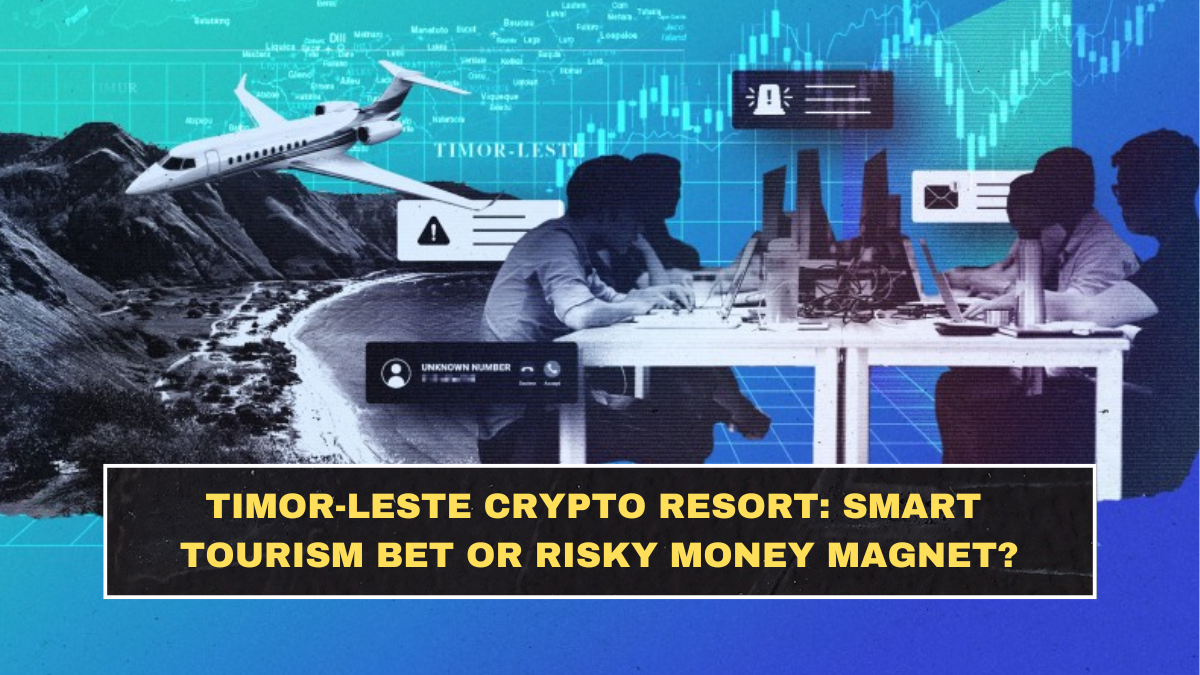
Timor-Leste’s proposed crypto resort has become controversial because it sits at the uncomfortable intersection of foreign investment, digital assets, tourism, weak regulation and alleged links to transnational scam networks. A Guardian and OCCRP investigation reported that the planned AB Digital Technology Resort in Dili had connections to people later sanctioned by the United States over alleged ties to the Cambodia-based Prince Group, which US authorities have accused of cyber fraud and money laundering.
That does not automatically mean Timor-Leste’s government approved a criminal project. It also does not mean every investor linked to the resort is guilty of wrongdoing. But it does mean the project deserves serious scrutiny. Crypto-themed resorts, blockchain promises and vague digital-economy language can sound exciting, but they can also become perfect cover for opaque money, offshore schemes and influence-buying.

What Is The AB Digital Technology Resort?
The AB Digital Technology Resort has been promoted as a blockchain-themed development in Timor-Leste’s capital, Dili. Reports describe it as a proposed luxury digital resort connected to crypto, tourism, technology and foreign investment. But the project remains controversial because major questions remain about who truly controls it, how it is funded, how land was acquired and whether it could expose the country to reputational and financial risk.
The project has not become a simple success story with clear public plans, transparent backers and visible construction progress. Instead, it has triggered parliamentary questions, investigative reporting and warnings about Timor-Leste’s vulnerability to foreign organised crime. That is the problem. A serious investment project should reduce doubts over time. This one appears to have created more.
| Key Issue | Why It Matters? |
|---|---|
| Project name | AB Digital Technology Resort |
| Location | Proposed beachfront site in Dili, Timor-Leste |
| Main pitch | Crypto, blockchain, tourism and digital investment |
| Main concern | Alleged links to figures tied to scam-network investigations |
| Political issue | President José Ramos-Horta has defended openness to investors |
| National risk | Weak regulation may attract dirty money or organised crime |
Why Is President José Ramos-Horta Defending Investment?
President José Ramos-Horta has defended Timor-Leste’s openness to foreign investors because the country needs to diversify beyond oil revenues and attract new economic activity. The country is small, young, and still building stronger institutions, so investment in tourism, technology and infrastructure can look attractive. Local reporting quoted Ramos-Horta as saying he would continue to welcome investors but would stop them if evidence of wrongdoing emerged.
That position is understandable, but it is also risky if handled weakly. “We need investment” cannot become an excuse for poor due diligence. Small countries are often targeted precisely because investors believe institutions are easier to influence. Timor-Leste should welcome clean investment, but it cannot afford to look desperate. Desperation is how bad money enters.
What Are The Alleged Links To Scam Networks?
The Guardian and OCCRP reported that individuals involved in the resort project had alleged links to the Prince Group, a Cambodia-based network accused by US and UK authorities of involvement in online scam operations, forced labour and money laundering. Some people connected to the project were later sanctioned by the US, and shareholders reportedly removed certain figures after scrutiny increased.
This is where caution is essential. Allegations and links are not the same as a court conviction against everyone connected to the project. Lin Xiaofan, the public face of the project and a presidential adviser, has denied wrongdoing and has not been sanctioned, according to reports. Still, the presence of sanctioned or allegedly linked figures around a strategic development project should trigger deep investigation, not polite reassurances.
Why Is Timor-Leste Vulnerable To This Kind Of Risk?
Timor-Leste is vulnerable because it is seeking investment, expanding digital connectivity and still strengthening law-enforcement capacity. The Guardian reported that President Ramos-Horta himself warned the country is vulnerable to infiltration by foreign organised crime, although he also said no organised crime had been confirmed in the country. Australian Federal Police have been helping Timor-Leste with cybercrime and digital forensics.
AP previously reported that scam centres and suspicious business networks linked to criminal activity have been emerging in East Timor, including concerns around special economic zones and digital centres. That broader regional pattern matters because scam networks have moved across Southeast Asia when pressure rises in one country. Timor-Leste cannot assume it is too small to be targeted. Smallness can actually make it more attractive.
Why Does Crypto Make The Project More Sensitive?
Crypto makes the project more sensitive because digital assets can move money quickly across borders, often through complex structures that are harder for weaker regulators to track. A normal hotel project already needs checks on funding sources, land ownership, political connections and tax arrangements. A crypto-linked resort needs even stronger checks because token systems, stablecoins, offshore wallets and opaque corporate networks can hide who benefits.
This does not mean every crypto project is criminal. That would be lazy thinking. But crypto-linked investment in a small developing country with limited regulatory depth should face tougher scrutiny, not lighter treatment. If investors cannot clearly explain the money, ownership, governance and compliance structure, the project should not be waved through under the banner of innovation.
What Questions Is Timor-Leste’s Parliament Asking?
Timor-Leste’s parliament has questioned the president over the resort’s links and the handling of foreign investors. Opposition MP Florentino Ximenes da Costa raised concerns about how the project obtained prime land and why Lin Xiaofan received a diplomatic passport. These are serious questions because land, passports and presidential access are not minor administrative details. They are high-value political privileges.
The government needs to answer clearly, not defensively. Who owns the project? Who financed it? What background checks were done? Who approved the land access? Why was a diplomatic passport issued? Were any security agencies consulted? If these questions are not answered publicly, the controversy will not fade. It will grow.
Could This Still Become A Good Tourism Investment?
It could, but only if the project passes serious transparency and compliance tests. Timor-Leste needs tourism, infrastructure and international capital. A clean, well-regulated resort with clear funding, local jobs, environmental safeguards and real accountability could help the economy. The country should not reject investment simply because it is foreign or ambitious.
But this specific project has already created enough warning signs that blind optimism would be foolish. A smart tourism bet needs clean money, clear ownership and public trust. A risky money magnet hides behind buzzwords, influential relationships and vague promises. Timor-Leste has to decide which one this is before letting it become a national embarrassment.
What Is The Bottom Line?
The Timor-Leste crypto resort controversy is not just about one proposed beachfront development. It is about whether a young country can attract investment without becoming vulnerable to questionable money, scam-linked networks and political influence operations. The project may promise tourism and digital growth, but the allegations around it are serious enough to demand full scrutiny.
The blunt truth is that Timor-Leste cannot afford to be naive. Foreign investment is useful only if it is clean, transparent and controlled by strong rules. If crypto resort investors bring hidden ownership, suspicious links or political shortcuts, the country is not gaining development. It is importing risk.
FAQs
What Is The Timor-Leste Crypto Resort?
The Timor-Leste crypto resort refers to the proposed AB Digital Technology Resort in Dili, promoted as a blockchain-themed tourism and digital investment project. It has attracted scrutiny over transparency and alleged links to controversial foreign networks.
Why Is The Resort Controversial?
It is controversial because investigative reports found links between people involved in the project and individuals later sanctioned over alleged ties to the Prince Group, which has been accused of cyber fraud and money laundering.
Has Timor-Leste Confirmed Organised Crime In The Project?
No. President José Ramos-Horta has said no organised crime has been confirmed in the country, while also warning that Timor-Leste is vulnerable to infiltration by foreign organised crime.
Why Is Crypto A Risk For Timor-Leste?
Crypto can create risk because digital-asset projects may involve opaque funding, offshore entities and fast cross-border money flows. Countries with weaker regulatory systems need strong due diligence before approving such projects.
Can The Project Still Benefit Timor-Leste?
Yes, but only if ownership, funding, land access, compliance and political links are made fully transparent. Without that, the project may create more reputational and security risk than economic benefit.