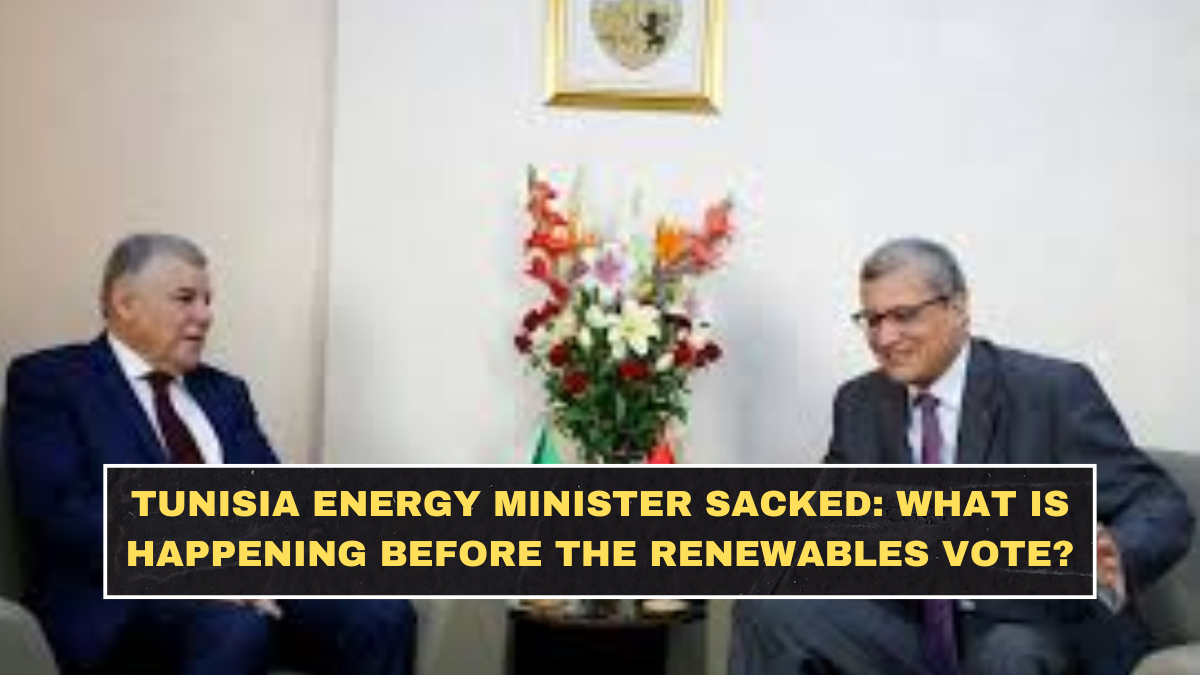
Tunisia’s President Kais Saied has dismissed Energy Minister Fatma Thabet just before parliament was expected to vote on renewable energy projects. The timing is what makes this politically sensitive. A ministerial dismissal can be routine in some governments, but when it happens right before a major energy decision, it raises obvious questions about control, policy direction, and internal disagreement.
Reuters reported that Saied dismissed Thabet amid growing controversy over renewable energy projects due to be voted on in parliament. The presidency did not provide a detailed public explanation for the move, which makes the situation more suspicious, not less. When a minister is removed at a critical policy moment without clear reasoning, people naturally ask whether the issue is performance, politics, or pressure behind the scenes.
Why Does The Renewable Energy Vote Matter So Much?
The vote matters because Tunisia badly needs energy reform. The country has faced economic pressure, public-service strain, and repeated concerns about energy security. Renewable projects could help reduce dependence on imported fossil fuels, attract investment, and ease long-term pressure on public finances. But renewable energy also involves land, contracts, concessions, foreign investors, and regulatory control, which makes it politically sensitive.
Carbon Pulse reported earlier in April that Tunisia’s renewable energy concessions were being debated alongside carbon-crediting and Article 6 frameworks, with officials arguing that some projects may need carbon finance to be profitable. That means the issue is not only about electricity generation. It is also about investment terms, international finance, climate policy, and who benefits from Tunisia’s energy transition.
| Key Issue | Why It Matters |
|---|---|
| Energy minister dismissed | Raises questions before a major renewable vote |
| Renewable concessions | Could shape Tunisia’s clean-energy investment path |
| Carbon finance debate | Projects may rely on international climate-credit revenue |
| Presidential control | Saied has repeatedly centralised political authority |
| Investor confidence | Sudden dismissals can worry foreign and domestic investors |
Is This Really About Energy Or About Political Control?
It is probably about both. Energy policy is never just technical when a country is under economic pressure. Decisions on renewable concessions, foreign investment, subsidies, public utilities, and energy imports can create winners and losers. If the presidency wants tighter control over those decisions, removing the minister before a parliamentary vote sends a message: the final political authority sits with Saied.
This fits a broader pattern in Tunisia. Since 2021, Saied has concentrated power, dissolved the elected parliament, ruled by decree, and reshaped institutions. Reuters recently reported that Tunisia continues to face criticism from rights groups over repression and shrinking freedoms, while Saied says his actions are needed to fight corruption and protect the state. That background matters because every major dismissal now lands inside a bigger debate about presidential power.
Why Are Renewable Projects Controversial In Tunisia?
Renewable projects can become controversial because they involve long-term contracts, land access, grid connections, tariffs, foreign developers, and revenue-sharing. Supporters see them as necessary for energy independence and climate resilience. Critics may worry about poor transparency, unfair concessions, weak local benefits, or foreign companies gaining too much control over national resources.
Tunisia also needs practical energy capacity, not just announcements. A GIZ-backed study on Tunisia’s Power-to-X opportunities described the country’s renewable project rules as involving ministerial authorisation and long contract terms, including 20-year contract validity in some cases. That shows why ministerial oversight matters. These are not minor paperwork decisions; they can shape energy policy for decades.
What Does This Mean For Investors?
For investors, sudden political dismissals create uncertainty. Renewable energy projects require long timelines, financing, permits, land agreements, grid access, and regulatory stability. If ministerial leadership changes abruptly before a key vote, investors may ask whether the rules are stable enough to commit serious money. That does not mean projects will collapse, but it does increase perceived risk.
Tunisia needs investment, so this is not a small issue. Renewable energy can help the country reduce fuel-import pressure and build cleaner domestic power. But investors will not move confidently if they believe decisions can change suddenly due to political intervention. Clean-energy ambition without institutional predictability is just a slogan.
How Does Tunisia’s Economic Situation Affect This Decision?
Tunisia’s economy has been under pressure for years, with concerns around public debt, inflation, shortages, unemployment, and slow growth. Energy is part of that pressure because imported fuel can strain government finances and expose the country to global price shocks. Renewable energy is attractive because it promises more domestic generation and lower long-term vulnerability.
But economic stress also makes politics more volatile. When governments struggle to deliver jobs, affordable services, and stable supplies, leaders often look for visible action. Firing a minister can create the appearance of control, even when deeper structural problems remain unsolved. That is the uncomfortable possibility here: the dismissal may make headlines faster than it fixes Tunisia’s energy problems.
Could This Slow Down Tunisia’s Clean Energy Push?
Yes, it could slow things down if the dismissal creates confusion over project approvals, investor terms, or parliamentary support. Renewable projects already face technical and financial hurdles. Any leadership change can delay decisions, especially if new officials review existing agreements or shift policy priorities.
However, the dismissal could also speed things up if Saied wants to push projects through under tighter presidential direction. That is the tricky part. Centralised power can sometimes move decisions faster, but it often weakens transparency and trust. Fast decision-making is not automatically good if the public does not understand who benefits and what terms were agreed.
Why Should Ordinary Tunisians Care?
Ordinary Tunisians should care because energy policy affects electricity costs, job creation, public spending, and long-term economic resilience. If renewable projects are handled well, they could reduce dependence on imported fuel, create local work, and support cleaner power. If handled badly, they could become another source of opaque contracts, political favouritism, or public frustration.
This is not just elite politics. Energy shortages, high prices, and weak investment eventually hit households and businesses. Tunisia needs a serious energy strategy, not leadership drama every time a major decision approaches. If the government wants public trust, it needs to explain the dismissal clearly and show how the renewable vote serves national interests.
Conclusion
Fatma Thabet’s dismissal before a renewable energy vote is politically important because it sits at the intersection of energy reform, investor confidence, and Kais Saied’s centralised style of rule. Tunisia needs renewable energy badly, but it also needs transparent decisions, stable institutions, and credible project governance.
The blunt truth is that firing a minister does not solve Tunisia’s energy problems. It may clear the way for Saied’s preferred approach, but it also raises doubts about transparency and stability. If Tunisia wants renewable energy to become a real economic opportunity, it must prove that projects are being approved for public benefit, not just political control.
FAQs
Why was Tunisia’s energy minister dismissed?
President Kais Saied dismissed Energy Minister Fatma Thabet ahead of a parliamentary vote on renewable energy projects. The presidency did not give a detailed public explanation, which has raised questions about the timing and political motive.
Why are Tunisia’s renewable energy projects important?
They are important because Tunisia needs more domestic energy production, lower dependence on imported fuels, and stronger clean-energy investment. Renewable projects could support long-term energy security if managed transparently.
Is Kais Saied centralising power in Tunisia?
Yes, critics say Saied has centralised power since 2021 after dissolving parliament and ruling by decree. Saied argues his actions are necessary to fight corruption and protect the state, but rights groups warn about shrinking democratic freedoms.
Could the dismissal affect renewable investment?
Yes. Sudden ministerial changes before major project votes can worry investors because renewable projects require regulatory stability, clear approvals, and long-term confidence in government policy.