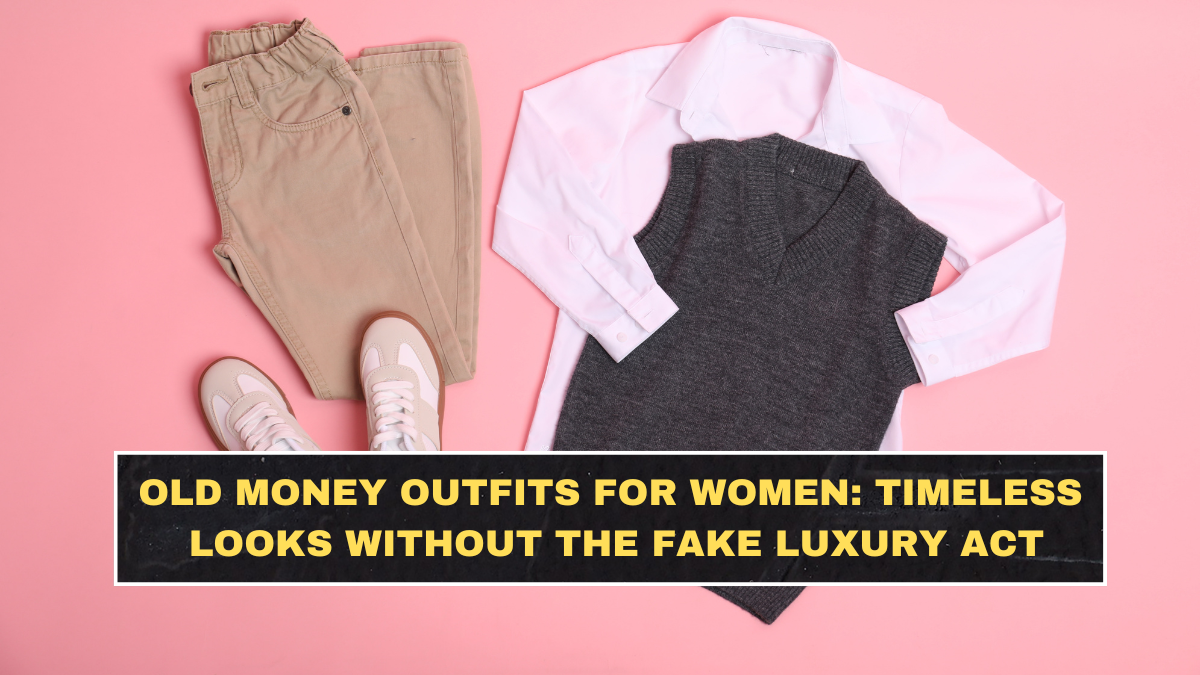
The “old money” look keeps pulling attention because it sells a fantasy of wealth without logos, but the part worth copying is not the fantasy. It is the discipline. Fashion coverage in 2026 keeps pushing the same core idea: elevated basics, smart tailoring, neutral layers, and pieces that do not scream for attention. Vogue’s 2026 wardrobe essentials guide highlights staples like turtlenecks and other long-lasting basics, while current capsule-wardrobe coverage keeps circling back to trench coats, loafers, linen shirts, cardigans, and clean tailoring.
What does “old money style” actually mean?
It means clothes that look expensive because they look calm, structured, and well chosen. That is the part people get wrong. They think “old money” means copying rich people badly with pearls, blazers, and beige everything. That is lazy styling. The real version is about fit, fabric, and restraint. Current fashion editorials still link timeless dressing with neutral tones, smart tailoring, and subtle design rather than loud trend chasing. Vogue’s recent coverage around minimalist fashion and rising labels built on quiet design points in exactly that direction.
Which pieces matter most for old money outfits?
You do not need a giant wardrobe. You need a tight set of reliable pieces that look polished repeatedly. The strongest foundation usually includes a crisp button-up shirt, straight-leg trousers, a trench coat, a cardigan or lightweight knit, a structured blazer, loafers or simple flats, a midi skirt or tailored dress, and one clean leather bag. Fashion editors covering 2026 capsule wardrobes repeatedly spotlight trench coats, straight-leg jeans, cardigans, lightweight knits, loafers, linen shirts, and refined bags as the core of a timeless wardrobe.
| Piece | Why it works | Better choice |
|---|---|---|
| Trench coat | Makes simple outfits look finished | Clean cut, neutral color |
| Button-up shirt | Sharp and versatile | Cotton or linen blend |
| Tailored trousers | Instantly more polished than leggings | Straight or wide-leg fit |
| Lightweight knit | Adds softness without sloppiness | Wool or cotton blend |
| Loafers or flats | Classic and practical | Leather, minimal hardware |
| Midi skirt or dress | Elegant without trying too hard | Simple silhouette |
| Structured tote or shoulder bag | Pulls the outfit together | Plain leather, no loud logo |
Which colors make the look work better?
Neutrals do most of the heavy lifting. Cream, navy, camel, black, white, taupe, chocolate brown, and soft grey are the most useful because they mix easily and rarely look cheap when the fit is right. That does not mean you can never wear color. It means your base should stay controlled. Recent fashion coverage on minimalist midi dresses, taupe accessories, and elevated basics shows the same pattern: quieter palettes make clothes look more refined and more repeatable.
How should old money outfits fit?
Fit matters more than brand. That is the harsh truth people avoid because buying something expensive feels easier than tailoring something properly. Trousers should skim, not strangle. Blazers should shape the shoulders without looking stiff. Shirts should feel crisp, not oversized in a sloppy way. Dresses should fall cleanly. The old-money effect comes from clothes looking intentional. Current editorial advice on elevated transitional dressing keeps stressing polished staples, smart layering, and timeless accessories rather than oversized chaos.
What are a few easy old money outfit formulas?
Start with formulas you can repeat. A white shirt, tailored beige trousers, and loafers is one of the easiest. A navy knit with cream trousers and a leather tote is another. A trench coat over a striped knit and straight-leg jeans works for casual days without looking lazy. A simple sleeveless midi dress with flats or low heels also fits the look, especially because minimalist midi dresses are back again in 2026 fashion coverage. The point is not originality. The point is consistency.
Which fabrics make outfits look more expensive?
Natural-looking fabrics usually help most. Cotton poplin, linen, wool blends, cashmere if you can afford it, tweed accents, and smoother leather tend to look more refined than shiny synthetics that wrinkle oddly or cling badly. You do not need everything in luxury fabric, but one or two better-textured pieces can change the whole outfit. Fashion editors still keep returning to lightweight knits, wool blends, linen, and tailored separates because those materials hold shape and read more polished.
What mistakes make old money outfits look fake?
The biggest one is overacting. Too many gold buttons, too many “rich-looking” accessories, too much beige, or too many trend pieces pretending to be classic all make the outfit worse. Another mistake is buying cheap items that mimic luxury details badly instead of buying simpler items with cleaner lines. The 2026 “quiet luxury” obsession works only when the clothes stay understated. Once the outfit starts begging to be noticed, the illusion is gone. The Row’s current cult status and the appeal of minimalist wardrobe pieces show that understated structure still carries more weight than forced glamour.
Can you build the look without spending a fortune?
Yes, but only if you stop shopping emotionally. That means buying fewer items, choosing cleaner silhouettes, and repeating them often. Affordable brands can work when the cut is strong and the fabric looks decent. The mistake is trying to buy ten “rich girl” outfits instead of four strong basics. Even recent coverage of more affordable handbag brands and timeless high-street finds makes the same point: quality-looking simplicity beats obvious imitation every time.
Conclusion?
Old money outfits for women work when they are built on restraint, not performance. The best version of the look is not fake luxury. It is timeless basics, good fit, controlled colors, and fabrics that do not look flimsy. If you want the style to work, stop trying to look rich and start trying to look well put together. That is the real difference.
FAQs
What is the easiest old money outfit to start with?
A white button-up shirt, tailored neutral trousers, loafers, and a structured bag is one of the simplest starting points because every piece is reusable.
Do old money outfits have to be neutral?
Mostly neutral tones help, but the real rule is restraint. A small amount of color works if the overall outfit still feels polished and controlled.
Which shoes fit the old money look best?
Loafers, ballet flats, riding-style boots, and low simple heels usually work best because they look classic rather than trend-heavy.
Can you dress old money on a budget?
Yes, but only if you focus on fit, fabric appearance, and repeatable basics instead of chasing fake luxury details.
Click here to know more